
Dashboard Lights You Should Never Ignore in Dubai Traffic
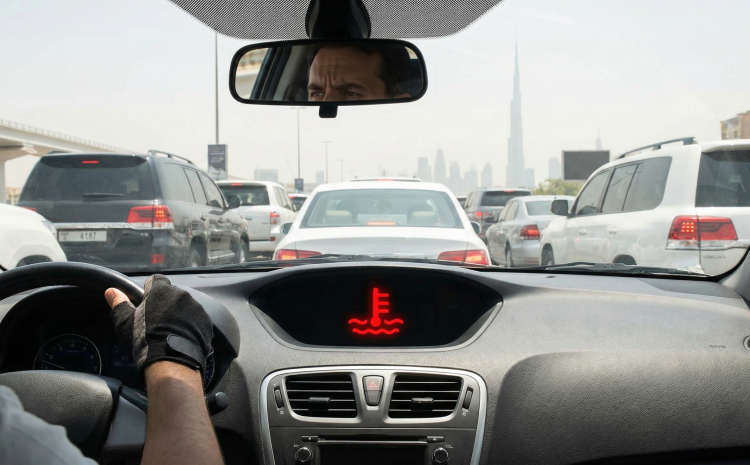
Picture this: It is 2:00 PM on a Tuesday. You are navigating the bumper-to-bumper chaos of Sheikh Zayed Road, with the Burj Khalifa shimmering in the heat haze to your left. The outside temperature is pushing 45°C, and your air conditioning is working overtime to keep the cabin bearable. Suddenly, a chime sounds, and a bright red symbol illuminates on your dashboard. Your heart skips a beat. The traffic is moving at a crawl, and there is no shoulder in sight. Panic begins to set in as you wonder: Can I make it to the next exit, or is my car about to give up right here in the middle of five lanes of traffic?
For countless drivers in the UAE, this is a nightmare scenario. Modern vehicles are equipped with sophisticated computer systems that monitor thousands of data points every second. When a dashboard light pops up, it is your car’s way of communicating a health crisis. However, the fear of the unknown often leads to poor decision-making. Some drivers ignore the light, hoping it will go away, while others freeze up. Understanding the difference between a minor sensor glitch and a catastrophic mechanical failure is essential for every driver in the Emirates.
In this comprehensive guide, we will decode the urgent signals your car sends you and exactly how to handle them safely. Whether it is a cooling system failure, a drop in oil pressure, or a failing electrical system requiring professional car battery Repair services knowing how to react instantly can save you from a dangerous roadside breakdown and a bill amounting to thousands of dirhams. We will explore the three “Red Flags” of dashboard lights that require immediate action and provide you with a survival guide for Dubai’s unique driving conditions.
The Psychology of the Dashboard: Red vs. Amber
Before diving into the specific lights, it is crucial to understand the universal color-coding system used by automotive manufacturers. Much like traffic lights, dashboard warning symbols generally follow a hierarchy of urgency:
- Green or Blue: These are informational. They tell you that a system is active (e.g., headlights, cruise control, or eco-mode).
- Amber or Yellow: These indicate caution. Something is not right, and you should get it checked soon, but immediate stoppage is usually not required. Examples include the “Check Engine” light or a low windshield washer fluid warning.
- Red: This is the danger zone. A red light indicates a severe failure or a safety issue that requires you to stop the vehicle immediately. Ignoring a red light often leads to irreversible damage to the engine or compromises your safety on the road.
In the high-stakes environment of Dubai traffic, where heat amplifies every mechanical stress, treating a red light with casual indifference is a recipe for disaster.
1. The Temperature Gauge (The Red Thermometer)
The Problem: Engine Overheating
The symbol usually looks like a thermometer dipped in liquid. If this light turns red, or if your temperature needle spikes into the “H” (Hot) zone, your engine is overheating. In the UAE, the cooling system is the most stressed component of any vehicle. The combination of high ambient temperatures, scorching asphalt radiating heat upward, and the lack of airflow during stop-and-go traffic creates a “heat soak” effect that can overwhelm a car’s radiator.
Why It Happens
Overheating can be caused by a variety of issues common in this region: a coolant leak from a dried-out hose, a failed thermostat, a broken radiator fan, or simply old coolant that has lost its boiling point efficiency.
Actionable Safety Steps in Traffic
If you see this light, you have seconds, not minutes, to act before the cylinder head warps or the head gasket blows.
- Turn Off the AC Immediately: This is the single most effective step. The AC compressor puts a massive load on the engine. Turning it off can drop engine temperatures significantly.
- Turn On the Heater: This sounds insane in Dubai heat, but you must roll down the windows and blast the heater. The heater core acts as a secondary radiator, pulling heat away from the engine block and into the cabin. It will be uncomfortable, but it might save your engine.
- Pull Over Safely: Do not try to make it home. Find the nearest safe area—a service road, a parking lot, or a wide shoulder. Turn the engine off immediately.
- Wait: Never, under any circumstances, open the radiator cap while the engine is hot. The system is under high pressure, and boiling steam can cause third-degree burns. Wait at least 30 to 45 minutes for the engine to cool down.
2. The Oil Pressure Light (The Old-Fashioned Oil Can)
The Problem: Loss of Lubrication
This symbol looks like a dripping oil can. It is arguably the most dangerous light on the dashboard. Many drivers mistakenly believe this light means the oil level is low. While low oil can cause it, the light specifically indicates a loss of oil pressure. Without pressure, oil cannot reach the upper parts of the engine. Metal parts—pistons, crankshafts, and camshafts—begin to grind against each other without lubrication.
The “Seized Engine” Risk
If you continue to drive with the oil pressure light on, your engine can seize (lock up) in a matter of minutes, sometimes even seconds. A seized engine is catastrophic; it cannot be repaired, only replaced, which is an agonizingly expensive ordeal.
What To Do
Unlike the temperature light, where you might have a brief window to maneuver, the oil pressure light is a “Stop Now” command.
- Stop Instantly: As soon as it is safe to do so, pull over and kill the ignition.
- Check the Dipstick: Once stopped, check the oil level. If the stick is dry, and you happen to have oil in the trunk (a good habit for UAE drivers), top it up. If the light goes off after restarting, you may limp to a garage.
- Call for Recovery: If the oil level is full but the light remains on, you likely have a failed oil pump or a blocked pickup screen. Do not restart the car. Call a recovery truck to take your vehicle to a reputable service center like Smart Garage.
3. The Battery Charge Warning Light (The Red Battery Box)
The Misconception
This is perhaps the most misunderstood light. When drivers see the battery symbol, they assume the battery is dead. They often think, “I can keep driving until I get to a shop to buy a new battery.” This is a dangerous fallacy. The light actually indicates a failure in the charging system, usually involving the alternator or the serpentine belt.
The Reality: You Are Running on Borrowed Time
When this light illuminates, it means your car is no longer generating electricity. It is running solely on the remaining charge stored in the battery. In a modern car with fuel injectors, electric fuel pumps, engine computers, and electric power steering, the battery alone will only last for a short distance—perhaps 10 to 20 minutes.
Once the battery drains, the car will die instantly. The engine will cut out, the power steering will become incredibly heavy, and the brake booster will lose pressure. Losing power steering and braking assist at 100 km/h on Sheikh Zayed Road is a terrifying safety hazard.
Why You Need Professional Diagnostics
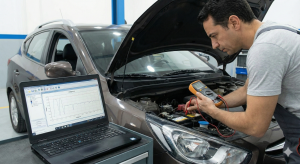
In Dubai, batteries fail frequently due to heat, which causes fluid evaporation and internal plate corrosion. However, simply replacing the battery without diagnosing the root cause is a waste of money. If your alternator is faulty, it will drain and destroy the new battery within days. This is where professional car battery Repair services differ from a simple roadside replacement.
A qualified technician will perform a comprehensive electrical system audit, including:
- Alternator Output Test: Verifying that the alternator is sending the correct voltage (usually between 13.5V and 14.5V) to the battery.
- Load Testing: Simulating high-stress conditions (AC on, lights on) to see if the system holds up.
- Parasitic Draw Test: Checking for electrical components that stay on when the car is off, slowly draining your power.
- Belt Inspection: Ensuring the serpentine belt driving the alternator is not cracked or slipping.
The Cost of Ignorance: Preventive Maintenance
The harsh reality of the UAE climate is that it accelerates the wear and tear of every vehicle component. Rubber hoses dry out and crack faster, batteries die younger, and fluids degrade quicker. The dashboard lights discussed above are the final cries for help from a vehicle that has likely been suffering silently for months.
The most effective way to avoid the panic of a dashboard warning light is proactive maintenance. This goes beyond the standard “oil and filter” change. A comprehensive inspection involves pressure testing the cooling system before the summer peaks, testing the battery health with digital analyzers, and inspecting oil seals for minor leaks before they become major pressure failures.
Choosing the Right Expert
When a light does pop up, the quality of the repair matters as much as the speed of the response. Many quick-fix garages might just reset the light using a scanner without fixing the underlying issue. This is like taking a painkiller for a broken leg; the problem is still there, and it will get worse.
At Smart Garage, located in Sharjah’s Industrial Area 6, we utilize dealer-level diagnostic computers that can read manufacturer-specific codes, not just generic warnings. We believe in transparency and education, showing you exactly why the light came on and what is needed to ensure it stays off.
Emergency Kit Essentials for UAE Drivers
While we hope you never have to use it, every driver in Dubai should keep an emergency kit in their trunk. Given the advice above, your kit should include:
- Warning Triangle: To be placed at least 50 meters behind your vehicle if you break down.
- Reflective Vest: Essential for visibility if you exit the car at night.
- Water: For you, not just the car. If you are stranded for an hour in July, dehydration is a real risk.
- Jumper Cables: High-quality cables can help if it is a simple battery drain, though they won’t fix an alternator.
- A List of Emergency Numbers: Including Police (999 for emergencies, 901 for non-emergencies) and your preferred recovery service.
Summary: Listen to Your Car
Driving in Dubai is a pleasure, offering some of the best infrastructure in the world. However, the environment demands respect and vigilance. Your dashboard lights are not suggestions; they are critical indicators of your vehicle’s safety and reliability. Ignoring the temperature gauge, the oil pressure light, or the battery warning can turn a minor inconvenience into a major financial setback or a dangerous road incident.
Remember the golden rule: Red means Stop. If you see a warning light, do not gamble with your safety. Pull over, assess the situation, and seek professional help. Your car takes care of you on your daily commute; return the favor by listening when it tells you something is wrong.
Is your dashboard acting up? Do not wait for the smoke to start rising. Contact Smart Garage today for a complete vehicle health check. Our expert team is ready to provide top-tier diagnostics and repairs to keep you moving smoothly.
Drive Safe. Stay Cool. Keep Moving.