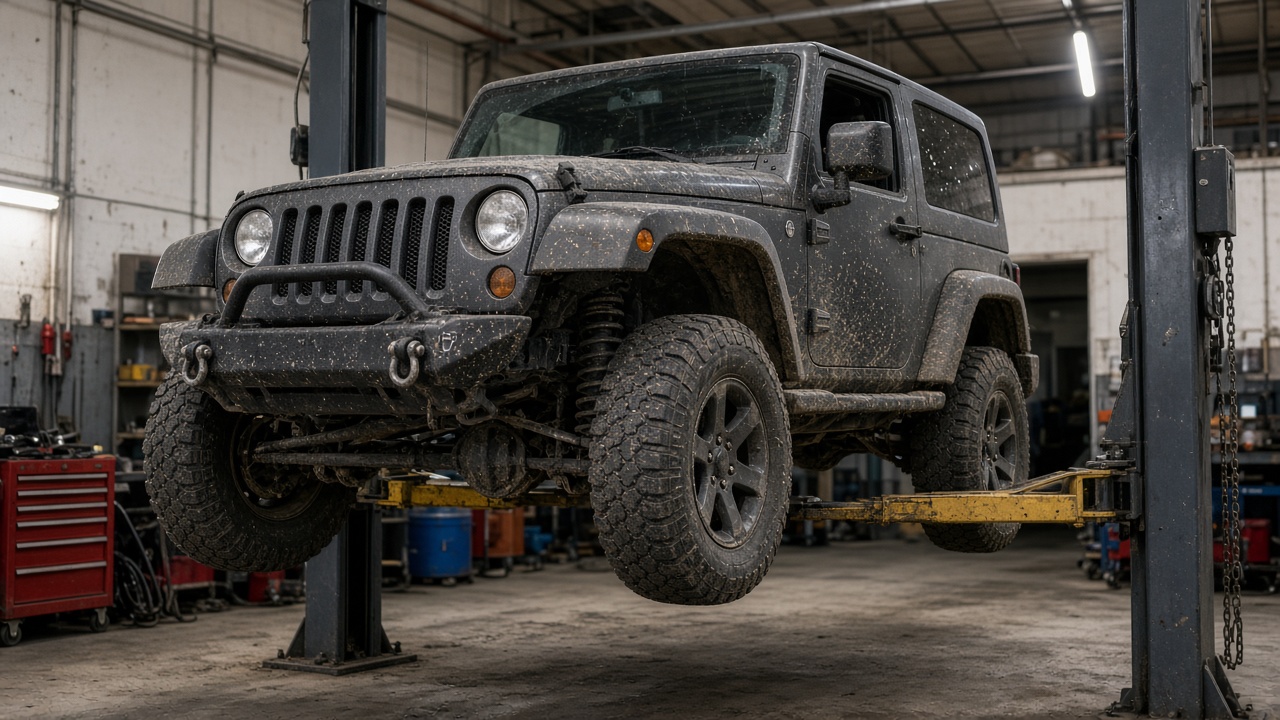
The Jeep Wrangler is an undisputed icon of off-road adventure, built to conquer rugged trails and open landscapes. However, when that terrain transitions into the intense environment of the Arabian Peninsula, the vehicle faces an entirely different level of challenge. Operating a 4×4 in the United Arab Emirates means subjecting it to ambient temperatures that frequently surpass 50°C (122°F), high humidity, fine desert sand, and prolonged high-RPM loads during dune bashing.
For owners in Dubai, Sharjah, and the wider Northern Emirates, seasonal shifts are not just a matter of adjusting the thermostat—they represent a significant threat to mechanical longevity. To maintain optimal performance and prevent catastrophic failures, specialized and proactive vehicle care is essential.
1. The Anatomy of Heat Stress: How the Gulf Climate Impacts Your Wrangler
Operating a vehicle in the Gulf region introduces distinct environmental variables that accelerate mechanical wear. Understanding these factors highlights the necessity of strict preventative care.
| Environmental Factor | Direct Impact on Powertrain | Operational Consequence |
| Extreme Ambient Heat (45°C – 50°C+) | Narrows the vehicle’s thermal safety margin | Reduced heat dissipation efficiency across all fluids |
| High-RPM Sand Driving | Forces sustained low-speed, high-load operation | Massive internal engine thermal energy generation |
| Fine Desert Dust & Sand | Blocks external heat exchanger fins externally | Restricts airflow, triggering cooling loop saturation |
| Continuous AC Operation | Condenser dumps high-temperature air into radiator | Double thermal load on the primary cooling system |
The Synergy of High Ambient Temperatures and Desert Sand
When tackling deep sands, a Wrangler’s powertrain operates under sustained high-load, low-speed conditions. Unlike highway cruising, where a continuous flow of high-velocity air passes through the grille to cool the radiator, sand driving relies heavily on the mechanical and electric cooling fans to draw air through the engine bay.
The resistance of loose sand forces the engine to run at elevated RPMs to maintain momentum, generating substantial internal thermal energy. When combined with ambient temperatures exceeding 45°C, the thermal margin of safety narrows rapidly, turning minor cooling inefficiencies into immediate risks.
Underhood Heat Sinking and Plastic Degradation
Modern Jeep Wranglers (including the JK, JL, and Gladiator JT platforms) utilize various high-grade composite and plastic components within the engine bay to reduce weight. These include thermostat housings, coolant crossover pipes, radiator tanks, and oil filter adapter housings.
Continuous exposure to extreme underhood temperatures causes these components to undergo thermal cycling, leading to material embrittlement over time. This makes them prone to hairline fractures, which can cause sudden coolant loss or subtle oil leaks that are difficult to detect until a system failure occurs.
2. Common Jeep Wrangler Engine Problems in Dubai & Sharjah
Vehicle owners in the UAE frequently report a specific set of mechanical challenges during the summer months. Identifying these symptoms early can prevent costly repairs.
Jeep Wrangler Overheating in UAE Heat
The most prevalent issue faced by owners is jeep wrangler overheating uae heat. Overheating is rarely caused by a single component failure; rather, it is typically the result of cumulative efficiency losses across the entire cooling loop. A slight degradation in radiator heat dissipation, a partially sticking thermostat, or aging coolant can collectively trigger a rapid spike in temperature during off-road excursions or while idling in heavy urban traffic.
Jeep Wrangler Radiator Problems in Sharjah
Radiators in the Gulf face harsh operating conditions. Jeep Wrangler radiator problems sharjah often stem from fine desert sand blocking the external cooling fins, which severely restricts airflow. Additionally, internal scaling can occur if the cooling system is topped off with tap water rather than the correct mixture of distilled water and OAT (Organic Additive Technology) coolant. This scaling creates an insulating layer inside the core, diminishing the radiator’s ability to transfer heat out of the engine block.
Jeep Wrangler Engine Oil Issues in UAE
High thermal loads directly impact the chemical stability of engine lubricants. Jeep Wrangler engine oil issues uae typically manifest as thermal breakdown, where the oil loses its specified viscosity and thins out excessively. This reduces the film strength required to keep moving metal components separated. Consequently, oil pressure can drop at hot idle speeds, causing accelerated wear on vital internal components like the camshafts, lifters, and main bearings.
Jeep Wrangler Engine Knocking Sound in Dubai
A distinct symptom of thermal distress and fuel pre-ignition is a jeep wrangler engine knocking sound dubai. When an engine runs consistently hot, the cylinder head temperatures rise. This can cause the air-fuel mixture to detonate prematurely rather than burn smoothly. This pre-ignition or “pinging” places severe mechanical stress on the pistons and connecting rods, and if left unaddressed, can lead to permanent structural damage.
3. The Vulnerability of the Cooling System Under Sand and AC Load
A vehicle’s cooling system does not operate in isolation; it must manage both engine heat and the heat rejected by the cabin’s air conditioning system.
| Cooling Component | Primary Threat in Desert Environment | Secondary Failure Risk |
| Radiator Core | External sand crusting & internal scale buildup | Blocked heat exchange, high coolant pressure |
| AC Condenser | Continuous high-load heat rejection in front of radiator | Pre-heating of intake air entering the engine bay |
| Cooling Fan / Shroud | Fan motor burnout under continuous max-speed operation | Complete loss of airflow during low-speed crawling |
| Thermostat Housing | Thermal cracking of composite materials | Sudden, catastrophic loss of engine coolant |
The Double Burden: AC and Cooling Stress
In the UAE, running the air conditioning at maximum capacity is a necessity for driver comfort. However, the AC condenser sits directly in front of the engine radiator. As the AC system works to cool the cabin, the condenser releases a significant amount of heat right into the path of the air entering the radiator.
This jeep wrangler ac and cooling stress uae forces the radiator to attempt to cool the engine using already-warmed air. During low-speed desert driving or prolonged idling, this combined thermal load can push the cooling system to its absolute limits.
Mechanics of Off-Road Engine Damage
When driving off-road, the cooling system faces unique challenges. Jeep Wrangler off road engine damage often occurs when fine sand mixed with moisture or light oil residue creates a cement-like crust on the exterior surfaces of the radiator and AC condenser cores. This crust restricts airflow through the cooling fins.
Furthermore, driving through deep sand can cause the cooling fan blades to flex or become distracted, leading to fan motor burnouts or damaged fan shrouds, which undermines the system’s ability to pull air through the engine bay.
4. Diagnostic Indicators: Identifying Jeep Wrangler Engine Failure Symptoms
Recognizing early warning signs allows drivers to take action before a minor mechanical issue turns into a catastrophic breakdown.
| Symptom | Potential Root Cause | Recommended Immediate Action |
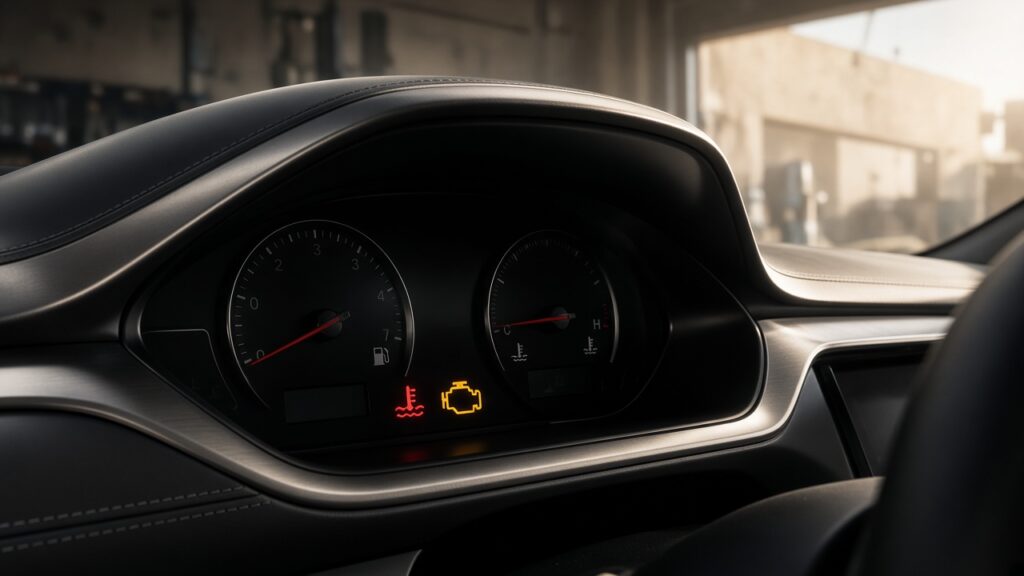
| Elevated Temperature Gauge / Digital Dashboard Alerts | Low coolant, cooling fan failure, or blocked radiator fins | Safely pull over, let the engine idle to cool down, check for visible leaks. Do not open a hot radiator cap. |
| Jeep Wrangler Engine Knocking Sound Dubai | Fuel pre-ignition, low oil viscosity, or worn lifters/bearings | Avoid high engine loads or heavy acceleration; seek professional engine diagnostics immediately. |
| Drops in Oil Pressure Dashboard Gauge at Hot Idle | Thermal breakdown of engine oil or a failing oil pump | Turn off the engine, check oil levels and condition, and arrange transportation to a specialized workshop. |
| White Smoke from Exhaust & Sweet Fluid Odor | Blown head gasket due to severe overheating | Do not drive the vehicle. Continuous operation can warp the cylinder head or hydro-lock the engine. |
| Sluggish Throttle Response & Lack of Power | Jeep Wrangler performance issues hot weather uae (heat soak/ECU pulling timing) | Reduce speed, deactivate unnecessary electrical/mechanical loads, and allow the powertrain to cool down. |
If you notice any of these jeep wrangler engine failure symptoms dubai, it is crucial to address them promptly to avoid irreversible internal engine damage.
5. Preventative Maintenance Framework for the Gulf Region
Standard, factory-recommended maintenance intervals designed for temperate climates are often insufficient for the extreme conditions of the Gulf. To ensure longevity, owners should follow a jeep wrangler heavy duty maintenance sharjah schedule tailored to the local environment.
| Maintenance Target | Severe Duty Gulf Interval | Key Local Requirement |
| Engine Oil & Filter | Every 5,000 Kilometers | High-shear, fully synthetic oil to combat thermal thinning |
| Radiator Core Service | Post-Offroad / Every 6 Months | Low-pressure reverse-flush to remove packed desert sand |
| Engine Coolant | Every 2 Years / 40,000 Kilometers | Strict usage of genuine OAT coolant and distilled water |
| Air Filtration Loop | Inspect Monthly / Clean Post-Dunes | Frequent filter cleaning or installation of a snorkel pre-cleaner |
| Drive Belts & Pulleys | Every 12 Months | Check for dry rot and micro-cracks from extreme underhood heat |
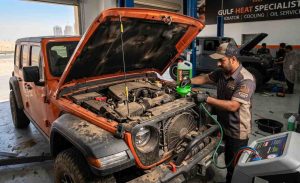
Oil and Fluid Optimization
-
Viscosity and Type: Use high-grade, fully synthetic engine oils formulated to resist thermal shear under high temperatures.
-
Intervals: For vehicles regularly driven off-road or idling in summer traffic, shorten oil change intervals to every 5,000 kilometers rather than the standard 10,000 kilometers.
-
Coolant Quality: Ensure the cooling system is filled with the correct formulation of OAT coolant mixed with distilled water. Periodically test the pH and boiling point of the fluid.
Radiator and Airflow Maintenance
-
Exterior Cleaning: After every desert trip, gently flush the radiator and AC condenser cores from the inside out using low-pressure water to remove trapped sand, dust, and debris. Avoid high-pressure washers, which can bend the delicate aluminum cooling cooling fins.
-
Cap and Seal Inspections: Inspect the radiator cap regularly. A weak spring or damaged seal cannot maintain the proper system pressure, lowering the boiling point of your coolant and leading to premature boil-overs.
Comprehensive Desert Driving Maintenance
Adhering to a dedicated jeep wrangler desert driving maintenance uae checklist before and after every excursion helps identify potential issues early:
-
Inspect Belts and Hoses: Check radiator hoses for soft spots, swelling, or brittle sections. Ensure the main serpentine belt is free of cracks and that the tensioner maintains proper alignment.
-
Monitor Differential and Gearbox Oils: Deep sand driving stresses the entire drivetrain. Check the front/rear differentials and transmission fluids regularly for signs of thermal discoloration or burnt odors.
-
Clean Air Filtration Systems: Fine desert dust quickly clogs standard air filters, restricting airflow, altering air-fuel ratios, and increasing internal operating temperatures. Clean or replace the air filter frequently, or consider upgrading to a high-quality pre-filter system.
6. Professional Engine Diagnostics and Specialized Repair Solutions
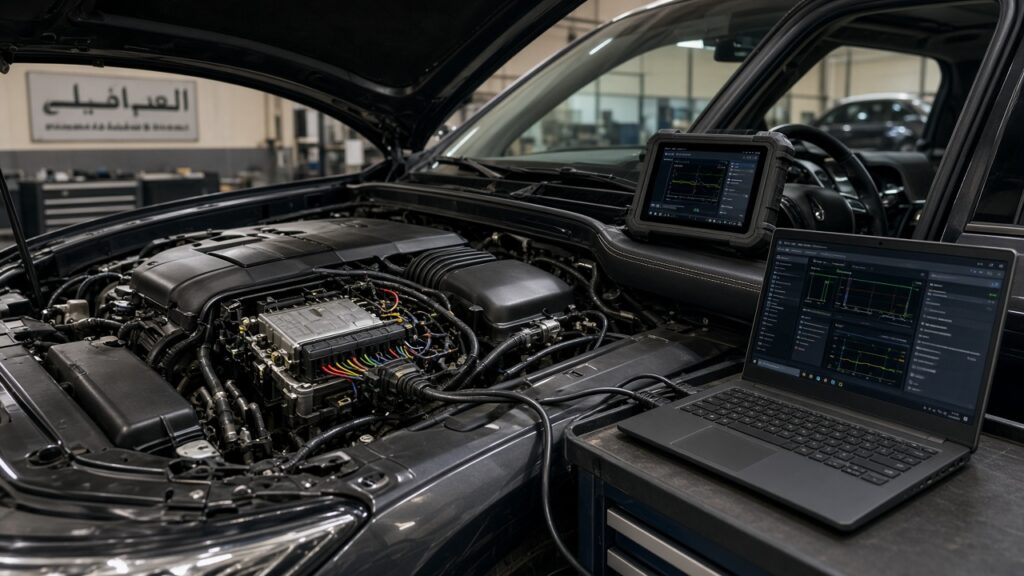
When an engine experiences performance drops or runs hot, basic troubleshooting may not find the root cause. Comprehensive jeep wrangler engine diagnostics dubai sharjah require specialized equipment and expertise to evaluate the entire powertrain.
Advanced Diagnostic Procedures
Experienced technicians look beyond dashboard warning lights by utilizing advanced testing methods:
-
Cooling System Pressure Tests: Pressurizing the cooling loop helps pinpoint hard-to-find leaks in plastic housings, coolant bypass lines, and the heater core.
-
Cylinder Chemical Block Testing: This test detects the presence of combustion gases within the cooling system, confirming whether a head gasket has failed due to overheating.
-
Live Sensor Data Analysis: Monitoring real-time data streams—such as coolant temperature sensors, oil temperature inputs, and fuel trim adaptations—helps identify issues like a lazy thermostat or an inefficient water pump before they cause visible overheating.
Choosing the Right Service Center
If your vehicle requires a jeep wrangler engine repair uae, selecting an experienced service partner is essential. Standard general workshops may lack the model-specific tools or deep understanding of Jeep powertrain engineering needed to properly resolve complex issues.
A dedicated jeep wrangler repair workshop uae offers factory-grade diagnostic tools, precise component torque specifications, and high-quality replacement parts designed to withstand the region’s harsh climate.
7. Elevate Your Engine Care at Smart Garage
At Smart Garage, we specialize in keeping your 4×4 trail-ready and fully optimized for the unique environmental challenges of the UAE. Whether you are dealing with persistent jeep wrangler cooling system problems dubai, performance drops during summer drives, or require specialized engine repairs, our team provides expert solutions tailored to your vehicle.
| Service Tier at Smart Garage | Diagnostic & Repair Capabilities | Long-Term Vehicle Benefit |
| Advanced Diagnostics | Live data streaming, cylinder block testing, thermal imaging | Catches micro-leaks and structural faults early |
| Cooling Upgrades | Heavy-duty all-aluminum radiators, high-flow water pumps | Expands thermal margins for worry-free desert driving |
| Preventative Care | Severe-duty fluid flushes, custom maintenance plans | Prevents premature oil breakdown and component wear |
| Specialized Engine Repair | Cylinder head machining, full rebuilds, valvetrain repair | Restores factory performance with region-hardened parts |
As a trusted best jeep wrangler garage dubai, our facilities feature advanced diagnostic technology and are staffed by experienced technicians who understand Jeep mechanical platforms inside and out. From preventative cooling system flushes to complete engine rebuilds, we use premium components and precise techniques to ensure your vehicle performs reliably on both city streets and remote desert dunes.
Don’t wait for a minor issue to turn into a costly breakdown. Contact Smart Garage today to schedule a comprehensive vehicle inspection, book your summer service, or explore tailored cooling system upgrades designed to keep your engine running smoothly all year round.
FAQs (Frequently Asked Questions)
Q1: Why does my Jeep Wrangler experience performance issues in hot weather in the UAE?
A: Extreme summer heat reduces air density, which can slightly lower engine volumetric efficiency. Additionally, when underhood temperatures spike, the engine control unit (ECU) may automatically retard ignition timing to prevent pre-ignition or knocking. This protective measure can result in noticeable jeep wrangler performance issues hot weather uae, such as reduced throttle responsiveness and lower overall power.
Q2: How often should I perform preventative engine maintenance if I drive in the desert regularly?
A: If you participate in regular off-roading, you should follow a jeep wrangler preventative maintenance uae schedule. This includes changing engine oil and filter every 5,000 km, inspecting the air filter after every major desert trip, and performing a thorough undercarriage and radiator flush to remove accumulated sand and debris.
Q3: What causes a sudden engine knocking sound on hot days in Dubai?
A: A jeep wrangler engine knocking sound dubai is often caused by fuel pre-ignition (detonation), which happens when internal cylinder temperatures become excessively high. It can also be caused by low oil pressure due to thermal oil thinning or mechanical wear on the valvetrain components. This symptom requires immediate professional diagnosis.
Q4: Can fine desert sand cause radiator problems in Sharjah?
A: Yes. Sand accumulates easily within the small spaces of the radiator and AC condenser fins. Over time, this sand combines with ambient moisture and oil residues to form a restriction layer that blocks airflow, directly leading to jeep wrangler radiator problems sharjah and subsequent engine overheating.
Q5: What should I do if my Jeep Wrangler’s temperature gauge starts spiking during a desert drive?
A: Immediately stop driving, turn the vehicle into the wind if safe to do so, and shift into neutral or park. Allow the engine to idle for a few minutes to keep coolant circulating while the fan helps lower temperatures. Never turn off the engine immediately during an extreme heat spike, as this can cause “heat soak” and potentially warp cylinder heads or blow gaskets. Never attempt to open the radiator cap while the system is hot.