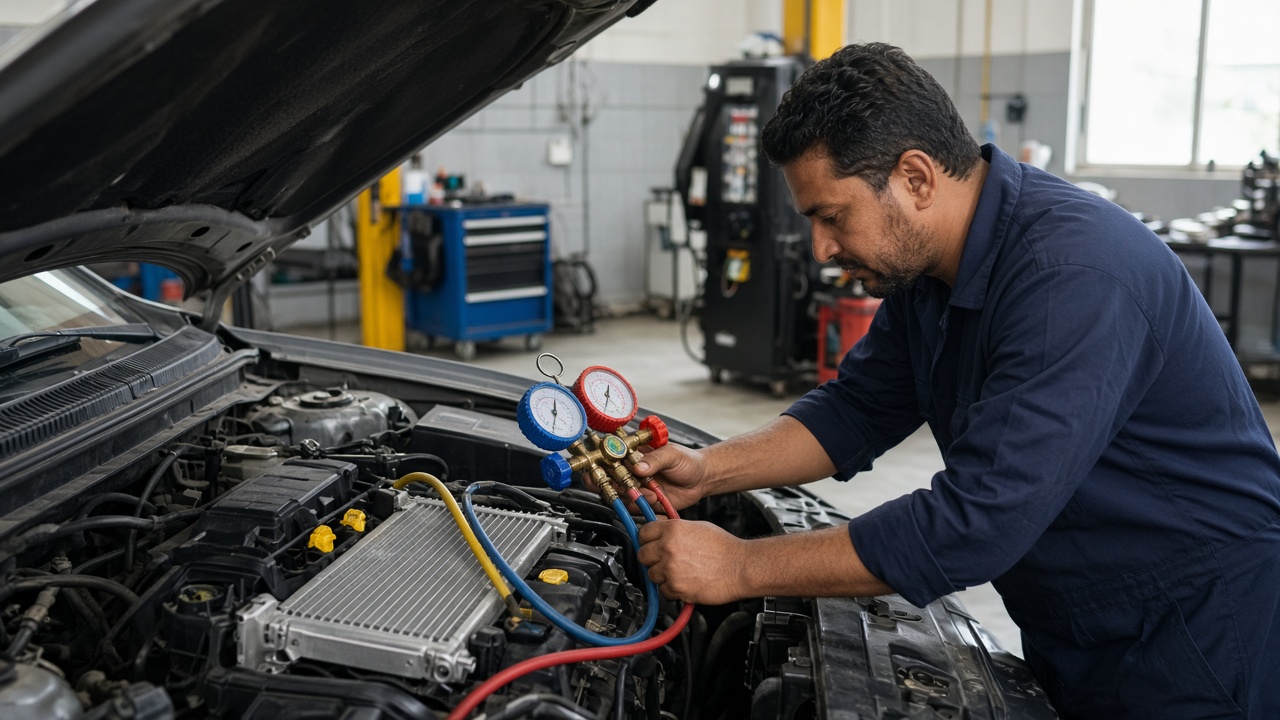
Driving in the United Arab Emirates presents a unique set of challenges for any vehicle. With ambient temperatures that frequently soar above 45°C (113°F) and humidity levels that can blanket the coastline in a dense fog, your car is constantly operating under “severe service” conditions. For the average driver in Dubai or Sharjah, the vehicle cabin is more than just a seat; it is a climate-controlled sanctuary essential for survival. However, when that sanctuary is invaded by a foreign, unpleasant odor, it is rarely a coincidence. It is an olfactory distress signal a warning flare sent up by your car’s mechanical or electrical systems indicating that something is wrong.
Unlike a “Check Engine” light, which can be triggered by a loose gas cap or a minor sensor glitch, a distinct smell usually indicates a physical event is currently taking place. Whether it is a chemical reaction, a biological growth, or the friction of failing materials, your nose is often the first diagnostic tool to detect a problem. In many cases, you can smell a fault hundreds of kilometers before a warning light illuminates on your dashboard. Ignoring these scents in the unforgiving heat of the Gulf is a gamble that often results in stranded vehicles on the side of Sheikh Zayed Road, waiting for a recovery truck in blistering heat.
At Smart Garage, we believe that an informed driver is a safe driver. While modern cars are complex machines, the chemistry behind these odors is straightforward. Whether it’s the acrid scent of burning rubber or the sweet deception of leaking coolant, these odors are your vehicle’s cry for help. Ignoring them in our harsh climate can lead to catastrophic engine failure, which is why sticking to a strict schedule of General Maintenance & Repairs is non-negotiable for every car owner in Dubai and Sharjah. In this comprehensive guide, we will decode the most dangerous smells, explain why the UAE climate makes them worse, and provide actionable solutions to keep your car fresh and road-worthy.
1. The “Musty Basement” Smell: Biological Warfare in Your AC
The Anatomy of the Stench
Perhaps the most common complaint we receive during the transition from the mild UAE winter to the scorching summer is a pervasive, damp odor often described as “dirty socks” or a “wet dog.” This isn’t just an annoyance; it is a health hazard. This smell is caused by the growth of mold, mildew, and bacteria deep within your vehicle’s Heating, Ventilation, and Air Conditioning (HVAC) system. Specifically, it originates from the evaporator core—a small radiator-like component buried behind your dashboard that gets freezing cold to cool the air.
Why It Happens in the UAE
The science behind this is simple thermodynamics. When you drive in Dubai’s humid coastal air, condensation forms on the freezing cold fins of your AC evaporator, much like water droplets on a cold soda can. In a dry climate, this moisture evaporates. However, in the UAE, the air is laden with fine organic dust and silica sand. This dust bypasses older cabin filters and settles on the wet evaporator, creating a nutrient-rich “mud” or bio-film. When you park your car, the dark, damp, and now warm environment becomes a perfect incubator for fungi like Cladosporium and bacteria.
Expert Anecdote: “I recently worked on a luxury SUV that had a terrible smell every time the AC started,” recalls a lead technician at Smart Garage. “The owner thought a food scrap was rotting under the seat. When we used an endoscopic camera to look into the vent system, the evaporator was completely coated in a black, fuzzy mold. The owner was essentially breathing in spores every time he drove. A simple ‘air freshener’ spray would never have fixed that; it required a chemical flush.”
Health Implications and The Fix
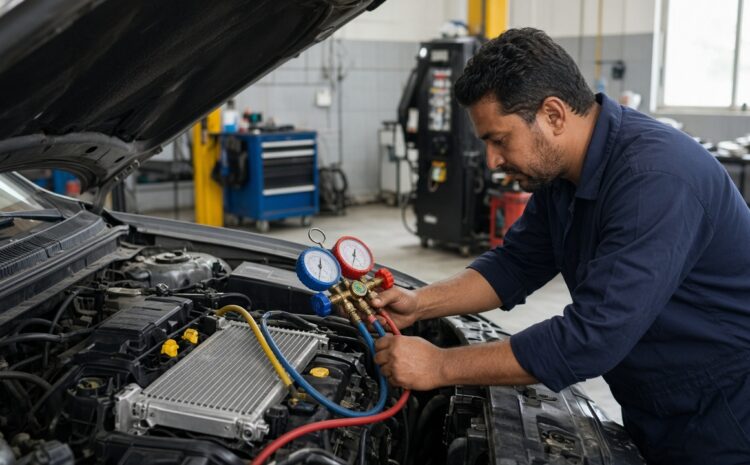
Breathing these microbial volatile organic compounds (mVOCs) can trigger allergies, asthma, and sinus infections. In extreme cases, standing water in the system can harbor Legionella bacteria. To solve this, you need more than a perfume. You need a professional evaporator cleaning service that utilizes foam cleaners to physically break down the bio-film, followed by clearing the AC drain tube to ensure water can escape. Replacing your Cabin Air Filter with an activated carbon version is also a critical preventative step.
2. The “Sweet Syrup” Smell: A Deceptive Danger
The Maple Syrup Paradox
It is one of the cruel ironies of automotive mechanics that one of the most lethal fluids for your engine smells like breakfast. Ethylene glycol, the active ingredient in engine coolant (antifreeze), has a distinctively sweet, sugary aroma. If you catch a whiff of maple syrup or fruit candy while driving, or immediately after parking, do not smile—your car is bleeding its lifeblood.

Diagnosing the Leak
Coolant circulates through your engine to absorb extreme heat and dissipate it through the radiator. The system is a sealed loop; it should never lose fluid. If you smell it, there is a leak.
- Smell outside the car: Usually points to a leaking radiator cap, a cracked radiator tank (common in UAE heat where plastic becomes brittle), or a loose hose clamp.
- Smell inside the car: If the sweet smell is accompanied by a greasy fog on the inside of your windshield or wet floor mats in the passenger footwell, your heater core has likely failed.
The Consequences of Ignoring It
In 50°C weather, a coolant leak is a ticking time bomb. As pressure drops, the coolant’s boiling point lowers. This can lead to localized boiling inside the engine block, creating steam pockets that warp aluminum cylinder heads. A small hose repair that costs a few hundred Dirhams can quickly spiral into a blown head gasket costing thousands if ignored. If you smell syrup, check your temperature gauge immediately and pull over if it rises.
3. The “Rotten Egg” Stench: Sulfur and Catalytic Failure
The Chemistry of H2S
A smell resembling rotten eggs or raw sewage is unmistakable and deeply offensive. This is the scent of Hydrogen Sulfide (H2S), a byproduct of sulfur found in trace amounts in gasoline. Under normal operations, your car’s catalytic converter processes this sulfur, converting it into odorless sulfur dioxide. When you smell rotten eggs, it means the converter is failing to do its job.
Why Converters Fail
The catalytic converter is a sensitive component. The most common cause of failure is the engine “running rich,” meaning too much fuel is being injected into the cylinders. This excess raw fuel enters the exhaust system and ignites inside the converter, causing it to overheat and melt its internal ceramic honeycomb structure. In the UAE, a dirty Mass Air Flow (MAF) sensor—coated in fine desert sand—is often the culprit, tricking the computer into injecting too much fuel.
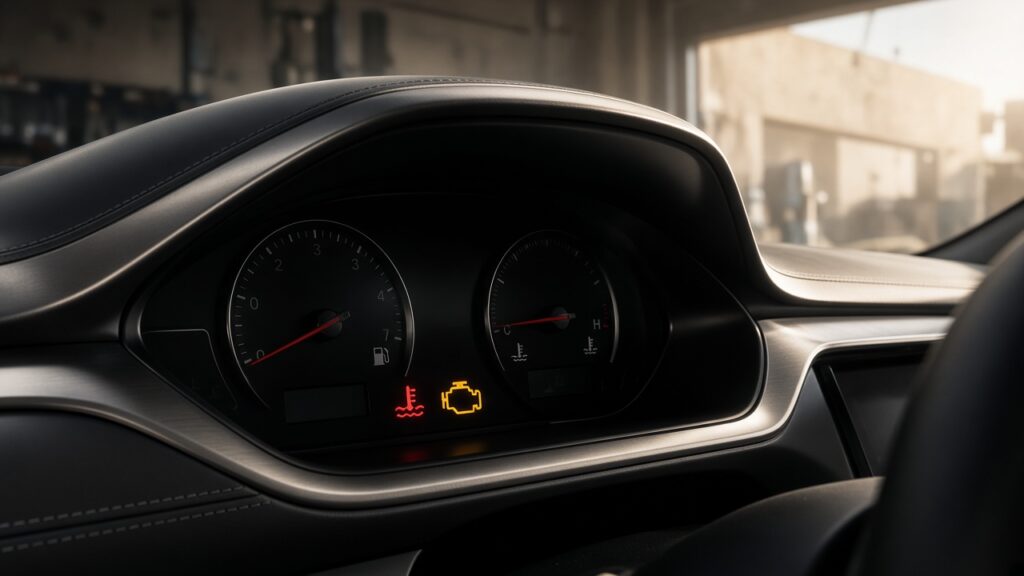
Actionable Tip: If you smell rotten eggs, look at your dashboard. Is the “Check Engine” light flashing? A flashing light indicates an active misfire that is destroying your converter right now. Stop driving immediately to save the component. Visit Smart Garage for a diagnostic scan to check your fuel trims and O2 sensors.
4. The “Burning Rubber” Warning: Belts, Pulleys, and Stress
The Friction Factor
The acrid smell of burning rubber triggers a primal alarm in the brain, and for good reason. In a vehicle, this smell indicates that a rubber component is contacting hot metal or spinning against a seized pulley. It is the smell of friction generating intense heat.
The Usual Suspects
- Slipping Serpentine Belt: In high temperatures, rubber belts expand. If your belt tensioner is weak, the belt will slip on the pulleys, especially when the AC compressor kicks in high gear. This friction burns the belt surface.
- Seized AC Compressor: If the bearing in your AC compressor locks up, the belt will be dragged over the stationary pulley, creating smoke and a burning smell within seconds.
- Rubbing Tires: If you have recently hit a large speed bump or pothole, a plastic fender liner may be rubbing against your tire. This smell will be most potent immediately after you stop the car.
Never ignore a burning rubber smell. If a drive belt snaps, you will lose power steering, your alternator will stop charging, and your water pump will stop circulating coolant, leading to rapid overheating.
5. The “Burning Oil” Smell: Acrid and Choking
External Leaks vs. Internal Burning
Burning oil has a thick, heavy scent that coats the back of your throat. It is distinct from the sharp tang of rubber.
Scenario A: The Valve Cover Leak. This is the most common cause. The gasket sealing the top of your engine dries out in the UAE heat and cracks. Oil weeps out and drips directly onto the hot exhaust manifold below. This creates immediate smoke and a strong smell, usually noticed when stopped at a traffic light. This is a fire hazard.
Scenario B: Internal Consumption. If the smell is coming from the tailpipe and is blue-ish in color, your piston rings or valve stem seals are worn, and the engine is burning oil during combustion. This requires major engine work.

6. The “Raw Gasoline” Alarm: Immediate Evacuation
The Most Dangerous Odor
If your car smells like a petrol station, you are in immediate danger. Gasoline fumes are highly volatile and explosive. This smell usually indicates a leak in the fuel injection line, a cracked fuel tank, or a saturated charcoal canister in the emissions system. Unlike other smells which signal upcoming repairs, this signals an immediate safety threat to life and property.
Emergency Protocol: Do not continue to drive. Do not smoke. Turn off the engine immediately and move away from the vehicle. Call a recovery service to transport your vehicle to a workshop. The heat of the engine bay combined with leaking fuel is a recipe for a vehicle fire.
7. The Economic Reality: Why Maintenance Matters
Many drivers in the UAE practice what we call “reactive repair”—fixing things only when they break. However, the costs associated with the smells listed above prove this is a flawed strategy. A coolant flush service might cost a few hundred Dirhams; replacing a warped cylinder head caused by a neglected leak costs thousands. Changing a serpentine belt is a minor expense; repairing an engine that overheated because a snapped belt disabled the water pump is a financial disaster.
Our “Severe Service” environment requires a proactive approach. Manufacturers design cars for global averages, not for the specific combination of 90% humidity and 50°C heat found here. This is why trusted local experts recommend shorter intervals for fluid changes and inspections.
Summary of Actions
- Trust Your Nose: If it smells damp, sweet, or acrid, do not ignore it.
- Check Fluids Weekly: A quick visual check of your coolant and oil levels can save your engine.
- Service Before Summer: Have your AC evaporator cleaned and your belts inspected before the peak heat of June hits.
- Seek Professional Help: Modern cars require advanced diagnostics to pinpoint the exact source of a smell without guessing.
Conclusion
Your vehicle is constantly communicating with you. While it uses lights and gauges for some data, it often uses scents to warn you of the most critical failures. In the extreme climate of the UAE, these warnings are time-sensitive. A small leak today is a breakdown tomorrow. By understanding what these odors mean—from the musty warning of moldy AC to the sweet danger of coolant leaks you can take control of your vehicle’s health.
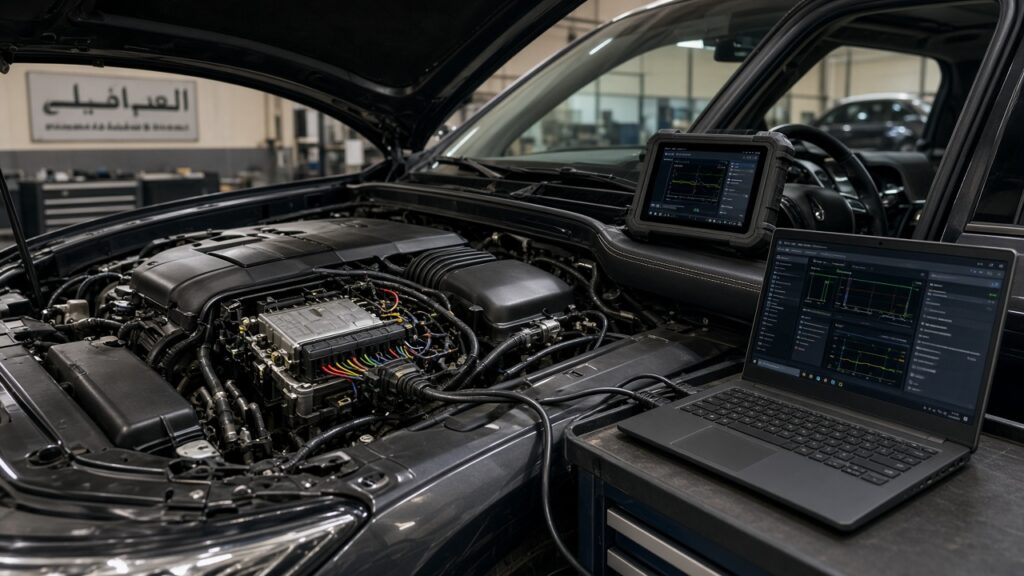
Don’t let a strange smell turn into a roadside emergency. At Smart Garage, we utilize state-of-the-art diagnostic tools, smoke machines for leak detection, and endoscopic cameras to find the root cause of any odor. Our team of seasoned experts is ready to perform the essential General Maintenance & Repairs your car needs to survive and thrive in the desert heat.
Is your car trying to tell you something? Contact Smart Garage today to schedule a comprehensive inspection. Let us help you keep your car smelling fresh, running cool, and driving safely.