The skyline of Dubai shrinks in your rearview mirror, replaced by an ocean of amber waves. The air changes, carrying the scent of hot sand and distant adventure. For those fortunate enough to pilot a Range Rover, this transition from the urban jungle to the Sharjah desert is a pilgrimage. It is a journey to test the very DNA of a vehicle marketed as the world’s most capable luxury SUV. But before you point your grille towards the dunes of Al Badayer and the challenge of “Big Red,” a sobering truth must be acknowledged: the desert does not discriminate between a showroom shine and mechanical neglect.
The UAE’s desert environment is uniquely punishing. It is a crucible of fine, abrasive silica, ambient temperatures that soar past 50 degrees Celsius, and driving conditions that demand sustained peak performance from your vehicle. This is not a casual Sunday cruise; it is an extreme sport for your machine. To be truly “Sharjah-Ready,” your Range Rover requires a level of preparation that transcends the standard service schedule. This comprehensive guide delves deep into the essential checks that separate a triumphant day in the dunes from a costly and dangerous recovery operation.
The Thermal Gauntlet: Mastering Your Engine’s Cooling System
When you begin your ascent of a towering dune, your Range Rover’s 2.5-tonne mass is fighting against gravity and deep sand. The engine, already working in extreme ambient heat, is starved of the cooling airflow it would receive on a highway. This creates a perfect storm for overheating, the single most common cause of desert breakdowns.
Your vehicle’s cooling system is its lifeline, and preparing it demands meticulous attention. It begins with the lifeblood itself: the coolant. A simple visual check is insufficient. The coolant mixture must be precisely balanced, typically a 50/50 ratio of antifreeze and distilled water. This specific blend is engineered not just to prevent freezing, which is irrelevant here, but to raise the boiling point of the fluid. In the desert, you need your coolant to remain a liquid and continue its cooling duties well beyond the standard 100 degrees Celsius. Pure water, or a diluted mix, will boil over, turning into useless steam and leaving your engine to cook itself.
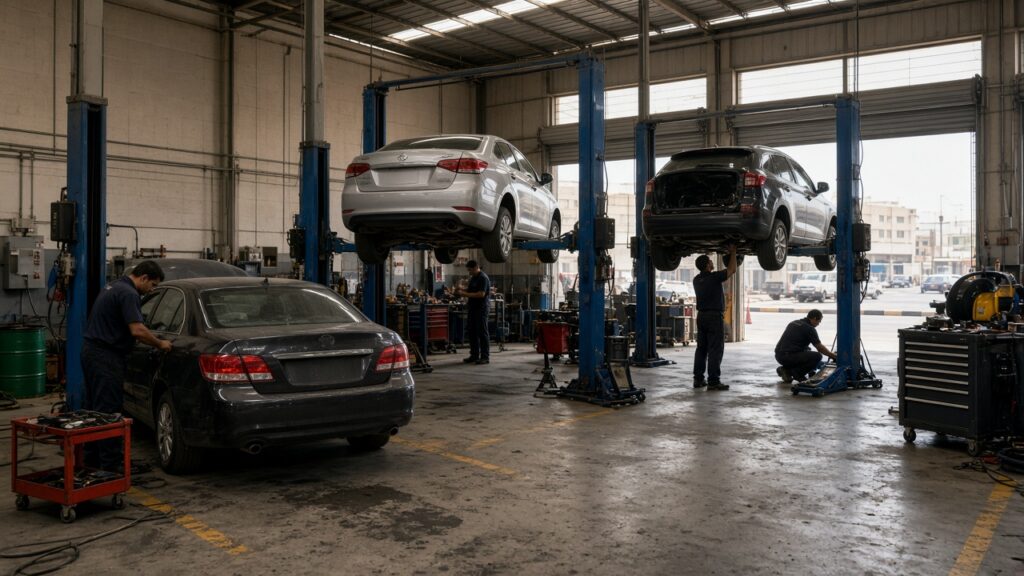
However, the fluid is only part of the equation. The front grille of your Range Rover acts as a radiator, quite literally. The air conditioning condenser and the main radiator are densely packed fins designed to dissipate heat. After months of city driving, this vital component becomes a carpet of compressed dust, sand, and insects. This layer acts as high-tech insulation, trapping heat inside the engine bay rather than releasing it. A professional desert service will include a careful and thorough cleaning of these fins, often using compressed air or low-pressure water to restore the radiator’s ability to breathe. Following this, a pressure test of the entire system—from the radiator cap to every single rubber hose—is critical. Micro-fractures that seal themselves under normal driving pressure can burst open under the extreme conditions of dune bashing, leading to a sudden and catastrophic loss of coolant far from any help.
The Electronic Nervous System: Securing Your Luxury SUV’s Brain
A modern Range Rover is less a mechanical vehicle and more a sophisticated network of computers on wheels. Every function, from the silky throttle response to the magic-carpet air suspension, is governed by electronic control units (ECUs) and a web of sensors. This complexity delivers unparalleled on-road luxury and off-road capability, but it also introduces a significant vulnerability: the desert dust. The fine, powdery sand that makes the Sharjah desert so beautiful is the arch-nemesis of electrical connections. It is invasive and abrasive. It can creep into seemingly sealed connectors, causing corrosion, intermittent signal loss, and phantom faults that can disable critical systems at the worst possible moment.
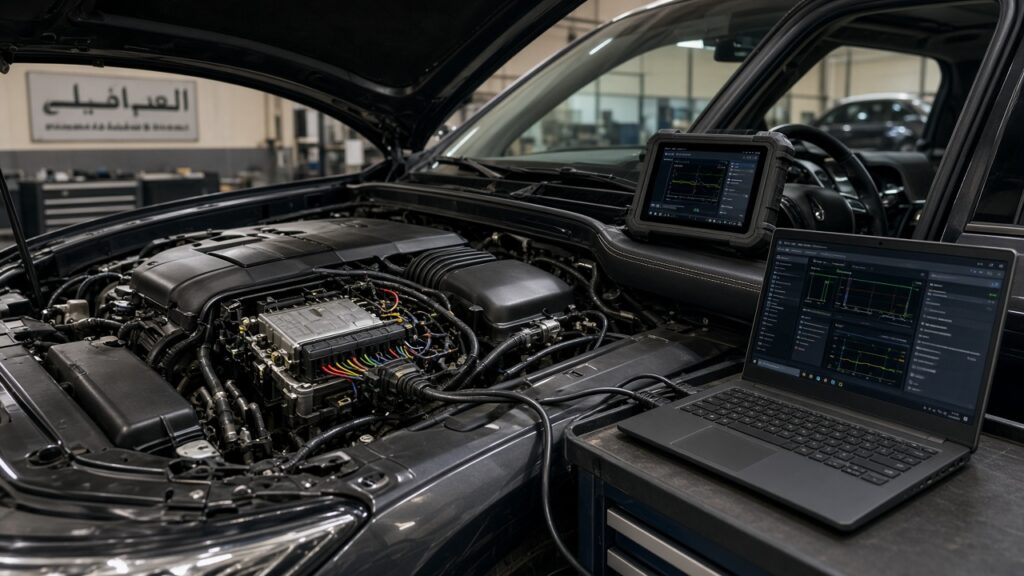
This is why, well before you air down your tires, you should search for a Car electrician near me who specializes in the intricacies of Land Rover electronics. A general mechanic may lack the advanced diagnostic tools required to peer into the soul of your vehicle. The process begins with the heart of the electrical system: the battery. Extreme heat accelerates the chemical reaction inside a battery, which can lead to overcharging and a dramatically shortened lifespan. A battery that provides a strong start in a cool garage can fail completely under the scorching heat of a closed hood after a long climb. A proper load test is the only way to verify its true health. Simultaneously, the alternator’s output must be verified to ensure it is properly charging the system, especially during low-RPM driving where output can dip.
Beyond the power source, a qualified auto electrician will perform a comprehensive diagnostic scan, searching for fault codes stored in the vehicle’s memory. These codes might relate to the Terrain Response 2 system, which could be confused by a faulty wheel speed sensor, or the throttle position sensor, which is critical for maintaining momentum in soft sand. Furthermore, a physical inspection of wiring harnesses, particularly those near the suspension components and in the engine bay, is necessary to identify wires that may have chafed against the chassis or connectors that have become loose. Ensuring the integrity of this electronic nervous system is the non-negotiable foundation of desert preparedness, as a single electrical glitch can leave you stranded as surely as a broken axle.
The Pneumatic Backbone: Fortifying Air Suspension for the Dunes
The plush, commanding ride that defines the Range Rover experience is largely attributable to its advanced air suspension system. In the desert, this system transforms from a luxury feature into a vital off-roading tool. The ability to raise the vehicle to its maximum off-road height provides the ground clearance necessary to crest sharp dunes without beaching the chassis. However, this sophisticated system is also one of the most vulnerable to the harsh desert environment.
The air suspension relies on rubber air springs (struts) at each wheel, filled with pressurized air from a compressor. The fine sand kicked up by the tires and the general dust of the environment act as an abrasive, slowly degrading the rubber and attacking the seals in the compressor and valve block. A slow leak that is barely noticeable in the city becomes a major problem in the desert, where the system is cycled constantly. If a strut fails or the compressor cannot keep up with the demand, the vehicle will sink onto its bump stops, rendering it immobile and incredibly difficult to recover without causing further damage.
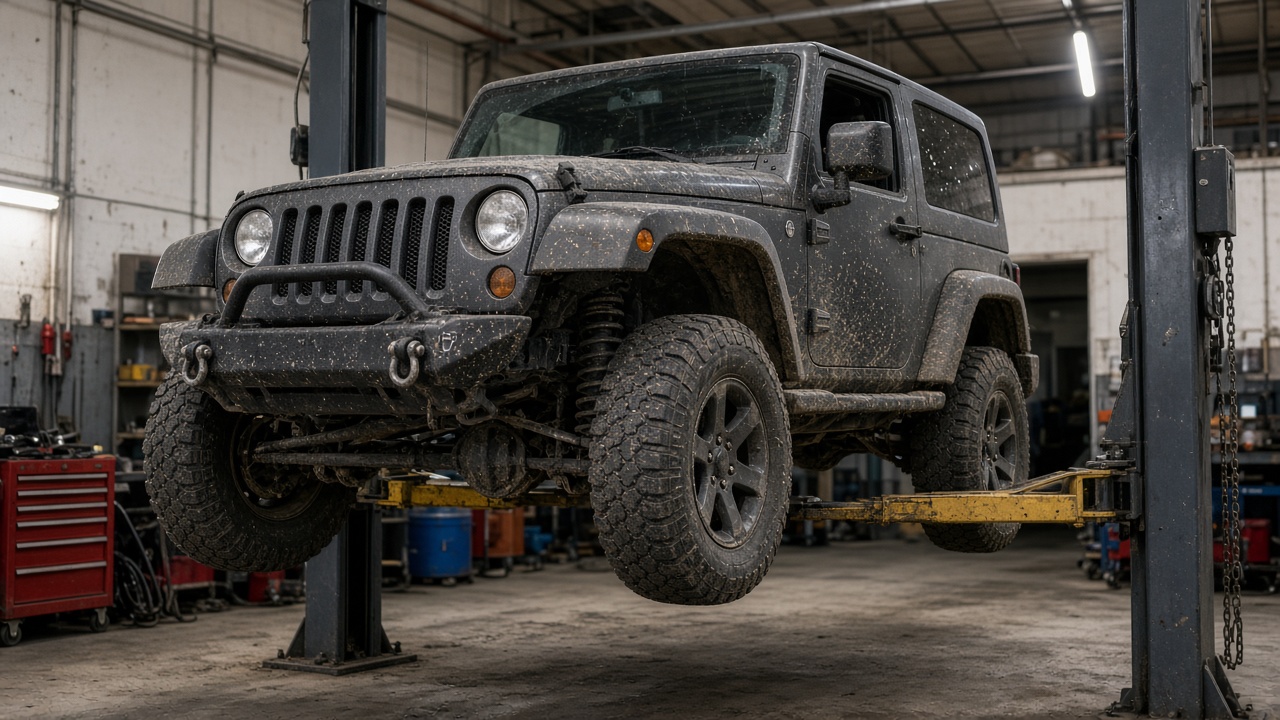
Preparing the suspension involves a meticulous inspection. Technicians will scrutinize each air strut for cracks, perishing of the rubber bellows, or any tell-tale signs of leakage, such as a fine mist of oil around the seals. The compressor, which works overtime during a day of off-roading, must have its performance tested. Its dryer unit, which removes moisture from the air to prevent internal corrosion, should be checked and replaced if saturated. Finally, the height sensors, small arms located near each wheel that tell the suspension how high to go, must be cleaned of accumulated grime and tested to ensure they are providing accurate data. A failure here could mean the difference between gliding over a dune and high-centering on its crest.
The Foundation of Traction: Tires, Wheels, and the Art of Flotation
It is a common misconception among newcomers that aggressive, mud-terrain tires are the key to desert driving. In the soft, deep sand of the UAE, the opposite is often true. The goal is not to dig down to find traction, but to float on top of the surface. Your tires are the sole point of contact with the terrain, and their condition and preparation are arguably the most critical safety factor of your entire trip.
The preparation begins with a thorough physical inspection. Each tire must be checked for cuts, bulges in the sidewall, or uneven wear patterns that indicate an underlying suspension or alignment issue. A compromised sidewall is a ticking time bomb; a sharp rock or a sudden impact in the dunes can cause a blowout that is both dangerous and extremely difficult to manage. This is also the time to ensure your full-size spare tire is in equally perfect condition, and that the vehicle’s jack and tools are present and functional. A can of tire sealant is utterly useless for a sidewall tear in the middle of the desert.
The true transformation for desert driving happens with the air pressure. For highway driving, your tires are inflated to a high pressure (typically 35-40 PSI) to reduce rolling resistance. In the sand, this high pressure causes the tire to cut through the soft surface like a knife, sinking the vehicle and requiring immense power to move. By significantly reducing the pressure—typically to between 15 and 18 PSI for a heavy vehicle like a Range Rover—the tire sidewall flexes, and the contact patch (the “footprint” on the ground) expands dramatically. This wider, softer tire allows the vehicle to “float” on top of the sand rather than plowing through it. A professional service can also install heavy-duty valve stems that make the process of deflating and, crucially, re-inflating after the trip much faster and safer, and are less prone to damage at low pressures.
Drivetrain Resilience: Protecting Transmissions and Differentials
While the engine gets the glory, the drivetrain does the heavy lifting. The transmission, transfer case, and differentials are responsible for taking the engine’s power and delivering it to the wheels in a usable way. The conditions of desert driving—low-speed, high-torque maneuvers, and constant wheel slip—place stresses on these components that are unlike anything they experience on the road.
The automatic transmission is particularly susceptible to heat. During dune driving, the transmission often stays in a lower gear for extended periods, creating immense internal friction and heat. The automatic transmission fluid (ATF) serves a dual purpose: it lubricates the intricate maze of gears and clutches, and it acts as the system’s primary coolant. If the ATF is old, burnt, or low, its ability to perform both functions is severely compromised. Overheated transmission fluid loses its lubricating properties and can cause the transmission to slip, shudder, or fail entirely, leaving you without drive in a location where a tow truck cannot reach you. A desert preparation service must include checking the condition and level of the transmission fluid.
Similarly, the transfer case (which splits power between the front and rear axles) and the differentials (which allow the wheels on the same axle to turn at different speeds) contain their own gear oil. These components are often out of sight and out of mind, but they are filled with gears that are under immense stress. Over time, the gear oil breaks down and becomes contaminated with microscopic metal particles from normal wear. Under the extreme loads of the desert, this degraded oil offers insufficient protection, leading to premature wear and potential failure. Ensuring all these lubricants are fresh and at the correct level is an investment in the mechanical longevity of your vehicle.
Breathing Clean: The Critical Role of the Air Intake System
Your engine is essentially a powerful air pump. It sucks in air, mixes it with fuel, and ignites the mixture to create power. In the desert, the air it is “breathing” is laden with fine, abrasive silica sand. The only thing standing between this sand and the precision-machined surfaces of your engine’s cylinders, pistons, and rings is the air filter.
Driving in the desert with a dirty or clogged air filter is one of the fastest ways to ruin an engine. A clogged filter restricts airflow, starving the engine of oxygen. This leads to a significant loss of power—the last thing you need when trying to maintain momentum up a steep dune. If the filter is so dirty that it collapses or tears, or if there is a gap in the air intake tract, unfiltered sand will be sucked directly into the engine. This acts like sandblasting inside your cylinders, rapidly wearing down the precise components and leading to a loss of compression, increased oil consumption, and eventual engine failure.
Before any desert trip, the air filter should be replaced with a high-quality, brand-new unit. It is not enough to simply tap it clean. Furthermore, a technician must inspect the entire air intake pathway, from the grille intake to the throttle body. All clamps and connections must be tight, and the plastic ducting must be free of cracks. This ensures that every molecule of air entering your engine has passed through the filter, protecting your investment from internal destruction.
The Human Element: Air Conditioning and Post-Trip Care
Finally, being “Sharjah-Ready” also means considering the human element. In the searing heat of the UAE summer, a functioning air conditioner is not a luxury; it is a critical piece of safety equipment. The risk of heat exhaustion and heatstroke is real and dangerous. The AC system is also mechanically linked to the engine’s cooling, with its condenser sitting directly in front of the radiator. A poorly performing AC system can put extra thermal load on the engine. A pre-trip check should verify that the system is blowing ice-cold air, that the refrigerant pressure is correct, and that the cabin air filter is clean to ensure maximum airflow for the occupants.
However, your responsibility doesn’t end when you coast back onto the tarmac. The sand that provided the fun will now try to destroy your car. A comprehensive post-trip routine is essential. The first stop should be a car wash with an undercarriage spray. High-pressure water must be used to blast accumulated sand from the chassis, suspension arms, brake calipers, and exhaust system. Left in place, this sand acts as a grinding paste, accelerating wear on every moving part it touches. The tires must be immediately re-inflated to their correct road pressure to prevent overheating and damage on the highway. Finally, the air filter that protected your engine all day should be checked and likely replaced, as it will be clogged with the evidence of your adventure. By respecting both the preparation and the recovery, you ensure that your Range Rover remains ready for the next time the dunes call.