Home About Services Brands Blog Contact
April 07, 2026 • car wiring repair

The Rise of AI-Powered Vehicle Inspections: What UAE Owners Need to Know

United Arab Emirates is currently navigating a period of profound technological disruption, characterized by the transition from traditional, labor-intensive maintenance methodologies to an advanced, data-centric ecosystem powered by artificial intelligence. This shift is not merely an isolated industrial trend but a strategic component of the UAE National Strategy for Artificial Intelligence 2031, which aims to position the nation as a global leader in AI adoption across vital sectors, including transportation and smart infrastructure. As vehicle complexity escalates through the integration of electric drivetrains, autonomous driver-assistance systems (ADAS), and intricate sensor networks, the methodologies for inspecting and certifying these machines have undergone a parallel evolution. For the millions of vehicle owners across the Emirates, this transition represents a movement toward unprecedented transparency, where the subjectivity of human assessment is replaced by the precision of computer vision and machine learning.

The Environmental Catalyst for Advanced Diagnostics

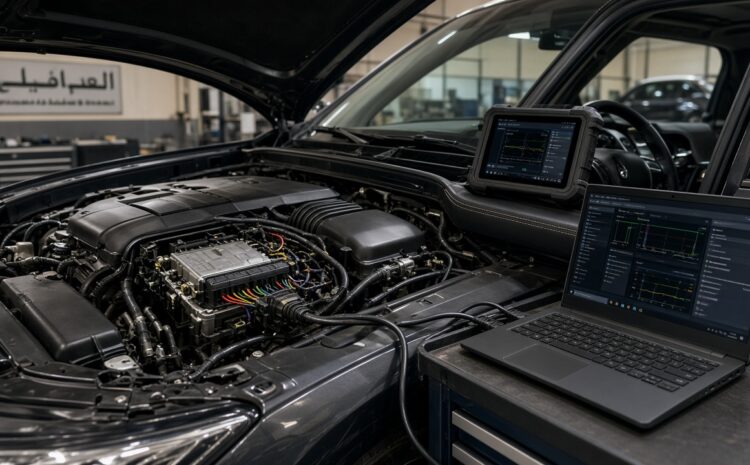
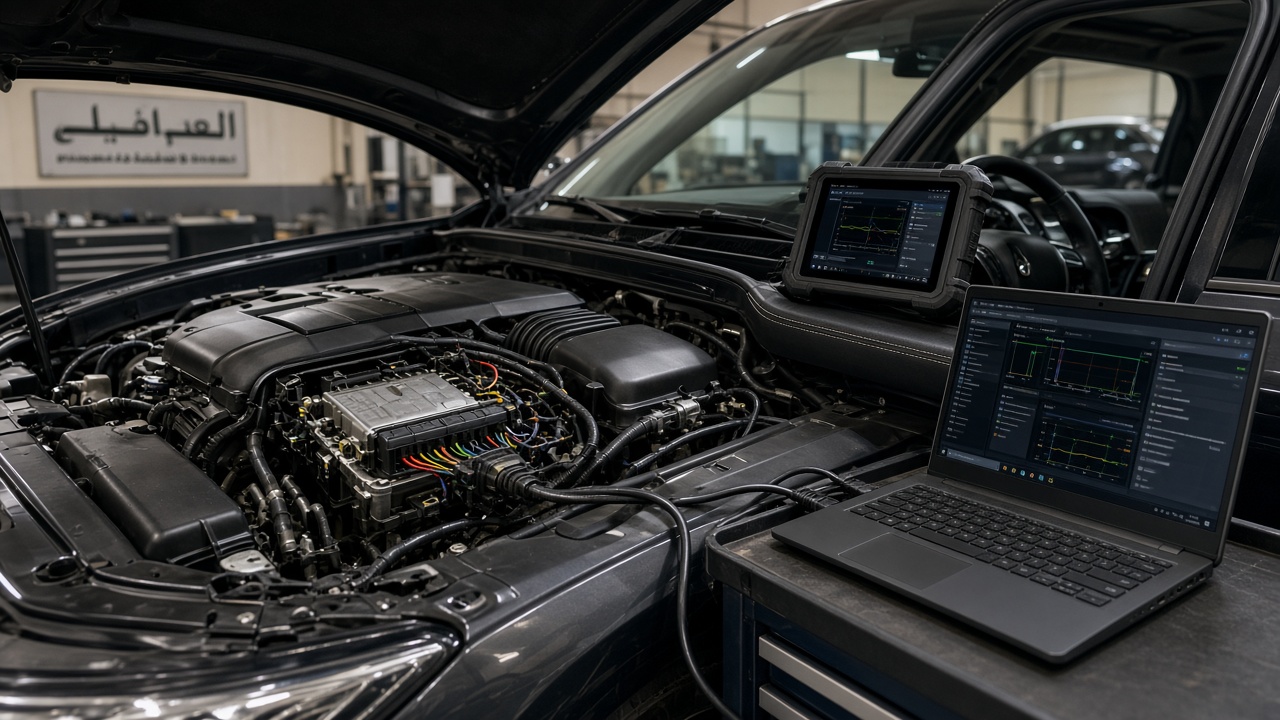
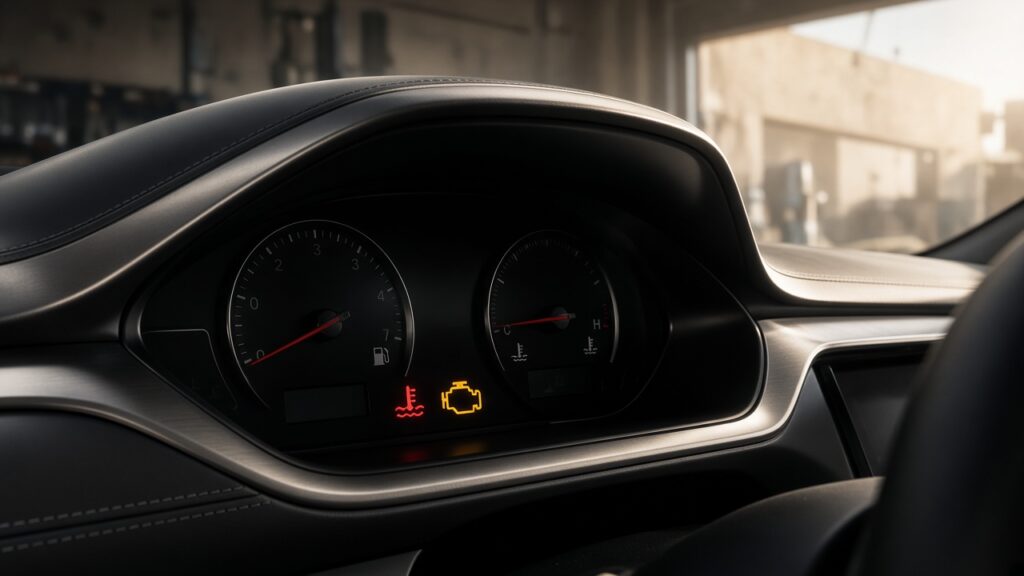
The unique climatic challenges of the Arabian Peninsula serve as a primary driver for the adoption of automated inspection technologies. For residents frequently requiring a Car Electrical repair Sharjah, understanding how extreme heat affects vehicle longevity is essential, as temperatures often exceeding 45 degree celcius   place immense stress on sensitive electronic control units and wiring harnesses. Traditional manual inspections often fail to detect the early stages of thermal degradation, which can lead to catastrophic electrical failures if left unaddressed. AI-powered systems, however, utilize thermal imaging and high-resolution sensors to identify abnormal heat signatures and micro-fissures in insulation that are invisible to the naked eye.

The impact of the local environment extends beyond mere temperature. The high concentration of fine particulate matter and humidity in coastal regions like Sharjah and Dubai accelerates the wear of mechanical and electrical components. Sand ingress can compromise air filtration systems and abrasive wear on suspension components, while humidity promotes oxidation within electrical connectors. These factors necessitate a more rigorous and frequent inspection protocol than is standard in more temperate climates. AI-driven platforms provide a solution by establishing a consistent baseline for vehicle health, allowing for the detection of minute deviations in performance that indicate the onset of environment-related wear.

Environmental Factor Specific Impact on Vehicles AI Detection Mechanism
Extreme Heat ($>40^{\circ}C$) Battery fluid evaporation, wiring embrittlement, AC strain

Thermal scanning and battery health algorithms

Dust and Sand Particulates Abrasive wear on brakes, suspension, and filtration

360-degree high-resolution imaging for surface erosion

High Salinity/Humidity Corrosion of undercarriage and electrical terminals

Under-vehicle scanning with anomaly detection

Heavy Urban Traffic Transmission heat soak and brake pad glazing

Predictive maintenance based on real-time sensor data

Technical Architecture of Automated Inspection Systems

The sophistication of modern AI vehicle inspections is rooted in the convergence of multiple sensing modalities, a process often referred to as sensor fusion. At the core of this technology is computer vision, which employs Convolutional Neural Networks (CNNs) to interpret visual data with superhuman accuracy. These systems are trained on millions of images encompassing a vast spectrum of vehicle makes, models, and potential defects, enabling them to recognize irregularities such as fluid leaks, structural cracks, or uneven tire wear within seconds of a vehicle passing through an inspection booth. This “MRI for cars” approach provides a comprehensive digital twin of the vehicle’s current state.

A critical component of these systems is Light Detection and Ranging (LiDAR), which uses laser pulses to create highly accurate three-dimensional maps of the vehicle’s exterior and undercarriage. LiDAR is particularly effective at detecting frame damage or structural misalignments that might be missed during a traditional visual check, especially if the vehicle has undergone cosmetic repairs following an accident. When combined with 360-degree high-definition cameras, these systems can capture detailed imagery of every surface, providing objective visual proof of a vehicle’s condition that can be shared instantly with owners or insurance adjusters.

The integration of edge computing allows these scans to be processed locally and instantaneously, providing immediate feedback without the latency associated with cloud-based processing. This is vital for high-throughput environments such as government testing centers or large-scale automotive dealerships. Furthermore, advanced systems incorporate thermal imaging analysis to monitor the health of the braking system, exhaust, and electrical components, identifying “hot spots” that suggest mechanical resistance or electrical short-circuits. This multi-layered diagnostic approach ensures that no aspect of vehicle safety is overlooked.

Government Initiatives and Public Sector Leadership

The UAE government has been a pioneer in the deployment of AI for public infrastructure and safety. Dubai’s Roads and Transport Authority (RTA) has taken a lead role, recently showcasing 11 major AI-driven projects, including the “AutoCheck 360” system. This initiative represents a milestone in government service innovation, utilizing computer vision and the Internet of Things (IoT) to standardize vehicle inspections across the Emirate. The implementation of AutoCheck 360 has demonstrated a remarkable improvement in operational efficiency, reducing the standard vehicle inspection time from 17 minutes to just 7 minutes, thereby significantly enhancing the customer experience and reducing congestion at testing facilities.

Beyond consumer vehicle testing, the RTA has applied AI to the maintenance of the city’s rail infrastructure. The Automated Rail Infrastructure Inspection System (ARIIS) utilizes a robotic platform equipped with LiDAR and 3D imaging to monitor the Dubai Metro tracks. ARIIS has been instrumental in optimizing maintenance workflows, reducing the manual labor required for track inspections by 75%, and increasing the frequency and accuracy of safety checks. Such systems are critical for ensuring the reliability of public transport in an environment where thermal expansion and sand accumulation can pose risks to rail integrity.

In Abu Dhabi, the City Municipality has expanded its fleet of smart inspection vehicles to 27 units as part of a Unified Inspection System. These vehicles, equipped with advanced automated analysis tools, are designed to monitor the urban right-of-way, detecting infrastructure damage, road furniture defects, and other violations in real-time. This proactive approach to urban monitoring ensures that the capital’s road network remains in optimal condition, supporting both economic growth and public safety. The data collected by these fleets is integrated into a centralized management platform, allowing for rapid response and data-driven resource allocation.

Government Entity Initiative Primary Technology Key Outcome
RTA Dubai AutoCheck 360 Computer Vision, IoT

Inspection time reduced from 17 to 7 minutes

RTA Dubai ARIIS (Rail Robot) LiDAR, 3D imaging

75% reduction in manual inspection man-hours

Abu Dhabi Municipality Smart Inspection Fleet AI Cameras, Automated Detection

Real-time monitoring of road and infrastructure

RTA Dubai AI Factory Machine Learning, Big Data

Platform for developing predictive mobility

RTA Dubai Smart Vehicle Network C-ITS, AI Traffic Control

25% reduction in traffic delays

Impact on the UAE Used Car Market and Consumer Trust

The UAE’s used car market is characterized by high turnover and a diverse inventory, largely driven by the transient nature of the expatriate population. Historically, this market has faced challenges regarding transparency and the accuracy of vehicle history reports. The introduction of AI-powered inspections is fundamentally altering this dynamic. Platforms that provide AI-verified digital health reports are seeing rapid adoption, as they offer buyers a level of assurance that was previously unavailable. In 2025 alone, over 42,000 drivers in the UAE utilized these digital reports to facilitate safer vehicle purchases.
The economic implications of this technological shift are substantial. By reducing traditional fraud concerns—such as odometer tampering or the concealment of major accident damage—AI-verified reports have compressed the average selling period for used vehicles from 55 days to just 40 days. This increased liquidity benefits both individual sellers and commercial dealerships. Moreover, AI-driven pricing tools are helping to standardize valuations by analyzing thousands of data points, including real-time market demand, vehicle condition, and service history, thereby providing a more equitable environment for all market participants.

For the consumer, the most tangible benefit is the rise of comprehensive Pre-Purchase Inspections (PPI). Specialized centers in Sharjah and Dubai now offer AI-powered assessments that scan the chassis, engine, and electrical systems for hidden faults. These reports often include high-resolution imagery and detailed explanations of any flagged issues, empowering buyers to negotiate from a position of knowledge or to avoid potentially costly investments. This transparency is particularly crucial in the luxury segment, where a single undetected mechanical issue can result in repair costs totaling tens of thousands of dirhams.

Precision Diagnostics in the Sharjah and Dubai Workshop Ecosystem

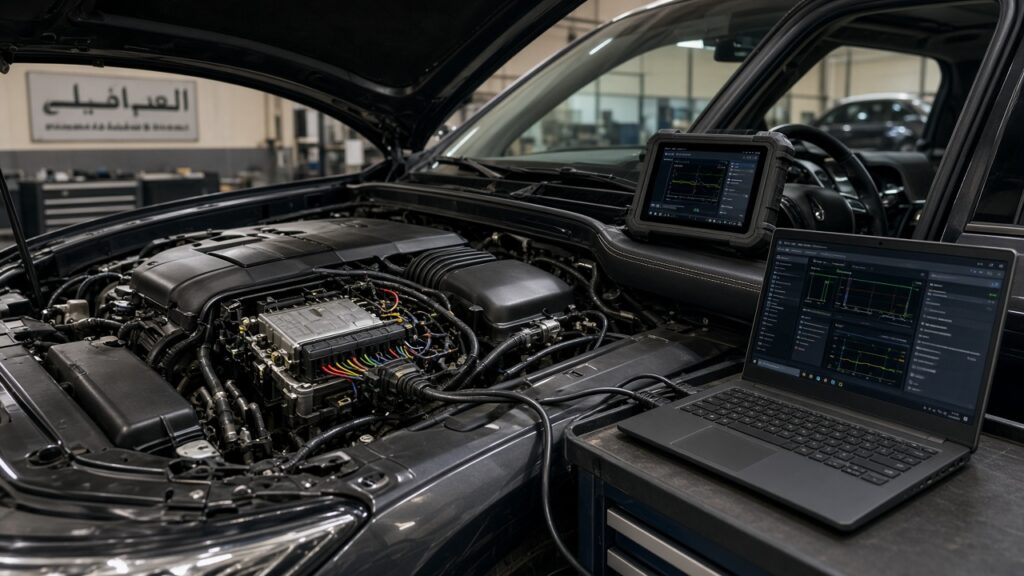
The technical requirements for automotive repair in the UAE have shifted toward the digital domain, with 85% of modern vehicle repairs now requiring electronic diagnostics. This has necessitated a significant investment in specialized tools by workshops across Sharjah and Dubai. Professional-grade diagnostic scanners from brands like Autel, Launch, and Snap-on have become the standard, enabling technicians to interface with a vehicle’s Electronic Control Units (ECUs) to identify intermittent electrical faults or software-related issues. In Sharjah’s industrial sectors, garages that have adopted these AI-driven tools have reported efficiency gains of up to 40%.

For owners of German and European vehicles, which often feature more complex electrical architectures, specialized workshops like PitStop44 and Royal Swiss Auto utilize manufacturer-level software to perform in-depth system scans. These tools can calibrate Advanced Driver-Assistance Systems (ADAS), reset adaptive learning parameters, and identify faulty sensors that might otherwise cause vague performance issues. The move toward computerized diagnostics has transformed the role of the automotive technician from a manual mechanic to a digital specialist, capable of navigating the complex network of CAN-bus communications that define modern vehicles.

Diagnostic Tier Estimated Cost (AED) Features and Capabilities Recommended Use
Basic OBD-II Scan 100 – 150 Fault code reading, battery check, light reset

Routine check, clearing simple warnings

Standard Diagnostic 200 – 300 Full system scan, sensor analysis, performance check

Investigating performance issues

Advanced Electrical 300 – 450 Wiring inspection, fuse testing, in-depth diagnostics

Complex electrical failures, short circuits

Full Vehicle Report 500 – 700 Complete scan of engine, trans, ABS, HVAC + printout

Comprehensive health check

Luxury/German Scan 700 – 1,000 OEM software scan, ECU coding, adaptive analysis

High-end European/Performance vehicles

Proactive Maintenance and the Predictive AI Revolution

The paradigm of vehicle care is shifting from reactive maintenance—where repairs are made only after a failure occurs—to predictive maintenance, which identifies potential issues before they manifest. This is particularly relevant in the UAE, where environmental stress can cause components to fail prematurely. AI predictive maintenance uses real-time data from vehicle sensors to forecast the remaining useful life of components such as brake pads, batteries, and cooling system parts. By analyzing millions of kilometers of operational data, companies like Vzone have developed models that can predict failure risks with high accuracy, allowing fleet operators to reduce unexpected breakdowns by up to 40%.

For luxury car owners, predictive maintenance is no longer a luxury but a necessity for preserving the value and safety of their investment. Brands such as Mercedes-Benz, BMW, and Porsche generate thousands of data points per minute, which AI models can analyze to detect subtle anomalies in engine performance or battery health. This is vital for electric and hybrid vehicles, where monitoring battery degradation and managing thermal systems is critical for ensuring long-term performance in high-temperature environments. Advanced garages in Dubai now offer “concierge-level” maintenance packages that include continuous monitoring and real-time alerts for the owner.

The economic benefits of predictive maintenance are compelling. For commercial fleets, the ability to schedule repairs during planned downtime can reduce emergency maintenance costs by 30% and extend the overall lifespan of the vehicle by two or more years. This proactive approach also enhances safety by ensuring that critical systems, such as braking and steering, are always functioning within their optimal parameters. As the UAE moves toward a more sustainable and efficient transport ecosystem, the widespread adoption of predictive AI will be a cornerstone of the nation’s smart mobility strategy.

Insurance Integration and the Role of Telematics

The integration of AI in the UAE’s car insurance sector is redefining risk assessment and claims processing. Telematics technology, which monitors driving behavior such as speed, braking, and route adherence, is now being used to offer tailored premiums. Under schemes promoted by the UAE Insurance Authority, drivers who opt for telematics monitoring can receive additional discounts of up to 10% on their motor premiums, rewarding safe driving habits and contributing to a reduction in road fatalities. This data-driven underwriting allows insurers to offer more competitive pricing to low-risk individuals while accurately pricing higher-risk policies.

In the event of an accident, AI is dramatically shortening the claims lifecycle. Machine learning algorithms can analyze photographs of vehicle damage to provide instant repair estimates and determine the severity of the impact. This automation reduces the need for manual surveyor inspections in many cases, allowing for faster claims approval and payouts. Furthermore, AI systems are being used to combat insurance fraud by identifying suspicious claim patterns and cross-referencing data across multiple entities, such as workshops and claimants. This not only protects the financial integrity of the insurance sector but also helps maintain lower premiums for the broader population.

Insurance Metric Impact of AI / Telematics Business Value
Premium Discounts Up to 10% for telematics users

Encourages safe driving and loyalty

Claims Processing Automated photo analysis and estimation

Reduces cycle time and operational costs

Fraud Detection Graph analytics to identify recurring patterns

Reduces loss ratios and improves compliance

Risk Assessment Data-driven underwriting via telematics

Improves pricing accuracy and risk stratification

Customer Service 24/7 AI-driven chatbots and assistants

Enhances customer satisfaction and transparency

Challenges in Implementation: Data Privacy and Capital Requirements

The widespread adoption of AI-powered vehicle inspections is not without significant hurdles. For smaller workshops and independent service centers, the high initial capital outlay for advanced scanning hardware and software licenses can be a major barrier to entry. While large dealerships and government-backed entities can easily absorb these costs, smaller players in Sharjah’s industrial areas may struggle to keep pace with the technological requirements, leading to a potential consolidation of the market. This creates a digital divide within the automotive service sector that requires careful management through training and potentially shared infrastructure models.

Data security and privacy present perhaps the most critical challenges. AI systems collect and process vast amounts of sensitive information, including vehicle health data, driving behaviors, and even interior imagery in some cases. Ensuring the secure storage and ethical use of this data is paramount, as a breach could lead to significant legal liabilities and a loss of consumer trust. Insurance companies and service providers must adhere to stringent data protection regulations and implement robust encryption and access controls to mitigate these risks. Furthermore, the complexity of integrating these AI platforms with existing workshop management and fleet software requires specialized IT expertise that is currently in high demand.

Another factor to consider is the “human-in-the-loop” requirement. While AI can identify defects with high precision, the final validation of complex issues and the subsequent physical repairs still require the expertise of human technicians. There is a risk of over-reliance on automated findings, which could lead to a decline in traditional diagnostic skills if not managed through comprehensive training programs. The future of the industry lies in the synergy between AI-driven insights and human mechanical skill, rather than the complete replacement of one by the other.

Future Outlook: Autonomous Testing and the 2030 Vision

The future of vehicle inspection in the UAE is intrinsically linked to the broader goals of smart city development and autonomous mobility. By 2030, the market for AI vehicle inspection systems is expected to reach a highly mature state, with a significant portion of the global fleet transitioning to automated diagnostic solutions. In the UAE, we can expect to see the emergence of fully autonomous inspection booths that operate 24/7, providing real-time roadworthiness certification for both private vehicles and shared autonomous fleets. These systems will likely be integrated with national registration and insurance databases, enabling seamless, paperless renewals based on a vehicle’s real-time health data.

The rise of Electric Vehicles (EVs) will also drive specialized AI innovations focused on battery health and power electronics. As the UAE targets significant growth in its EV sector, AI models trained specifically to monitor battery degradation and thermal management in desert climates will become essential. These systems will provide owners with detailed insights into their battery’s “state of health,” which will be a critical factor in determining the resale value of electric vehicles. Furthermore, the integration of blockchain technology could provide an immutable ledger of a vehicle’s service and inspection history, further enhancing transparency and trust in the second-hand market.
Ultimately, the goal of these technological advancements is to create a safer, more efficient, and more sustainable transport environment. By leveraging AI to remove human error from the inspection process and move toward a model of predictive care, the UAE is setting a global benchmark for automotive excellence. For vehicle owners, this means more than just faster inspections; it represents a new era of empowered ownership, where data provides the confidence to navigate the roads of the Emirates with total peace of mind.

Technical Specifications and Comparative Analysis of Sensing Technologies

The efficacy of an AI-powered inspection system is fundamentally determined by its sensor suite and the underlying algorithms used to process that data. For a domain expert, understanding the trade-offs between different sensing modalities is essential for evaluating system performance. While high-resolution cameras provide the bulk of the visual data for surface defect detection, they are susceptible to changes in lighting conditions and can be obscured by dirt or debris. To counteract these limitations, advanced systems employ LiDAR and thermal imaging to provide a more robust and comprehensive data set.

LiDAR systems used in vehicle inspection typically operate in the near-infrared spectrum, allowing them to penetrate light dust and provide precise measurements regardless of ambient lighting. This makes them ideal for structural analysis and the detection of frame misalignments. However, LiDAR has lower resolution than traditional cameras, making it less effective for identifying cosmetic issues like paint scratches or small dents. Thermal sensors, on the other hand, provide a unique window into the vehicle’s functional state, detecting anomalies in heat dissipation that indicate mechanical friction or electrical resistance. The integration of these modalities through sensor fusion algorithms allows the AI to cross-reference data points, reducing false positives and ensuring a higher degree of accuracy in defect classification.

Sensor Modality Primary Function Advantages Limitations
HD Cameras (RGB) Surface defect detection, part ID High resolution, color accuracy

Sensitive to light and dirt

LiDAR (3D Scanning) Structural mapping, frame check Millimeter precision, light-independent

Lower surface detail

Thermal Imaging Heat signature analysis Detects hidden mechanical/electrical issues

Lower spatial resolution

Ultrasonic Sensors Proximity and thickness measurement Can detect internal material thinning

Short range, specific material focus

IoT / Telematics Real-time behavior and status data Continuous monitoring, predictive potential

Privacy concerns, data overhead

Strategic Economic Gains and Industrial Efficiency

The adoption of AI vehicle inspections is yielding substantial economic returns for both the public and private sectors in the UAE. For government entities like the RTA, the 75% reduction in man-hours for rail inspections through ARIIS represents a massive optimization of human capital, allowing skilled technicians to focus on complex repair tasks rather than routine monitoring. Similarly, the reduction in vehicle inspection times at centers like AutoCheck 360 increases the throughput capacity of existing facilities, deferring the need for costly capital expansion while improving service delivery to the public.

In the private sector, the ROI for AI inspection systems is driven by increased service revenue and reduced liability. Dealerships using systems like UVeye have reported significant increases in tire and alignment sales—often 20% to 50%—by identifying issues that were previously missed during manual walk-arounds. Furthermore, the ability to provide “time-stamped” visual proof of a vehicle’s condition upon arrival at a service center has eliminated 100% of damage disputes in some locations, saving workshops thousands of dirhams in policy claims and improving customer trust.

For fleet operators, the economic argument for AI predictive maintenance is even stronger. By reducing unexpected breakdowns and extending vehicle life, these systems provide a clear competitive advantage in the high-stakes logistics and transport industries. The shift toward “Just-in-Time” maintenance schedules, enabled by real-time AI diagnostics, ensures that spare parts inventory is optimized and that vehicles spend the maximum possible time on the road. As the UAE’s economy continues to diversify and the demand for efficient transport grows, these technological efficiencies will be a key driver of national productivity.

Synthesizing the Road Ahead: A Conclusion for UAE Motorists

The transition to AI-powered vehicle inspections represents a fundamental re-engineering of the automotive lifecycle in the United Arab Emirates. From the initial purchase of a used car to its routine maintenance and eventual resale, every touchpoint is now being enhanced by data-driven insights. For the owner, this means a move away from the “black box” of traditional mechanics toward a transparent, objective, and proactive model of vehicle care. The challenges of the local climate, while significant, have served to accelerate this innovation, making the UAE a global leader in smart mobility.

As we look toward the 2030 horizon, the role of AI will only expand, encompassing autonomous testing, EV battery management, and integrated digital identities for every vehicle. This evolution is a testament to the UAE’s commitment to safety, efficiency, and technological excellence. For the millions of motorists who call the Emirates home, the rise of AI is not just a technical trend; it is a promise of safer roads, more reliable transport, and a more trustworthy automotive market. By embracing these advancements, UAE owners can ensure that their vehicles remain at the peak of performance, ready to meet the demands of the nation’s dynamic and rapidly evolving future.
 The Rise of AI-Powered Vehicle Inspections: What UAE Owners Need to Know

The Rise of AI-Powered Vehicle Inspections: What UAE Owners Need to Know

United Arab Emirates is currently navigating a period of profound technological disruption, characterized by the transition from traditional, labor-intensive maintenance methodologies to an advanced, data-centric ecosystem powered by artificial intelligence. This shift is not merely an isolated industrial trend but a strategic component of the UAE National Strategy for Artificial Intelligence 2031, which aims to position the nation as a global leader in AI adoption across vital sectors, including transportation and smart infrastructure. As vehicle complexity escalates through the integration of electric drivetrains, autonomous driver-assistance systems (ADAS), and intricate sensor networks, the methodologies for inspecting and certifying these machines have undergone a parallel evolution. For the millions of vehicle owners across the Emirates, this transition represents a movement toward unprecedented transparency, where the subjectivity of human assessment is replaced by the precision of computer vision and machine learning.

The Environmental Catalyst for Advanced Diagnostics

The unique climatic challenges of the Arabian Peninsula serve as a primary driver for the adoption of automated inspection technologies. For residents frequently requiring a Car Electrical repair Sharjah, understanding how extreme heat affects vehicle longevity is essential, as temperatures often exceeding 45 degree celcius   place immense stress on sensitive electronic control units and wiring harnesses. Traditional manual inspections often fail to detect the early stages of thermal degradation, which can lead to catastrophic electrical failures if left unaddressed. AI-powered systems, however, utilize thermal imaging and high-resolution sensors to identify abnormal heat signatures and micro-fissures in insulation that are invisible to the naked eye.

The impact of the local environment extends beyond mere temperature. The high concentration of fine particulate matter and humidity in coastal regions like Sharjah and Dubai accelerates the wear of mechanical and electrical components. Sand ingress can compromise air filtration systems and abrasive wear on suspension components, while humidity promotes oxidation within electrical connectors. These factors necessitate a more rigorous and frequent inspection protocol than is standard in more temperate climates. AI-driven platforms provide a solution by establishing a consistent baseline for vehicle health, allowing for the detection of minute deviations in performance that indicate the onset of environment-related wear.

Environmental Factor Specific Impact on Vehicles AI Detection Mechanism
Extreme Heat ($>40^{\circ}C$) Battery fluid evaporation, wiring embrittlement, AC strain

Thermal scanning and battery health algorithms

Dust and Sand Particulates Abrasive wear on brakes, suspension, and filtration

360-degree high-resolution imaging for surface erosion

High Salinity/Humidity Corrosion of undercarriage and electrical terminals

Under-vehicle scanning with anomaly detection

Heavy Urban Traffic Transmission heat soak and brake pad glazing

Predictive maintenance based on real-time sensor data

Technical Architecture of Automated Inspection Systems

The sophistication of modern AI vehicle inspections is rooted in the convergence of multiple sensing modalities, a process often referred to as sensor fusion. At the core of this technology is computer vision, which employs Convolutional Neural Networks (CNNs) to interpret visual data with superhuman accuracy. These systems are trained on millions of images encompassing a vast spectrum of vehicle makes, models, and potential defects, enabling them to recognize irregularities such as fluid leaks, structural cracks, or uneven tire wear within seconds of a vehicle passing through an inspection booth. This “MRI for cars” approach provides a comprehensive digital twin of the vehicle’s current state.

A critical component of these systems is Light Detection and Ranging (LiDAR), which uses laser pulses to create highly accurate three-dimensional maps of the vehicle’s exterior and undercarriage. LiDAR is particularly effective at detecting frame damage or structural misalignments that might be missed during a traditional visual check, especially if the vehicle has undergone cosmetic repairs following an accident. When combined with 360-degree high-definition cameras, these systems can capture detailed imagery of every surface, providing objective visual proof of a vehicle’s condition that can be shared instantly with owners or insurance adjusters.

The integration of edge computing allows these scans to be processed locally and instantaneously, providing immediate feedback without the latency associated with cloud-based processing. This is vital for high-throughput environments such as government testing centers or large-scale automotive dealerships. Furthermore, advanced systems incorporate thermal imaging analysis to monitor the health of the braking system, exhaust, and electrical components, identifying “hot spots” that suggest mechanical resistance or electrical short-circuits. This multi-layered diagnostic approach ensures that no aspect of vehicle safety is overlooked.

Government Initiatives and Public Sector Leadership

The UAE government has been a pioneer in the deployment of AI for public infrastructure and safety. Dubai’s Roads and Transport Authority (RTA) has taken a lead role, recently showcasing 11 major AI-driven projects, including the “AutoCheck 360” system. This initiative represents a milestone in government service innovation, utilizing computer vision and the Internet of Things (IoT) to standardize vehicle inspections across the Emirate. The implementation of AutoCheck 360 has demonstrated a remarkable improvement in operational efficiency, reducing the standard vehicle inspection time from 17 minutes to just 7 minutes, thereby significantly enhancing the customer experience and reducing congestion at testing facilities.

Beyond consumer vehicle testing, the RTA has applied AI to the maintenance of the city’s rail infrastructure. The Automated Rail Infrastructure Inspection System (ARIIS) utilizes a robotic platform equipped with LiDAR and 3D imaging to monitor the Dubai Metro tracks. ARIIS has been instrumental in optimizing maintenance workflows, reducing the manual labor required for track inspections by 75%, and increasing the frequency and accuracy of safety checks. Such systems are critical for ensuring the reliability of public transport in an environment where thermal expansion and sand accumulation can pose risks to rail integrity.

In Abu Dhabi, the City Municipality has expanded its fleet of smart inspection vehicles to 27 units as part of a Unified Inspection System. These vehicles, equipped with advanced automated analysis tools, are designed to monitor the urban right-of-way, detecting infrastructure damage, road furniture defects, and other violations in real-time. This proactive approach to urban monitoring ensures that the capital’s road network remains in optimal condition, supporting both economic growth and public safety. The data collected by these fleets is integrated into a centralized management platform, allowing for rapid response and data-driven resource allocation.

Government Entity Initiative Primary Technology Key Outcome
RTA Dubai AutoCheck 360 Computer Vision, IoT

Inspection time reduced from 17 to 7 minutes

RTA Dubai ARIIS (Rail Robot) LiDAR, 3D imaging

75% reduction in manual inspection man-hours

Abu Dhabi Municipality Smart Inspection Fleet AI Cameras, Automated Detection

Real-time monitoring of road and infrastructure

RTA Dubai AI Factory Machine Learning, Big Data

Platform for developing predictive mobility

RTA Dubai Smart Vehicle Network C-ITS, AI Traffic Control

25% reduction in traffic delays

Impact on the UAE Used Car Market and Consumer Trust

The UAE’s used car market is characterized by high turnover and a diverse inventory, largely driven by the transient nature of the expatriate population. Historically, this market has faced challenges regarding transparency and the accuracy of vehicle history reports. The introduction of AI-powered inspections is fundamentally altering this dynamic. Platforms that provide AI-verified digital health reports are seeing rapid adoption, as they offer buyers a level of assurance that was previously unavailable. In 2025 alone, over 42,000 drivers in the UAE utilized these digital reports to facilitate safer vehicle purchases.

The economic implications of this technological shift are substantial. By reducing traditional fraud concerns—such as odometer tampering or the concealment of major accident damage—AI-verified reports have compressed the average selling period for used vehicles from 55 days to just 40 days. This increased liquidity benefits both individual sellers and commercial dealerships. Moreover, AI-driven pricing tools are helping to standardize valuations by analyzing thousands of data points, including real-time market demand, vehicle condition, and service history, thereby providing a more equitable environment for all market participants.

For the consumer, the most tangible benefit is the rise of comprehensive Pre-Purchase Inspections (PPI). Specialized centers in Sharjah and Dubai now offer AI-powered assessments that scan the chassis, engine, and electrical systems for hidden faults. These reports often include high-resolution imagery and detailed explanations of any flagged issues, empowering buyers to negotiate from a position of knowledge or to avoid potentially costly investments. This transparency is particularly crucial in the luxury segment, where a single undetected mechanical issue can result in repair costs totaling tens of thousands of dirhams.

Precision Diagnostics in the Sharjah and Dubai Workshop Ecosystem

The technical requirements for automotive repair in the UAE have shifted toward the digital domain, with 85% of modern vehicle repairs now requiring electronic diagnostics. This has necessitated a significant investment in specialized tools by workshops across Sharjah and Dubai. Professional-grade diagnostic scanners from brands like Autel, Launch, and Snap-on have become the standard, enabling technicians to interface with a vehicle’s Electronic Control Units (ECUs) to identify intermittent electrical faults or software-related issues. In Sharjah’s industrial sectors, garages that have adopted these AI-driven tools have reported efficiency gains of up to 40%.

For owners of German and European vehicles, which often feature more complex electrical architectures, specialized workshops like PitStop44 and Royal Swiss Auto utilize manufacturer-level software to perform in-depth system scans. These tools can calibrate Advanced Driver-Assistance Systems (ADAS), reset adaptive learning parameters, and identify faulty sensors that might otherwise cause vague performance issues. The move toward computerized diagnostics has transformed the role of the automotive technician from a manual mechanic to a digital specialist, capable of navigating the complex network of CAN-bus communications that define modern vehicles.

Diagnostic Tier Estimated Cost (AED) Features and Capabilities Recommended Use
Basic OBD-II Scan 100 – 150 Fault code reading, battery check, light reset

Routine check, clearing simple warnings

Standard Diagnostic 200 – 300 Full system scan, sensor analysis, performance check

Investigating performance issues

Advanced Electrical 300 – 450 Wiring inspection, fuse testing, in-depth diagnostics

Complex electrical failures, short circuits

Full Vehicle Report 500 – 700 Complete scan of engine, trans, ABS, HVAC + printout

Comprehensive health check

Luxury/German Scan 700 – 1,000 OEM software scan, ECU coding, adaptive analysis

High-end European/Performance vehicles

Proactive Maintenance and the Predictive AI Revolution

The paradigm of vehicle care is shifting from reactive maintenance—where repairs are made only after a failure occurs—to predictive maintenance, which identifies potential issues before they manifest. This is particularly relevant in the UAE, where environmental stress can cause components to fail prematurely. AI predictive maintenance uses real-time data from vehicle sensors to forecast the remaining useful life of components such as brake pads, batteries, and cooling system parts. By analyzing millions of kilometers of operational data, companies like Vzone have developed models that can predict failure risks with high accuracy, allowing fleet operators to reduce unexpected breakdowns by up to 40%.

For luxury car owners, predictive maintenance is no longer a luxury but a necessity for preserving the value and safety of their investment. Brands such as Mercedes-Benz, BMW, and Porsche generate thousands of data points per minute, which AI models can analyze to detect subtle anomalies in engine performance or battery health. This is vital for electric and hybrid vehicles, where monitoring battery degradation and managing thermal systems is critical for ensuring long-term performance in high-temperature environments. Advanced garages in Dubai now offer “concierge-level” maintenance packages that include continuous monitoring and real-time alerts for the owner.

The economic benefits of predictive maintenance are compelling. For commercial fleets, the ability to schedule repairs during planned downtime can reduce emergency maintenance costs by 30% and extend the overall lifespan of the vehicle by two or more years. This proactive approach also enhances safety by ensuring that critical systems, such as braking and steering, are always functioning within their optimal parameters. As the UAE moves toward a more sustainable and efficient transport ecosystem, the widespread adoption of predictive AI will be a cornerstone of the nation’s smart mobility strategy.

Insurance Integration and the Role of Telematics

The integration of AI in the UAE’s car insurance sector is redefining risk assessment and claims processing. Telematics technology, which monitors driving behavior such as speed, braking, and route adherence, is now being used to offer tailored premiums. Under schemes promoted by the UAE Insurance Authority, drivers who opt for telematics monitoring can receive additional discounts of up to 10% on their motor premiums, rewarding safe driving habits and contributing to a reduction in road fatalities. This data-driven underwriting allows insurers to offer more competitive pricing to low-risk individuals while accurately pricing higher-risk policies.

In the event of an accident, AI is dramatically shortening the claims lifecycle. Machine learning algorithms can analyze photographs of vehicle damage to provide instant repair estimates and determine the severity of the impact. This automation reduces the need for manual surveyor inspections in many cases, allowing for faster claims approval and payouts. Furthermore, AI systems are being used to combat insurance fraud by identifying suspicious claim patterns and cross-referencing data across multiple entities, such as workshops and claimants. This not only protects the financial integrity of the insurance sector but also helps maintain lower premiums for the broader population.

Insurance Metric Impact of AI / Telematics Business Value
Premium Discounts Up to 10% for telematics users

Encourages safe driving and loyalty

Claims Processing Automated photo analysis and estimation

Reduces cycle time and operational costs

Fraud Detection Graph analytics to identify recurring patterns

Reduces loss ratios and improves compliance

Risk Assessment Data-driven underwriting via telematics

Improves pricing accuracy and risk stratification

Customer Service 24/7 AI-driven chatbots and assistants

Enhances customer satisfaction and transparency

Challenges in Implementation: Data Privacy and Capital Requirements

The widespread adoption of AI-powered vehicle inspections is not without significant hurdles. For smaller workshops and independent service centers, the high initial capital outlay for advanced scanning hardware and software licenses can be a major barrier to entry. While large dealerships and government-backed entities can easily absorb these costs, smaller players in Sharjah’s industrial areas may struggle to keep pace with the technological requirements, leading to a potential consolidation of the market. This creates a digital divide within the automotive service sector that requires careful management through training and potentially shared infrastructure models.

Data security and privacy present perhaps the most critical challenges. AI systems collect and process vast amounts of sensitive information, including vehicle health data, driving behaviors, and even interior imagery in some cases. Ensuring the secure storage and ethical use of this data is paramount, as a breach could lead to significant legal liabilities and a loss of consumer trust. Insurance companies and service providers must adhere to stringent data protection regulations and implement robust encryption and access controls to mitigate these risks. Furthermore, the complexity of integrating these AI platforms with existing workshop management and fleet software requires specialized IT expertise that is currently in high demand.

Another factor to consider is the “human-in-the-loop” requirement. While AI can identify defects with high precision, the final validation of complex issues and the subsequent physical repairs still require the expertise of human technicians. There is a risk of over-reliance on automated findings, which could lead to a decline in traditional diagnostic skills if not managed through comprehensive training programs. The future of the industry lies in the synergy between AI-driven insights and human mechanical skill, rather than the complete replacement of one by the other.

Future Outlook: Autonomous Testing and the 2030 Vision

The future of vehicle inspection in the UAE is intrinsically linked to the broader goals of smart city development and autonomous mobility. By 2030, the market for AI vehicle inspection systems is expected to reach a highly mature state, with a significant portion of the global fleet transitioning to automated diagnostic solutions. In the UAE, we can expect to see the emergence of fully autonomous inspection booths that operate 24/7, providing real-time roadworthiness certification for both private vehicles and shared autonomous fleets. These systems will likely be integrated with national registration and insurance databases, enabling seamless, paperless renewals based on a vehicle’s real-time health data.

The rise of Electric Vehicles (EVs) will also drive specialized AI innovations focused on battery health and power electronics. As the UAE targets significant growth in its EV sector, AI models trained specifically to monitor battery degradation and thermal management in desert climates will become essential. These systems will provide owners with detailed insights into their battery’s “state of health,” which will be a critical factor in determining the resale value of electric vehicles. Furthermore, the integration of blockchain technology could provide an immutable ledger of a vehicle’s service and inspection history, further enhancing transparency and trust in the second-hand market.

Ultimately, the goal of these technological advancements is to create a safer, more efficient, and more sustainable transport environment. By leveraging AI to remove human error from the inspection process and move toward a model of predictive care, the UAE is setting a global benchmark for automotive excellence. For vehicle owners, this means more than just faster inspections; it represents a new era of empowered ownership, where data provides the confidence to navigate the roads of the Emirates with total peace of mind.

Technical Specifications and Comparative Analysis of Sensing Technologies

The efficacy of an AI-powered inspection system is fundamentally determined by its sensor suite and the underlying algorithms used to process that data. For a domain expert, understanding the trade-offs between different sensing modalities is essential for evaluating system performance. While high-resolution cameras provide the bulk of the visual data for surface defect detection, they are susceptible to changes in lighting conditions and can be obscured by dirt or debris. To counteract these limitations, advanced systems employ LiDAR and thermal imaging to provide a more robust and comprehensive data set.

LiDAR systems used in vehicle inspection typically operate in the near-infrared spectrum, allowing them to penetrate light dust and provide precise measurements regardless of ambient lighting. This makes them ideal for structural analysis and the detection of frame misalignments. However, LiDAR has lower resolution than traditional cameras, making it less effective for identifying cosmetic issues like paint scratches or small dents. Thermal sensors, on the other hand, provide a unique window into the vehicle’s functional state, detecting anomalies in heat dissipation that indicate mechanical friction or electrical resistance. The integration of these modalities through sensor fusion algorithms allows the AI to cross-reference data points, reducing false positives and ensuring a higher degree of accuracy in defect classification.

Sensor Modality Primary Function Advantages Limitations
HD Cameras (RGB) Surface defect detection, part ID High resolution, color accuracy

Sensitive to light and dirt

LiDAR (3D Scanning) Structural mapping, frame check Millimeter precision, light-independent

Lower surface detail

Thermal Imaging Heat signature analysis Detects hidden mechanical/electrical issues

Lower spatial resolution

Ultrasonic Sensors Proximity and thickness measurement Can detect internal material thinning

Short range, specific material focus

IoT / Telematics Real-time behavior and status data Continuous monitoring, predictive potential

Privacy concerns, data overhead

Strategic Economic Gains and Industrial Efficiency

The adoption of AI vehicle inspections is yielding substantial economic returns for both the public and private sectors in the UAE. For government entities like the RTA, the 75% reduction in man-hours for rail inspections through ARIIS represents a massive optimization of human capital, allowing skilled technicians to focus on complex repair tasks rather than routine monitoring. Similarly, the reduction in vehicle inspection times at centers like AutoCheck 360 increases the throughput capacity of existing facilities, deferring the need for costly capital expansion while improving service delivery to the public.

In the private sector, the ROI for AI inspection systems is driven by increased service revenue and reduced liability. Dealerships using systems like UVeye have reported significant increases in tire and alignment sales—often 20% to 50%—by identifying issues that were previously missed during manual walk-arounds. Furthermore, the ability to provide “time-stamped” visual proof of a vehicle’s condition upon arrival at a service center has eliminated 100% of damage disputes in some locations, saving workshops thousands of dirhams in policy claims and improving customer trust.

For fleet operators, the economic argument for AI predictive maintenance is even stronger. By reducing unexpected breakdowns and extending vehicle life, these systems provide a clear competitive advantage in the high-stakes logistics and transport industries. The shift toward “Just-in-Time” maintenance schedules, enabled by real-time AI diagnostics, ensures that spare parts inventory is optimized and that vehicles spend the maximum possible time on the road. As the UAE’s economy continues to diversify and the demand for efficient transport grows, these technological efficiencies will be a key driver of national productivity.

Synthesizing the Road Ahead: A Conclusion for UAE Motorists

The transition to AI-powered vehicle inspections represents a fundamental re-engineering of the automotive lifecycle in the United Arab Emirates. From the initial purchase of a used car to its routine maintenance and eventual resale, every touchpoint is now being enhanced by data-driven insights. For the owner, this means a move away from the “black box” of traditional mechanics toward a transparent, objective, and proactive model of vehicle care. The challenges of the local climate, while significant, have served to accelerate this innovation, making the UAE a global leader in smart mobility.

As we look toward the 2030 horizon, the role of AI will only expand, encompassing autonomous testing, EV battery management, and integrated digital identities for every vehicle. This evolution is a testament to the UAE’s commitment to safety, efficiency, and technological excellence. For the millions of motorists who call the Emirates home, the rise of AI is not just a technical trend; it is a promise of safer roads, more reliable transport, and a more trustworthy automotive market. By embracing these advancements, UAE owners can ensure that their vehicles remain at the peak of performance, ready to meet the demands of the nation’s dynamic and rapidly evolving future.
Leave a Reply

Your email address will not be published. Required fields are marked *

Smart Garage
Service Advisor
Online
Smart Garage
Hello! How can we help you with your car today? 👋
Just now
1