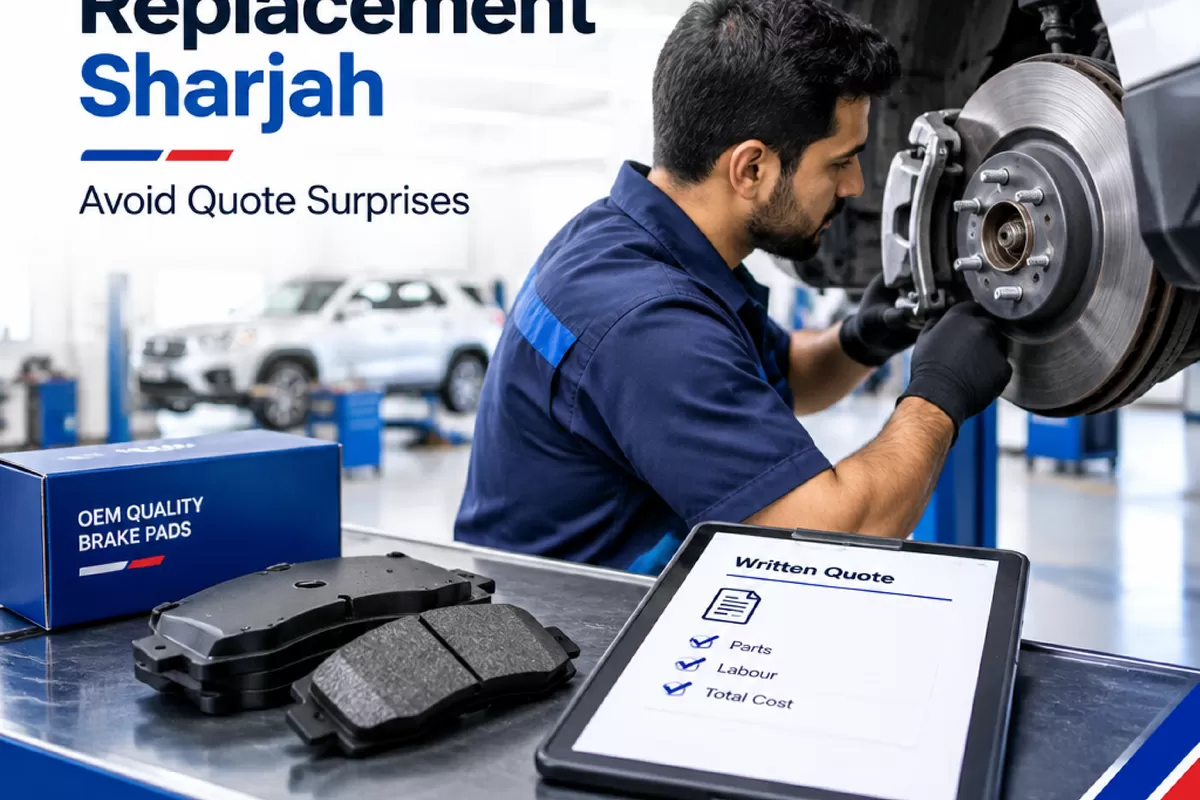
If you are arranging brake pad replacement in Sharjah, it helps to know what a proper workshop visit should cover before you approve any work. A brake noise or warning light can be worrying, but a quote should be based on an inspection, not an assumption that the pads are the only part involved.
This guide explains what to share when booking, what to ask the technician to inspect, and how to check that the written quote matches the findings. For drivers in Sharjah, including people who brake frequently in stop-start traffic, the aim is simple: understand the condition of the brakes and agree the work before it begins.
What to share when booking brake pad replacement in Sharjah
When you contact the workshop, give enough detail for staff to identify the vehicle and understand the concern. Share the make, model, year and, if available, the registration or vehicle identification number (VIN). The VIN is a unique vehicle identifier that can help distinguish versions of the same model. You can also provide the current mileage and say whether the car is used mainly for short journeys, longer drives or regular commuting around Sharjah.
Describe what you have noticed in plain terms. For example, tell the workshop if you hear squealing when braking, feel a vibration through the pedal or steering wheel, notice the car pulling to one side, or see a brake warning light. Mention when it happens: at low speed, after the car has been parked, during harder braking, or on most journeys. These details do not diagnose the cause, but they give the technician a useful starting point.
Also mention any recent brake work, if you know what was replaced, and whether the sound or feeling began before or after that visit. If you are unsure, say so. There is no need to guess whether the pads, discs or another component is responsible. That is what the inspection is for.
Before arranging the visit, confirm how the workshop wants you to book and whether it needs any additional vehicle details. Smart Garage UAE is a Sharjah-based technical workshop offering diagnostics, repairs and maintenance for luxury and family vehicles. You can review its brake pad replacement sharjah guide, then contact the workshop to confirm current service details and how to proceed.
What the brake inspection should establish
A brake pad replacement should start with checking the brakes, not simply fitting pads because a driver has reported a noise. Ask the workshop to explain what it inspected and what evidence supports the recommendation. The exact checks depend on the vehicle and the symptoms, but a useful assessment considers the pads and related parts that affect braking.
The technician should assess pad wear on the relevant wheels. Pads can wear at different rates, including between the inner and outer pad on the same wheel. Uneven wear may be a reason to investigate further rather than treating the job as a straightforward parts change. Ask whether the remaining friction material is low and whether wear appears even across the pads checked.
The brake discs, also called rotors, should be considered as part of the assessment. Pads press against the discs to slow the wheels. A technician may check for visible damage, scoring, uneven contact or other signs that could affect how the new pads operate. The inspection should distinguish between a disc that can remain in service and one for which further work is being recommended. If the workshop proposes replacing or machining a disc, ask what condition led to that recommendation and whether it applies to one side or both sides of an axle.
Depending on the findings, the workshop may also need to assess whether the caliper and pad hardware are moving as intended. A caliper presses the pads against the disc. If a component is sticking or a pad cannot move correctly, replacing the friction material alone may not address the cause of uneven wear or a persistent symptom. Ask the technician to separate confirmed faults from items that are simply being monitored.
How findings should be explained before you approve work
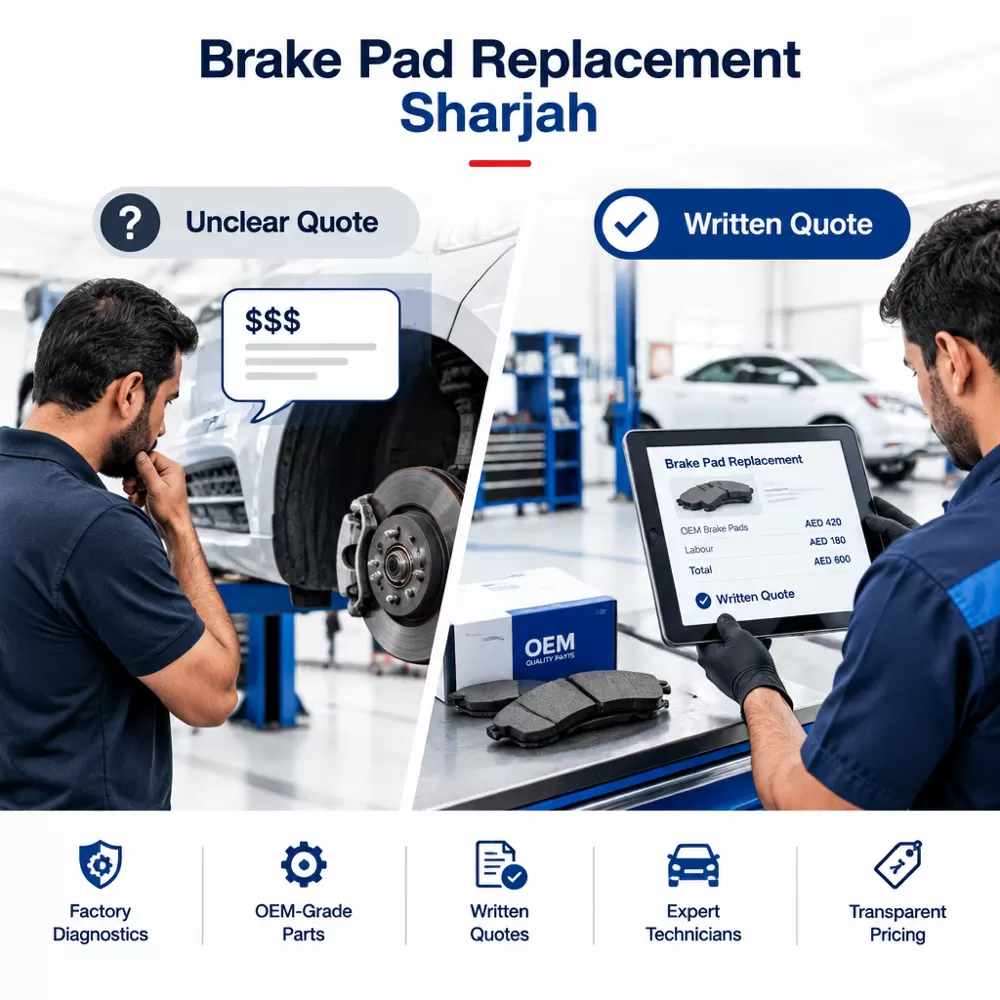
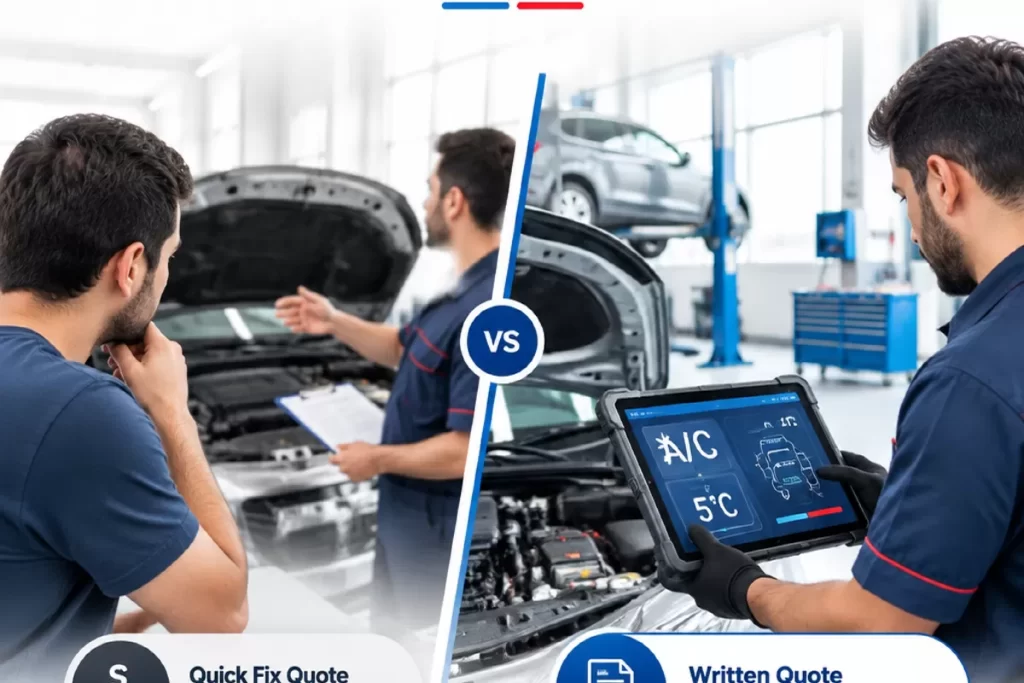
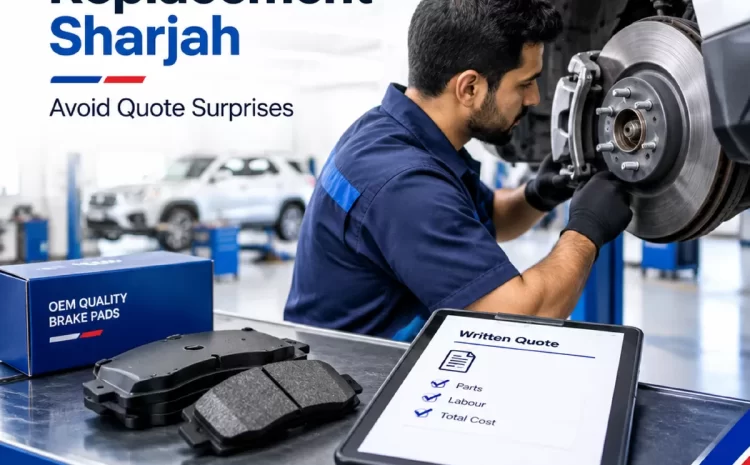
Ask for the inspection findings in clear language, ideally with a written estimate that identifies the work being proposed. You should be able to see which pads are being replaced, whether the recommendation applies to the front or rear axle, and what related parts or labour are included. If the quote uses a technical term you do not recognise, ask the service adviser to explain it before you decide.
A useful explanation connects the finding to the recommendation. For instance, “the pads are worn” is less informative than an explanation of which pads were checked, how their condition compares, and why replacement is advised now. If a technician reports uneven wear, ask whether the caliper, hardware or disc was checked for a related cause. The answer should reflect the inspection actually carried out, not a generic list of possible faults.
It is also reasonable to ask what is not included. A quote for pads may not include discs or other parts unless the workshop has identified a need for them and listed them. Confirm whether the estimate includes the relevant parts, labour and any applicable charges, and ask whether the quoted scope could change if another issue is found during the work. Do not assume that an extra item is included just because it was discussed verbally.
For a clear decision, ask the workshop to distinguish between necessary work identified by the inspection and optional or future maintenance advice. If more work is recommended, request the reason and the revised total before approving it. Smart Garage UAE’s stated approach includes transparent service and diagnostics; confirm directly with the workshop what the current written estimate covers for your vehicle.
Brake pad replacement Sharjah: what to confirm before approval
Before giving approval, compare the proposed work with the symptoms and findings already discussed. Check that the vehicle details are correct, the axle or wheels are specified, and the parts and labour listed match what you have agreed to. If the quote refers to a pair or an axle set, ask the adviser to clarify exactly which pads will be replaced. This avoids misunderstandings about whether the estimate is for one wheel or both sides.
- Scope: Which pads are included, and are any discs or related components also being proposed?
- Reason: What inspection finding supports each recommended item?
- Parts: What type of parts are being quoted, and are they suitable for your exact vehicle?
- Total: What is the written price for the approved work, including the listed labour and charges?
- Changes: Will the workshop contact you for approval before adding work if further findings arise?
For vehicles with electronic parking brakes, brake wear sensors or other model-specific systems, mention the exact vehicle version when booking and ask whether the quote accounts for the relevant requirements. Do not assume every version of a model uses the same parts or procedure. If the adviser needs to confirm compatibility, allow them to check the vehicle details before you approve the estimate.
Do not feel pressured to approve work you do not understand. You can ask for the findings to be explained again or request an itemised estimate. If the workshop has identified an immediate braking concern, ask what that means for using the car and follow its safety advice. A quote is a proposal for work, not a substitute for understanding the condition it describes.
What happens during the workshop visit
Once you approve the written scope, the workshop carries out the agreed work on the relevant brakes. The process can vary by vehicle, so avoid relying on a standard time estimate unless the workshop has confirmed one for your car and its current workload. If you need to plan around the visit, ask directly about expected timing, collection arrangements and any vehicle-specific requirements.
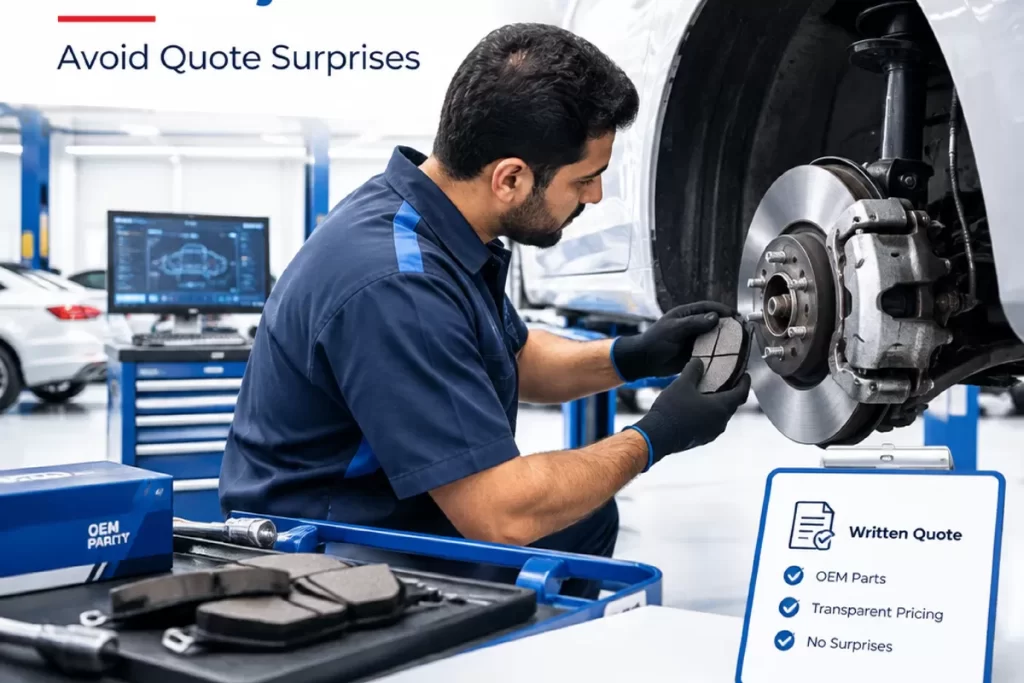
During a pad change, the technician removes the relevant wheel and accesses the brake components. The old pads are removed, and the technician checks the parts being reused as appropriate to the inspection and repair scope. New pads must be fitted correctly, and the brake assembly put back together according to the requirements of that vehicle. If the inspection identified a separate concern, the workshop should explain whether it is included in the authorised job or needs a separate decision.
Ask what confirmation you will receive when the work is complete. The final explanation should state what was replaced and note whether any recommended work remains outstanding. If the final invoice differs from the approved quote, ask for the reason and confirm that any additional work was authorised. Keep the invoice and any written inspection notes with your vehicle records, especially if you may need to explain the repair at a later visit.
Before leaving, ask whether there are any specific instructions for the newly fitted pads. Some brake components may need a careful bedding-in period, which means allowing the pad and disc contact surfaces to settle through controlled use. The correct advice depends on the parts and vehicle. Follow the workshop’s instructions rather than applying a generic procedure you have found elsewhere.
Warning signs, common mistakes and when to seek help
Brake noise is not a diagnosis on its own. A squeal can have more than one cause, while a grinding sound, a change in pedal feel, a warning light or a noticeable pull can indicate a more serious concern. Report each symptom and when it occurs. If braking feels reduced or unpredictable, do not treat a routine pad booking as proof that the car is safe to drive. Contact the workshop for advice about what to do next.
One common mistake is asking for pads to be changed without asking whether the inspection found a cause of uneven wear or a problem with another brake component. Another is approving a vague quote that does not say which axle, parts or extra work it covers. A third is comparing estimates by total price alone. Different quotes may cover different parts or scopes, so ask for a like-for-like explanation before making a decision.
Do not ignore a warning because the car still seems to stop normally, and do not assume a sound will disappear after replacement. The technician needs to assess the vehicle and explain what the findings support. Similarly, avoid asking for extra parts to be replaced solely as a precaution without understanding why they are recommended. The right decision depends on the condition of the components and the requirements of your particular vehicle.
After the repair, pay attention to how the brakes feel and sound during normal use, following any instructions given by the workshop. If a warning remains, the pedal feels abnormal, or the original concern continues, contact the workshop promptly and describe what has changed. This is more useful than continuing to drive and hoping the symptom settles.
Next steps for Sharjah drivers
To arrange brake pad replacement in Sharjah with fewer surprises, prepare your vehicle details, describe the symptoms accurately and ask for the inspection findings in plain language. Before approving the work, check the written scope, the parts and labour included, the reason for each recommendation, and how extra findings will be handled.
Smart Garage UAE serves Sharjah drivers with brake diagnostics, repairs and maintenance for luxury and family vehicles. Confirm current availability, vehicle-specific requirements, pricing and other service details directly with the workshop. A clear conversation before approval helps you understand what is being replaced, why the work is proposed and what to expect when you collect the car.