It is one of the most frustrating feelings for any driver: you fill your tank, practice sensible driving, and yet the fuel gauge seems to plummet faster every week. You are already following the common advice you avoid aggressive driving, you do not let the engine idle excessively, and you have even cleared unnecessary heavy items from your boot.
Still, your trips to the petrol station are becoming far too frequent.
Here is the truth: your driving habits may not be the problem. The real issue is often a hidden fault causing your poor fuel economy, a mechanical or electrical failure that silently drains your tank without leaving a puddle on the driveway. These leaks are not in your fuel tank; they are in the complex systems that manage your engine’s efficiency. They cause your engine to work harder, burn fuel inefficiently, or waste it outright.
Hidden Leak #1: The Deceptive Oxygen (O2) Sensor
What It Is
Think of the Oxygen (O2) sensor as your engine’s financial accountant. Located in the exhaust system, its job is to measure the amount of unburned oxygen leaving the engine after combustion. It then sends this data to your car’s main computer, the Engine Control Unit (ECU).
How it “Leaks” Petrol
A healthy engine’s ECU uses the O2 sensor’s data to maintain the perfect air-fuel ratio. But when an O2 sensor fails with age, it begins to “lie.” The failing sensor often sends a “false lean” signal, telling the ECU that there is too much oxygen and not enough fuel. The ECU, believing the engine is starving, “corrects” this non-existent problem by dumping more fuel into the combustion chamber. The engine is now running “rich,” and this excess, unburned petrol is blasted out the exhaust, completely wasted.
Symptoms to Watch For
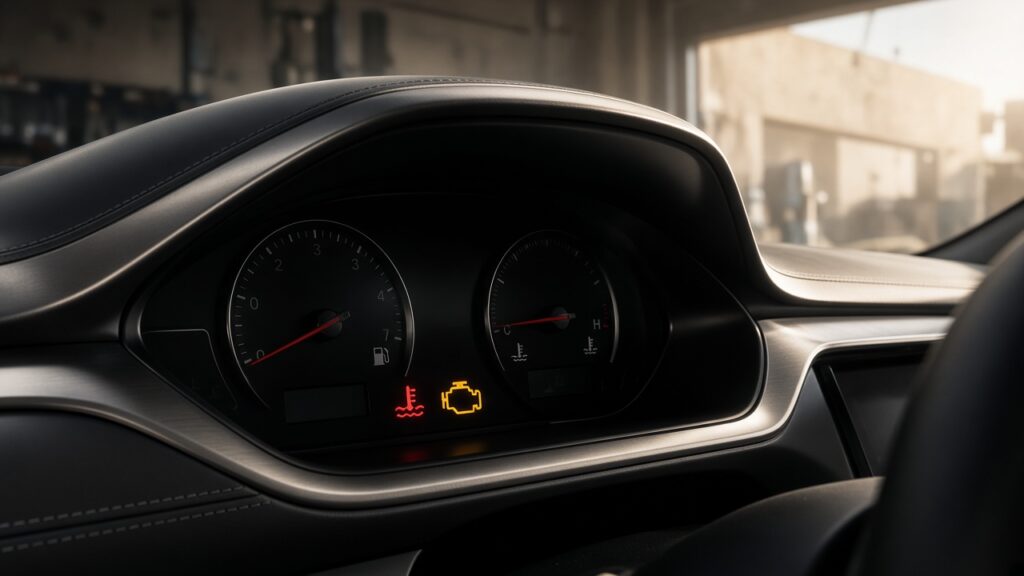
- A Check Engine Light
- Noticeable drop in fuel economy
- A “rotten egg” (sulfur) smell from the exhaust
- Rough idling and engine misfires
The Fix
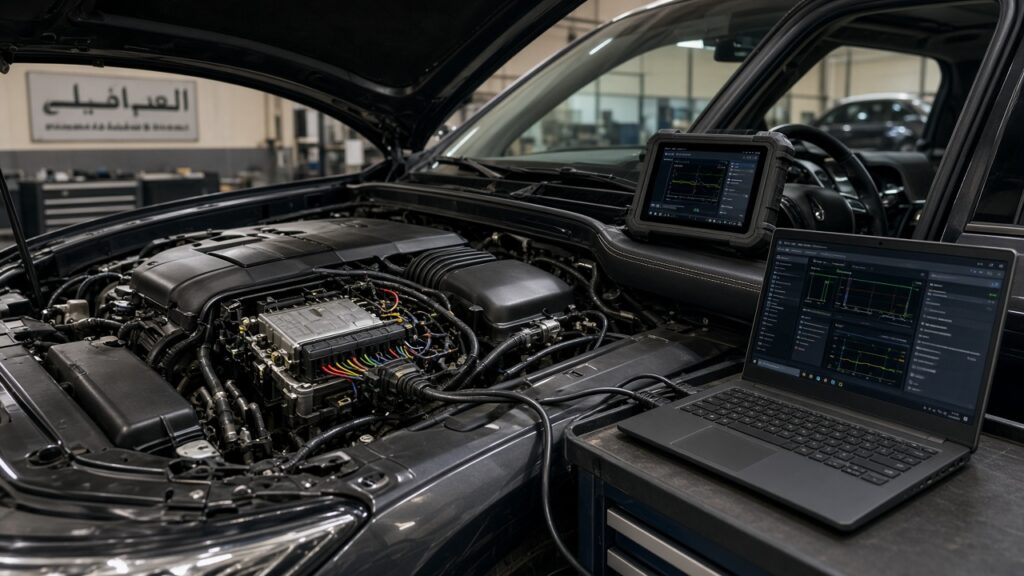
You cannot guess with this component. The only way to be certain is with a professional diagnostic scan. A technician can monitor the sensor’s live voltage data and response time to confirm it is the root cause before replacing it.
Hidden Leak #2: The Contaminated Mass Air Flow (MAF) Sensor
What It Is
If the O2 sensor is the accountant, the Mass Air Flow (MAF) sensor is the gatekeeper. Located between your air filter and the engine, its job is to measure the precise mass of air entering the engine. This measurement is the primary factor the ECU uses to calculate how much fuel to inject.
How it “Leaks” Petrol
Over time, fine dust and oil vapors can bake onto the sensor’s delicate “hot wire.” This grime insulates the wire, causing it to misinterpret the amount of air flowing past. It “under-reports” the air, telling the ECU there is less air than there actually is. The ECU injects less fuel, causing a lean mixture. Your O2 sensor then detects this lean mixture and tells the ECU to add more fuel to compensate. This “sensor fight” confuses the computer and destroys your fuel economy.
Symptoms to Watch For
- Hesitation or jerking during acceleration
- Rough idling or stalling
- Poor fuel economy
- Black smoke from the exhaust in some cases
The Fix
A professional diagnostic scan is essential to monitor the “live data” from both the MAF and O2 sensors to see if their readings are “fighting” each other. Sometimes the sensor can be carefully cleaned by a professional, but in many cases, it requires replacement.
Hidden Leak #3: Worn-Out or Fouled Spark Plugs
What It Is
The spark plug is the “igniter.” Its job is to create a tiny, intense spark at the exact right millisecond to ignite the air-fuel mixture and create power.
How it “Leaks” Petrol
This is not a “leak,” but a “wasted opportunity.” Over tens of thousands of kilometers, a plug’s electrodes wear down or become “fouled” with carbon. A worn plug produces a weak, inconsistent spark. This weak spark fails to ignite the entire air-fuel mixture in the cylinder. A portion of the petrol never burns and is simply pushed out the exhaust as waste. This causes sluggish acceleration, so you instinctively press the accelerator further, telling the ECU to inject even more fuel and creating a vicious cycle of waste.
Symptoms to Watch For
- Sluggish acceleration; the car feels “lazy”
- Engine misfires (a “jerking” or “stumbling” sensation)
- Rough idling
- Difficulty starting the engine
The Fix
Spark plugs are a critical maintenance item that should be replaced according to your manufacturer’s schedule. It is essential to use the correct type (e.g., iridium, platinum) and heat range for your specific engine to ensure efficient combustion.
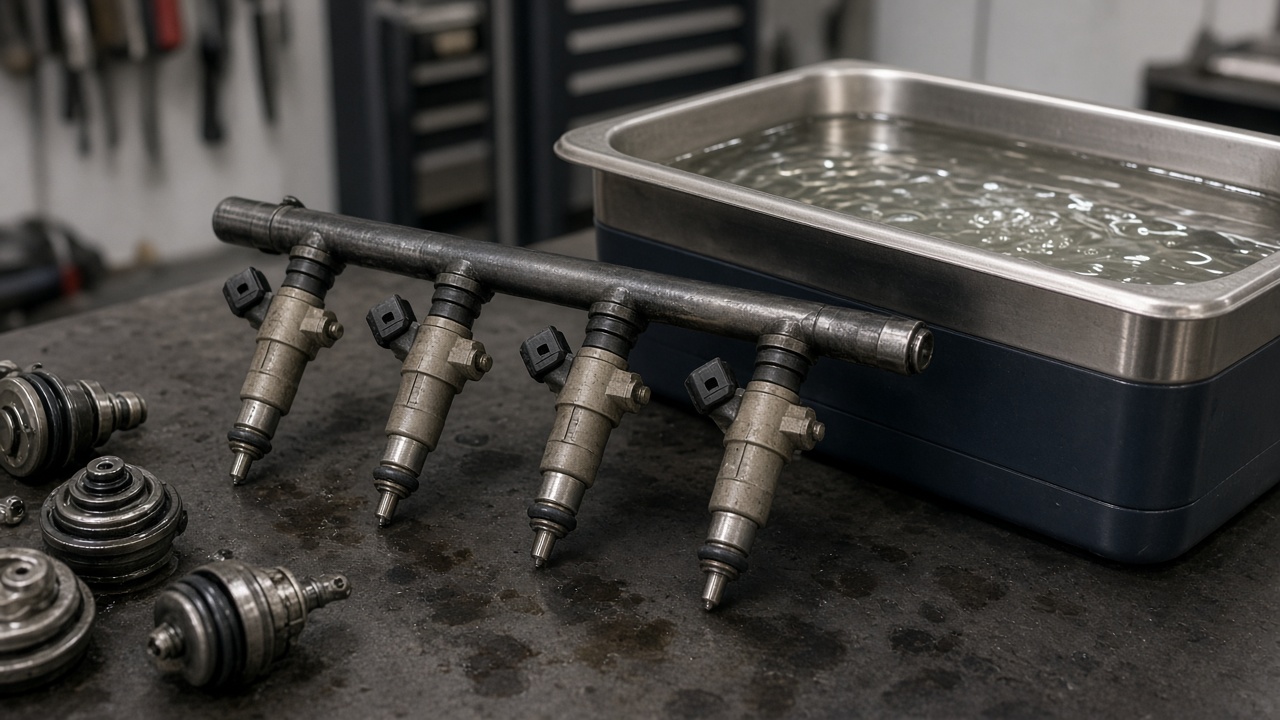
Hidden Leak #4: Clogged Fuel Injectors
What It Is
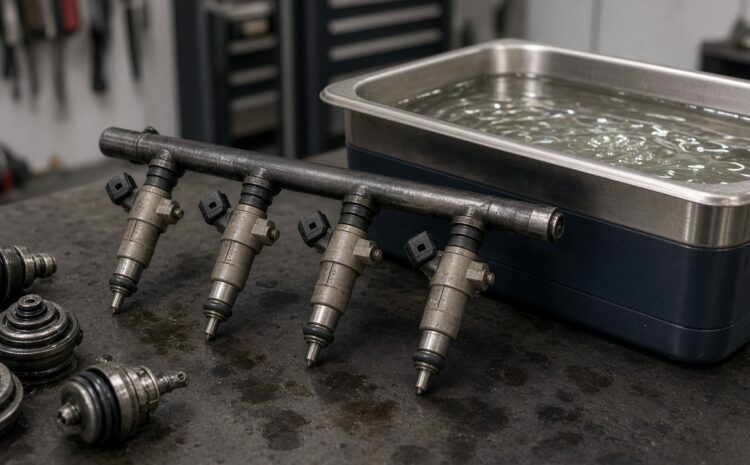
Fuel injectors are high-pressure nozzles that do not just spray fuel, but atomize it—turning liquid petrol into a fine, conical mist that can mix perfectly with the air for an efficient explosion.
How it “Leaks” Petrol
Think of a clean injector as an aerosol can and a clogged injector as a squirt gun. Carbon deposits and fuel varnish build up on the nozzle, disrupting the spray pattern. The fine mist becomes an uneven dribble of liquid petrol. Liquid petrol does not burn efficiently. These large droplets fail to mix with the air, and a significant portion is wasted as unburned fuel, leading to power loss and, once again, causing the ECU to inject more fuel to compensate.

Symptoms to Watch For
- Sudden drop in fuel efficiency
- Rough idling and stalling at stoplights
- Engine hesitation when you press the accelerator
- Engine misfires
The Fix
This issue requires professional fuel system diagnostics. In many cases, a professional fuel system and injector cleaning service can restore the spray pattern. In severe cases, the clogged injectors may need to be replaced.
Hidden Leak #5: The Silent Killer: A Seized Brake Caliper
What It Is
This is the most insidious leak because it has nothing to do with your engine. The brake caliper is the hydraulic “clamp” that holds your brake pads. When you press the brake pedal, it pushes the pads against the spinning brake rotor, stopping the car.
How it “Leaks” Petrol
When you release the brake pedal, the caliper piston should retract. But due to rust or debris, the piston or its “slide pins” can seize. The brake pad is now stuck in the “on” position, constantly dragging on the rotor as you drive. Your engine must work significantly harder and burn far more petrol just to maintain highway speed. All that extra engine power is being converted directly into waste heat at the stuck wheel. This is not only a massive fuel leak but also a major safety hazard.
Symptoms to Watch For
- Car pulls to one side while driving
- A strong, acrid, burning smell after a drive
- One wheel is significantly hotter than the others
- Sluggish performance, like the parking brake is on
The Fix
This is a critical safety and efficiency issue that must be serviced or replaced immediately by a professional mechanic. Driving with a seized caliper can lead to total brake failure.
Stop Wasting Money: Fix the Leak for Good
Stop blaming your driving habits or the high price of petrol for your poor fuel economy. Your car is likely suffering from a fixable hidden leak. The truth is, you are already paying for the repair, one wasted dirham at a time, every time you visit the petrol station.
This is why “guessing” is the most expensive way to repair a car. You might pay to replace your spark plugs, only to find the real problem was the MAF sensor, wasting both time and money.
If your car feels sluggish, smells strange, or your fuel gauge is dropping too fast, do not guess. Get a professional diagnostic scan to find the exact fault the first time. Stop wasting money at the petrol station and fix the leak for good.
About the Author: The experts at Smart Garage have over 20 years of experience helping drivers in the UAE. They specialize in advanced diagnostics to find the root cause of issues like poor fuel economy. Book an appointment to get your car’s performance and efficiency restored.