Home About Services Brands Blog Contact
February 25, 2026 • Engine Services

What Actually Happens During a Car Diagnostic Scan?

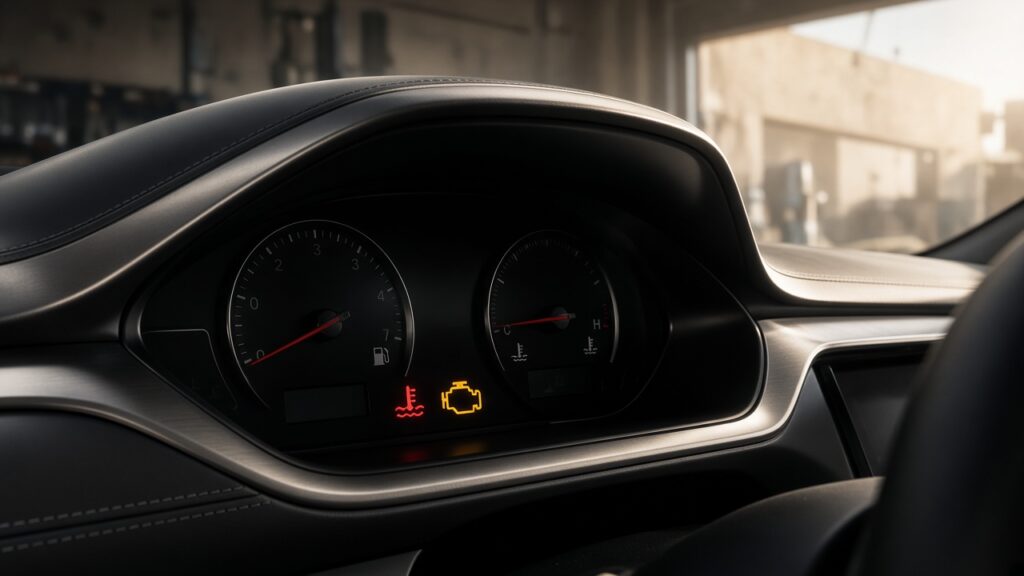
When your vehicle’s warning light suddenly appears on the dashboard, it can feel alarming. Most drivers know that something is wrong, but very few understand what truly happens when they take their car in for a car diagnostic scan. Is it just a quick plug-in test? Is it simply reading an error code? Or is there something much more advanced happening behind the scenes?

At Smart Garage UAE, our Advanced Diagnostics & Electrical Services go far beyond basic code reading. A modern vehicle is essentially a network of interconnected computers, sensors, and control units. Diagnosing it requires technology, expertise, and systematic analysis. In this article, we will break down exactly what happens during a professional car diagnostic scan, why it matters, and how it helps prevent costly repairs.

Modern Vehicles Are Complex Computer Systems

Today’s cars are not just mechanical machines; they are intelligent systems controlled by multiple Electronic Control Units (ECUs). These modules monitor and regulate everything from engine performance to transmission shifting, braking systems, airbags, climate control, and battery management.

Each ECU continuously receives data from dozens of sensors. If a reading falls outside its acceptable range, the system logs a fault and may trigger a warning light. This is where a car diagnostic scan. becomes essential. It allows technicians to communicate directly with these control modules to retrieve stored information and interpret system behavior.

At Smart Garage, the diagnostic process is structured, data-driven, and precise. It is not guesswork. It is a technical evaluation designed to uncover the root cause of the issue.

Step One: Connecting to the Vehicle’s On-Board System

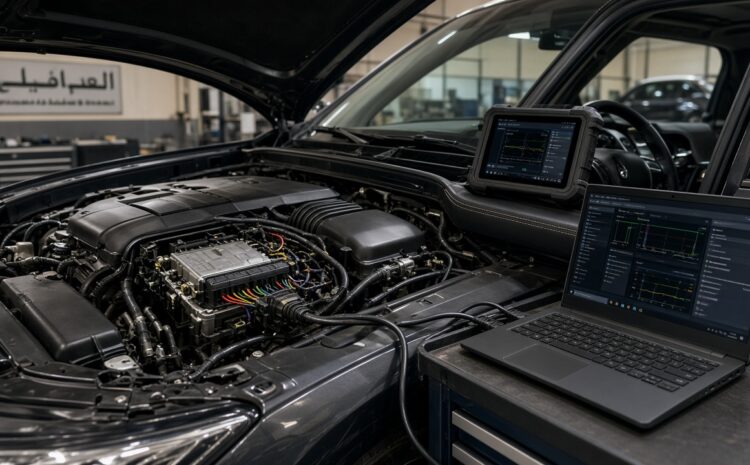
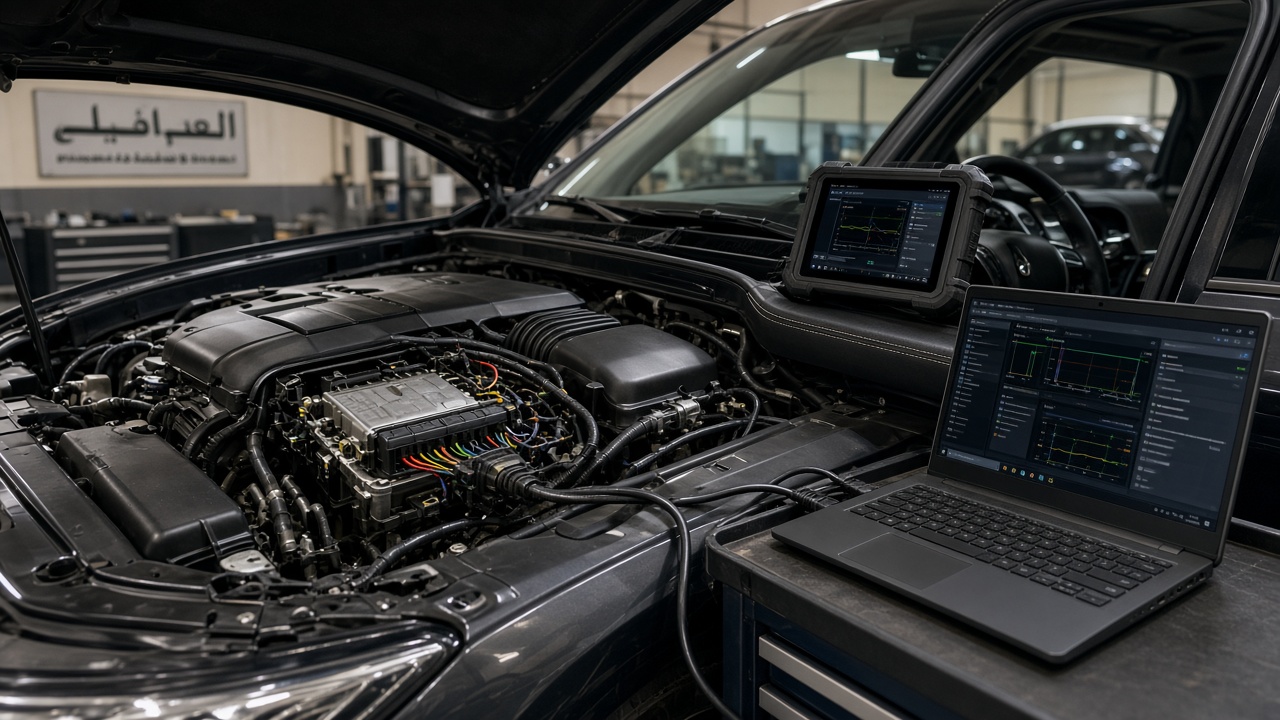
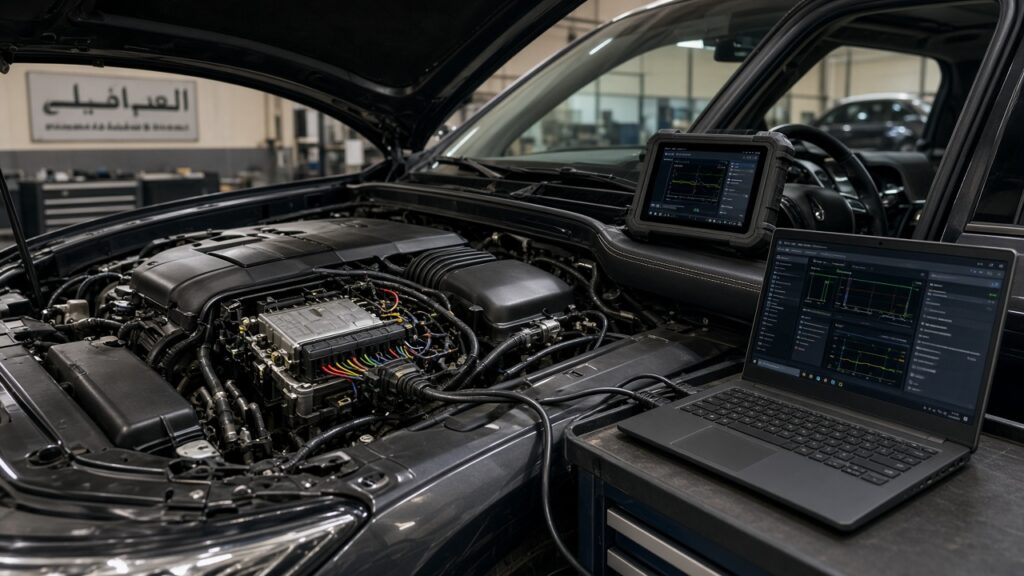
The diagnostic process begins by connecting a professional scan tool to the vehicle’s On-Board Diagnostics (OBD) port. This port provides direct access to the vehicle’s internal communication network, often referred to as the Controller Area Network (CAN bus).

Through this connection, technicians can access data from multiple modules, including:

Engine Control Module
Transmission Control Module
ABS Control Module
Airbag System
Body Control Module
Battery Management System

Unlike basic handheld scanners, professional-grade tools used in Advanced Diagnostics & Electrical Services allow deep access to manufacturer-specific data and advanced functions.

Step Two: Retrieving Diagnostic Trouble Codes

Once connected, the scan tool retrieves stored Diagnostic Trouble Codes (DTCs). These codes are triggered when a sensor detects abnormal readings or system behavior.

However, a common misconception is that a code directly identifies a faulty part. In reality, a code identifies the system where a problem was detected — not necessarily the exact component that needs replacement.

For example, a misfire code may indicate irregular combustion in a cylinder. But the underlying cause could be spark plugs, ignition coils, fuel injectors, compression issues, vacuum leaks, or wiring faults. This is why professional interpretation is critical.

At Smart Garage, technicians do not simply read codes and replace parts. They analyze patterns, evaluate system data, and identify the true origin of the malfunction.

Step Three: Analyzing Live Data Streams

One of the most important aspects of a professional car diagnostic scan is live data analysis. Instead of relying solely on stored codes, technicians monitor real-time sensor readings while the engine is running.

Live data may include:

Engine RPM
Fuel trim values
Oxygen sensor output
Coolant temperature
Throttle position
Battery voltage
Transmission speed

This real-time information provides a deeper understanding of how the vehicle behaves under different operating conditions. A sensor may not trigger a fault code but may still display irregular patterns when analyzed closely. Identifying these inconsistencies helps detect developing issues before they become serious problems.

Step Four: Running Functional and Actuation Tests

Professional diagnostic equipment does more than observe data — it actively interacts with vehicle components. Through functional tests, technicians can command certain parts to operate on demand.

For instance, they may activate fuel injectors, test cooling fans, cycle ABS pumps, or engage electronic throttle controls. These tests confirm whether components respond correctly to commands from the control unit.

This step is especially important in Advanced Diagnostics & Electrical Services because electrical faults can mimic mechanical failures. A component may be functional, but a wiring fault or communication issue could prevent it from operating correctly. Functional testing helps differentiate between these possibilities.

Step Five: Electrical System Evaluation

Electrical issues are among the most complex problems in modern vehicles. Wiring harnesses, relays, fuses, connectors, and modules must all communicate properly for the vehicle to operate efficiently.

A professional car diagnostic scan often reveals communication errors between modules. Technicians then perform further testing using advanced tools to trace voltage drops, resistance issues, short circuits, or signal interruptions.

At Smart Garage, electrical diagnostics are performed with precision instruments and structured procedures. This approach prevents unnecessary replacement of expensive components and ensures the real issue is corrected.

Step Six: Interpreting Data and Identifying Root Causes

This is the stage where expertise truly matters. Diagnostic tools provide data, but human knowledge transforms that data into actionable solutions.

Technicians evaluate:

Whether codes are current or historical
If multiple codes are related
Whether one fault is triggering secondary errors
How sensor values compare to manufacturer specifications
If environmental conditions contributed to the issue

A professional diagnostic process connects all these factors to determine the root cause rather than addressing symptoms alone.

For example, a weak battery may cause multiple warning lights to appear. Replacing sensors without addressing the battery would not solve the problem. Through thorough Advanced Diagnostics & Electrical Services, technicians identify the primary fault and prevent repeated visits.

Step Seven: Generating a Detailed Diagnostic Report

After completing the evaluation, a comprehensive diagnostic report is prepared. This report outlines:

Detected fault codes
Affected systems
Live data observations
Functional test results
Recommended repairs

The goal is transparency. Vehicle owners receive clear information about what is happening inside their vehicle and why specific repairs are recommended.

This structured process ensures confidence in the repair strategy and eliminates uncertainty.
Why Professional Diagnostics Are Essential

Some drivers attempt to use basic OBD readers at home. While these tools can display general codes, they lack the advanced capabilities required for full system analysis.

Basic scanners cannot access manufacturer-specific modules, perform functional tests, analyze complex live data patterns, or evaluate communication networks. They provide surface-level information but not a complete picture.

Professional car diagnostic scan services, such as those offered by Smart Garage, provide comprehensive analysis across all systems. This approach saves time, reduces unnecessary expenses, and ensures accurate repairs.

Common Problems Identified During Diagnostic Scans

A professional scan can detect a wide range of issues, including:

Engine misfires and fuel delivery problems
Transmission control irregularities
ABS and braking system faults
Airbag module errors
Battery charging and alternator issues
Sensor malfunctions
Wiring and communication failures
Climate control system faults

Because modern vehicles integrate mechanical and electronic systems, diagnosing one issue often involves evaluating multiple interconnected modules. This is why Advanced Diagnostics & Electrical Services are critical for accurate results.

Preventive Benefits of a Diagnostic Scan

A diagnostic scan is not only useful when a warning light appears. Preventive scanning can reveal minor irregularities before they develop into major failures.

Early detection can improve fuel efficiency, extend engine life, protect transmission components, and prevent roadside breakdowns. In regions with extreme temperatures, electrical systems and battery performance can be especially vulnerable. Routine diagnostics ensure your vehicle remains reliable and safe.

The Smart Garage Approach to Diagnostics

At Smart Garage UAE, diagnostics are handled with a systematic methodology. The process begins with understanding the customer’s concerns, followed by a complete electronic system scan. Live data analysis and functional testing are performed to validate findings.

Technicians then interpret the results carefully to isolate the root cause. Only after confirming the fault do they recommend targeted repairs. Once repairs are completed, a final scan ensures that all systems are functioning properly and that no residual faults remain.

This level of precision defines our Advanced Diagnostics & Electrical Services and distinguishes professional diagnostics from basic code reading.

When Should You Schedule a Diagnostic Scan?

You should consider a professional car diagnostic scan if you notice reduced performance, poor fuel economy, unusual engine behavior, transmission hesitation, electrical malfunctions, warning lights, or inconsistent starting.

Even if the issue seems minor, early inspection can prevent more serious mechanical damage. Modern vehicles are engineered to provide early warning signals. Ignoring them can lead to higher repair costs over time.

Conclusion

A car diagnostic scan is a sophisticated process that involves far more than plugging in a device and reading a code. It is a comprehensive evaluation of your vehicle’s electronic and mechanical systems. From retrieving stored fault codes to analyzing live data and conducting functional tests, each step is designed to uncover the true cause of a problem.

At Smart Garage UAE, our Advanced Diagnostics & Electrical Services combine cutting-edge technology with technical expertise to ensure precise, efficient, and reliable results. Instead of guessing, we diagnose. Instead of replacing parts blindly, we identify root causes.

Understanding what happens during a diagnostic scan empowers you as a vehicle owner. It ensures transparency, protects your investment, and keeps your car operating at peak performance. If your vehicle shows warning signs or simply needs a system health check, a professional diagnostic scan is the smartest step forward.
 What Actually Happens During a Car Diagnostic Scan?

What Actually Happens During a Car Diagnostic Scan?

When your vehicle’s warning light suddenly appears on the dashboard, it can feel alarming. Most drivers know that something is wrong, but very few understand what truly happens when they take their car in for a car diagnostic scan. Is it just a quick plug-in test? Is it simply reading an error code? Or is there something much more advanced happening behind the scenes?

At Smart Garage UAE, our Advanced Diagnostics & Electrical Services go far beyond basic code reading. A modern vehicle is essentially a network of interconnected computers, sensors, and control units. Diagnosing it requires technology, expertise, and systematic analysis. In this article, we will break down exactly what happens during a professional car diagnostic scan, why it matters, and how it helps prevent costly repairs.

Modern Vehicles Are Complex Computer Systems

Today’s cars are not just mechanical machines; they are intelligent systems controlled by multiple Electronic Control Units (ECUs). These modules monitor and regulate everything from engine performance to transmission shifting, braking systems, airbags, climate control, and battery management.

Each ECU continuously receives data from dozens of sensors. If a reading falls outside its acceptable range, the system logs a fault and may trigger a warning light. This is where a car diagnostic scan. becomes essential. It allows technicians to communicate directly with these control modules to retrieve stored information and interpret system behavior.

At Smart Garage, the diagnostic process is structured, data-driven, and precise. It is not guesswork. It is a technical evaluation designed to uncover the root cause of the issue.

Step One: Connecting to the Vehicle’s On-Board System

The diagnostic process begins by connecting a professional scan tool to the vehicle’s On-Board Diagnostics (OBD) port. This port provides direct access to the vehicle’s internal communication network, often referred to as the Controller Area Network (CAN bus).

Through this connection, technicians can access data from multiple modules, including:

Engine Control Module
Transmission Control Module
ABS Control Module
Airbag System
Body Control Module
Battery Management System

Unlike basic handheld scanners, professional-grade tools used in Advanced Diagnostics & Electrical Services allow deep access to manufacturer-specific data and advanced functions.

Step Two: Retrieving Diagnostic Trouble Codes

Once connected, the scan tool retrieves stored Diagnostic Trouble Codes (DTCs). These codes are triggered when a sensor detects abnormal readings or system behavior.

However, a common misconception is that a code directly identifies a faulty part. In reality, a code identifies the system where a problem was detected — not necessarily the exact component that needs replacement.

For example, a misfire code may indicate irregular combustion in a cylinder. But the underlying cause could be spark plugs, ignition coils, fuel injectors, compression issues, vacuum leaks, or wiring faults. This is why professional interpretation is critical.

At Smart Garage, technicians do not simply read codes and replace parts. They analyze patterns, evaluate system data, and identify the true origin of the malfunction.

Step Three: Analyzing Live Data Streams

One of the most important aspects of a professional car diagnostic scan is live data analysis. Instead of relying solely on stored codes, technicians monitor real-time sensor readings while the engine is running.

Live data may include:

Engine RPM
Fuel trim values
Oxygen sensor output
Coolant temperature
Throttle position
Battery voltage
Transmission speed

This real-time information provides a deeper understanding of how the vehicle behaves under different operating conditions. A sensor may not trigger a fault code but may still display irregular patterns when analyzed closely. Identifying these inconsistencies helps detect developing issues before they become serious problems.

Step Four: Running Functional and Actuation Tests

Professional diagnostic equipment does more than observe data — it actively interacts with vehicle components. Through functional tests, technicians can command certain parts to operate on demand.

For instance, they may activate fuel injectors, test cooling fans, cycle ABS pumps, or engage electronic throttle controls. These tests confirm whether components respond correctly to commands from the control unit.

This step is especially important in Advanced Diagnostics & Electrical Services because electrical faults can mimic mechanical failures. A component may be functional, but a wiring fault or communication issue could prevent it from operating correctly. Functional testing helps differentiate between these possibilities.

Step Five: Electrical System Evaluation

Electrical issues are among the most complex problems in modern vehicles. Wiring harnesses, relays, fuses, connectors, and modules must all communicate properly for the vehicle to operate efficiently.

A professional car diagnostic scan often reveals communication errors between modules. Technicians then perform further testing using advanced tools to trace voltage drops, resistance issues, short circuits, or signal interruptions.

At Smart Garage, electrical diagnostics are performed with precision instruments and structured procedures. This approach prevents unnecessary replacement of expensive components and ensures the real issue is corrected.

Step Six: Interpreting Data and Identifying Root Causes

This is the stage where expertise truly matters. Diagnostic tools provide data, but human knowledge transforms that data into actionable solutions.

Technicians evaluate:

Whether codes are current or historical
If multiple codes are related
Whether one fault is triggering secondary errors
How sensor values compare to manufacturer specifications
If environmental conditions contributed to the issue

A professional diagnostic process connects all these factors to determine the root cause rather than addressing symptoms alone.

For example, a weak battery may cause multiple warning lights to appear. Replacing sensors without addressing the battery would not solve the problem. Through thorough Advanced Diagnostics & Electrical Services, technicians identify the primary fault and prevent repeated visits.

Step Seven: Generating a Detailed Diagnostic Report

After completing the evaluation, a comprehensive diagnostic report is prepared. This report outlines:

Detected fault codes
Affected systems
Live data observations
Functional test results
Recommended repairs

The goal is transparency. Vehicle owners receive clear information about what is happening inside their vehicle and why specific repairs are recommended.

This structured process ensures confidence in the repair strategy and eliminates uncertainty.

Why Professional Diagnostics Are Essential

Some drivers attempt to use basic OBD readers at home. While these tools can display general codes, they lack the advanced capabilities required for full system analysis.

Basic scanners cannot access manufacturer-specific modules, perform functional tests, analyze complex live data patterns, or evaluate communication networks. They provide surface-level information but not a complete picture.

Professional car diagnostic scan services, such as those offered by Smart Garage, provide comprehensive analysis across all systems. This approach saves time, reduces unnecessary expenses, and ensures accurate repairs.

Common Problems Identified During Diagnostic Scans

A professional scan can detect a wide range of issues, including:

Engine misfires and fuel delivery problems
Transmission control irregularities
ABS and braking system faults
Airbag module errors
Battery charging and alternator issues
Sensor malfunctions
Wiring and communication failures
Climate control system faults

Because modern vehicles integrate mechanical and electronic systems, diagnosing one issue often involves evaluating multiple interconnected modules. This is why Advanced Diagnostics & Electrical Services are critical for accurate results.

Preventive Benefits of a Diagnostic Scan

A diagnostic scan is not only useful when a warning light appears. Preventive scanning can reveal minor irregularities before they develop into major failures.

Early detection can improve fuel efficiency, extend engine life, protect transmission components, and prevent roadside breakdowns. In regions with extreme temperatures, electrical systems and battery performance can be especially vulnerable. Routine diagnostics ensure your vehicle remains reliable and safe.

The Smart Garage Approach to Diagnostics

At Smart Garage UAE, diagnostics are handled with a systematic methodology. The process begins with understanding the customer’s concerns, followed by a complete electronic system scan. Live data analysis and functional testing are performed to validate findings.

Technicians then interpret the results carefully to isolate the root cause. Only after confirming the fault do they recommend targeted repairs. Once repairs are completed, a final scan ensures that all systems are functioning properly and that no residual faults remain.

This level of precision defines our Advanced Diagnostics & Electrical Services and distinguishes professional diagnostics from basic code reading.

When Should You Schedule a Diagnostic Scan?

You should consider a professional car diagnostic scan if you notice reduced performance, poor fuel economy, unusual engine behavior, transmission hesitation, electrical malfunctions, warning lights, or inconsistent starting.

Even if the issue seems minor, early inspection can prevent more serious mechanical damage. Modern vehicles are engineered to provide early warning signals. Ignoring them can lead to higher repair costs over time.

Conclusion

A car diagnostic scan is a sophisticated process that involves far more than plugging in a device and reading a code. It is a comprehensive evaluation of your vehicle’s electronic and mechanical systems. From retrieving stored fault codes to analyzing live data and conducting functional tests, each step is designed to uncover the true cause of a problem.

At Smart Garage UAE, our Advanced Diagnostics & Electrical Services combine cutting-edge technology with technical expertise to ensure precise, efficient, and reliable results. Instead of guessing, we diagnose. Instead of replacing parts blindly, we identify root causes.

Understanding what happens during a diagnostic scan empowers you as a vehicle owner. It ensures transparency, protects your investment, and keeps your car operating at peak performance. If your vehicle shows warning signs or simply needs a system health check, a professional diagnostic scan is the smartest step forward.
Leave a Reply

Your email address will not be published. Required fields are marked *

Smart Garage
Service Advisor
Online
Smart Garage
Hello! How can we help you with your car today? 👋
Just now
1