It is a scenario every car owner in Dubai or Abu Dhabi knows well. You take your car in for a standard oil change, and the service advisor returns with a grim look. “Your oil is looking pretty dirty,” they say. “We highly recommend an engine oil flush to clean out the sludge. It’s only AED 100 extra.”
You hesitate. You want to take care of your car, especially in the harsh UAE climate. But a voice in the back of your head asks: Is this really necessary? Or is it just another mechanic upsell?
The answer is one of the most controversial topics in the automotive world. While local quick-lube shops swear by them, major car manufacturersfrom Toyota to Ford often advise against them. In fact, in some cases, an engine flush can void your warranty.
At Smart Garage, we believe in transparency over transaction. With 20 years of experience servicing high-performance and daily-driver vehicles across the UAE, we are here to reveal the truth about engine flushes, why manufacturers hate them, and the rare occasions when they might actually be good for your car.
What Is an Engine Flush Exactly?
Before we dive into the controversy, let’s define what an engine oil flush actually is.
An engine flush is an aftermarket chemical additive designed to clean accumulated deposits, varnish, and sludge from your engine’s internal components. The process is simple:
-
A mechanic pours a bottle of strong chemical solvent (often kerosene or detergent-based) into your engine’s oil filler port.
-
The engine is idled for 10–15 minutes, allowing the chemicals to circulate and dissolve thick sludge.
-
The dirty oil (mixed with the solvent) is drained.
-
Fresh oil and a new filter are installed.
The promise is alluring: Restore performance, improve fuel economy, and make your engine run like new. But if it’s so good, why do manufacturers don’t recommend engine flushes in their official service manuals?
The Manufacturer’s Verdict: Why They Say “No”
If you open the owner’s manual for a Honda, Ford, or Nissan, you will likely find a warning against using “aftermarket oil additives.”
1. The Warranty Void Risk
Most modern engines are designed to run on specific synthetic oils that already contain high-quality detergents. Manufacturers rigorously test these engines. They do not test how their seals and gaskets react to aggressive solvents found in a 5-minute flush bottle.
General Motors (GM), for example, has issued Technical Service Bulletins (TSBs) explicitly stating that they do not endorse crankcase flushing. They warn that engine flush damage specifically to seals and bearings—is not covered under the New Vehicle Warranty.
2. The Danger to Variable Valve Timing (VVT)
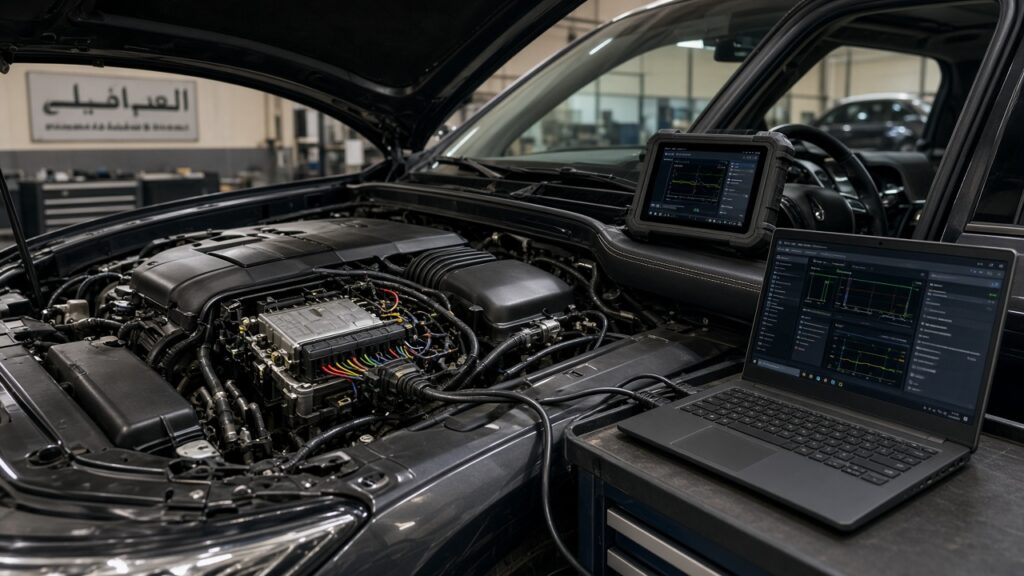
Modern engines like the V6 and V8 engines popular in UAE SUVs—are incredibly complex. They use Variable Valve Timing (VVT) solenoids and cam phasers that rely on oil pressure to function.
-
The Risk: An aggressive engine sludge remover can dislodge a chunk of debris, which then flows downstream and gets stuck in the tiny mesh screens of a VVT solenoid.
-
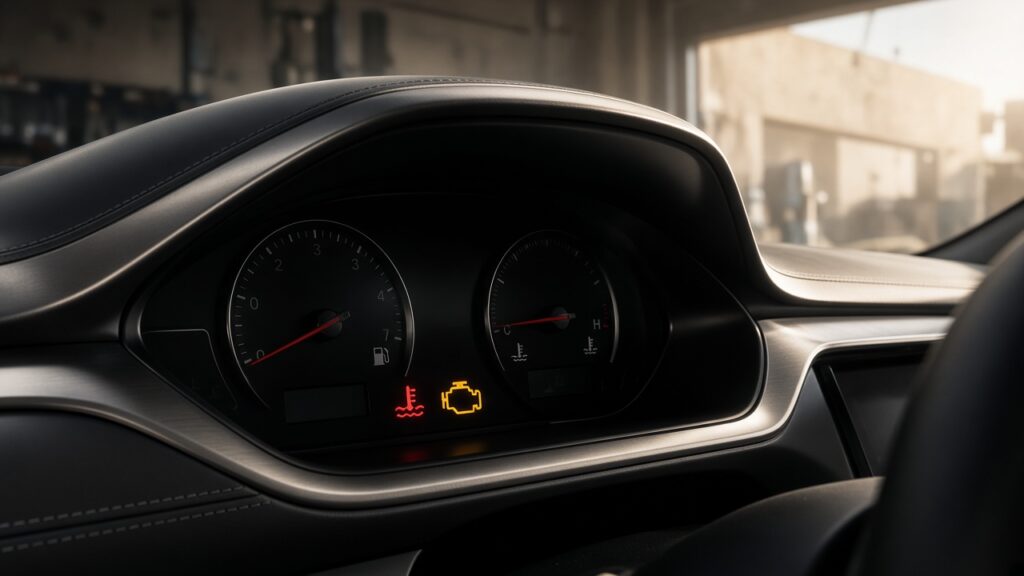
The Result: Your “Check Engine” light turns on, and you are left with rough idling or timing issues that cost thousands of Dirhams to fix.
3. Synthetic Oil Does the Job
Major automakers argue that if you follow the OEM oil change guidelines, you don’t need a flush. Top-tier synthetic oils (like Mobil 1 or Shell Helix) already contain dispersants that gently clean the engine over thousands of kilometers.
The Mechanic’s Argument: Why They Recommend It
If manufacturers say no, why is the engine flush pros and cons debate even happening? Why do mechanics push it?
1. The “High Margin” Upsell
Let’s be honest about the business side. For a quick-lube shop, an oil change has a very low profit margin. An engine flush is a high-margin add-on. It takes zero extra labor (the engine is idling anyway) and costs the shop very little in materials. It is the classic mechanic upsell engine flush tactic.
2. The Legitimate Fix (In Rare Cases)
Not every mechanic is trying to scam you. There are legitimate mechanical reasons to flush an engine, particularly for stuck hydraulic lifters. If your car has a “ticking” noise on cold starts, it might be due to varnish building up on the lifters. A flush can sometimes dissolve this varnish and quiet the noise, saving you from an expensive engine tear-down.
3. Neglected Maintenance
If a customer comes in with a car that hasn’t had an oil change in 30,000 km, the oil has turned into tar. In this specific “save the engine” scenario, a mechanic might suggest a flush as a last-ditch effort. However, this is where the danger lies.
The “Pandora’s Box” Effect: Risks for High-Mileage Cars
This is the most critical section for owners of older vehicles (100,000+ km) in the UAE.
Sludge as a “False Seal”
In an old engine, gaskets harden and shrink. Often, the only thing stopping oil from leaking out of these gaps is the sludge itself. It acts as a barrier. If you use a harsh engine flush treatment, you dissolve that barrier. Suddenly, your rear main seal starts dripping, your valve cover gaskets weep, and your driveway is covered in oil spots.
The Clogged Pickup Screen Nightmare
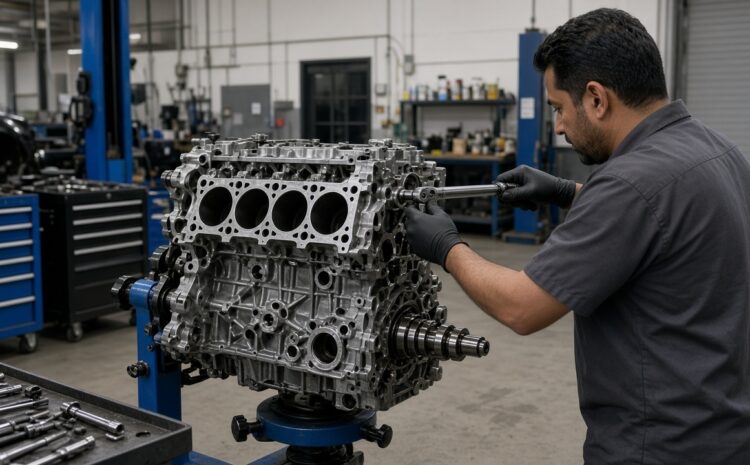
This is the worst-case scenario. An engine flush might loosen large chunks of hard carbon deposits but not fully dissolve them. These chunks drop into the oil pan. When you start the engine, the oil pump sucks these chunks up against the oil pickup screen. This starves the engine of oil.
-
Outcome: catastrophic engine failure (seized bearings) within days of the flush.
-
Search Query Reality: This is why you see so many forum posts titled “Engine knocking after flush” or “Oil pressure low after flush.”
The UAE Factor: Heat, Sand, and Sludge
Driving in the UAE presents a unique set of challenges that makes this topic even more relevant.
1. Extreme Heat Accelerates Sludge
Our summer temperatures regularly exceed 45°C. This heat causes engine oil to break down (oxidize) much faster than in cooler climates. Oxidized oil turns into sludge. Because sludge forms faster here, the temptation to flush is higher. However, the correct solution is not a chemical nuke; it is shorter oil change intervals.
2. Sand and Dust
Fine desert dust is the enemy of your engine. If your air filter isn’t changed frequently, silica (sand) enters the oil supply. A chemical flush does not remove sand; only physically draining the oil does.
Smart Garage Insight: For our customers in Dubai driving Land Cruisers, Patrols, and German sedans, we often see that adhering to the “10,000 km service interval” is too long for this climate. We recommend 7,000 km intervals to prevent sludge naturally.

Is Engine Flush Good or Bad? The Final Verdict
So, is engine flush good or bad? There is no simple yes/no, but here is our expert breakdown:
It is BAD (Avoid It) If:
-
Your car is brand new or under warranty: Do not risk voiding your warranty.
-
You have a high-mileage engine with unknown history: You risk the “Pandora’s Box” of leaks.
-
You maintain your car perfectly: If you change your oil on time, your engine is already clean. A flush is a waste of money.
-
You drive a modern Turbocharged car: Turbos rely on specific oil bearings that can be damaged by solvents.
It is GOOD (Proceed with Caution) If:
-
You bought a used car with mild neglect: If you inspect the oil cap and see light varnish (gold color) but not thick black sludge, a mild flush might help reset the maintenance baseline.
-
You have specific symptoms: Sticky lifters or VVT codes that a mechanic has diagnosed as varnish-related.
The Better Alternative: Short Interval Changes
If you are worried about sludge but afraid of the risks of a chemical flush, there is a safer, manufacturer-approved method. It is called the Short Interval Change method.
Instead of one harsh chemical cleaning:
-
Buy a high-quality synthetic oil (like Shell Helix or Mobil 1) and a quality filter.
-
Drive the car for just 1,000 to 1,500 km.
-
Change the oil and filter again.
-
Repeat one more time.
Why this works: The high detergent content in fresh synthetic oil cleans the engine gently and slowly. It dissolves sludge layer by layer, preventing large chunks from breaking off and clogging your engine. It costs more than a AED 50 flush bottle, but it is infinitely cheaper than a new engine.
Frequently Asked Questions (FAQs)
Q: Does engine flush void warranty in the UAE? A: It can. If your engine fails and the dealership finds traces of strong solvents in the oil, they may deny your claim. Always check your car owner’s manual oil flush section.
Q: How often should I flush my engine? A: Ideally, never. If you change your oil regularly, you should never need one. If you must, do it only when specific symptoms arise, not as “preventative” maintenance.
Q: Can engine flush cause leaks? A: Yes. On older cars, it cleans away the grime that was acting as a seal for worn gaskets.
Q: Is engine flush necessary for a Toyota or Nissan? A: generally, no. Both Toyota and Nissan engines are known for longevity if oil is changed regularly. Toyota/Nissan/Ford engine flush recommendations usually lean towards “avoid.”
Conclusion: Trust Expertise, Not Chemicals
At Smart Garage, we have seen the inside of thousands of engines. We have seen pristine engines with 300,000 km that never had a flush, simply because the owner changed the oil every 7,000 km. We have also seen seized engines caused by a cheap flush done at a quick-lube shop.
Don’t let fear of sludge drive you to make a risky decision.
Think your engine might have sludge? Don’t guess. Bring it to Smart Garage. We can perform a physical inspection (checking under the valve cover) to see the real condition of your engine. If it needs cleaning, we will guide you toward the safest method for your specific vehicle and mileage.