Home About Services Brands Blog Contact
May 18, 2026 • Smart Garage Sharjah

Why Modern Cars Struggle in Sharjah Traffic: A Technical Guide to Surviving the Gridlock

The interaction of extreme environmental factors and dense urban gridlock significantly accelerates the vehicle problems Sharjah motorists encounter on a daily basis. While contemporary automotive engineering has made substantial progress in optimizing fuel efficiency and passenger comfort, modern vehicles are validated under standardized driving cycles that assume temperate climates.

When subjected to the localized microclimate of the Arabian Peninsula where ambient temperatures frequently exceed 45°C, relative humidity is elevated, and airborne sand is constantly present—the operating envelopes of these vehicles are pushed to their absolute limits.

In highly populated urban centers like Sharjah, particularly within high-density residential and commercial transit corridors such as Al Khan, Al Majaz, Al Nahda, and Muwaileh, vehicles are subjected to prolonged idling and low-speed stop-and-start commuting. This continuous low-velocity operation alters the thermal dissipation, mechanical lubrication, and electrical generation cycles of the vehicle.

This comprehensive guide breaks down the distinct traffic-related car problems Sharjah workshops must systematically resolve to keep vehicles operational.

1. Urban Congestion and Extreme Environmental Variables in Sharjah

The geographical and structural layout of Sharjah creates a unique set of challenges for automotive engineering. High coastal humidity originating from the Arabian Gulf combines with blistering ambient temperatures to create a dense heat-island effect across the city’s major transit routes. During rush hours, major arterial highways such as the E11 and E311 experience severe congestion. In these conditions, vehicles operate in close proximity, creating localized zones of elevated temperature that are significantly hotter than regional weather forecasts suggest.

Furthermore, the atmosphere in Sharjah contains high concentrations of fine desert sand and industrial dust. These microscopic silica particles are drawn into engine bays and air intake systems, where they:

  • Degrade mechanical seals.

  • Accumulate in heat exchangers.

  • Clog filtration media.

Modern luxury and family cars, which rely on highly sensitive sensors, variable valve timing, and tight mechanical tolerances, are highly vulnerable to these airborne contaminants. When these particles combine with prolonged idling, the mechanical and electronic systems of the vehicle degrade much faster than they would under highway driving conditions.

2. Cooling System Bottlenecks and Engine Overheating Mechanics

The principal engineering challenge of operating an internal combustion engine or a hybrid powertrain in congested urban environments is heat rejection. Under normal driving conditions, an engine relies on the passive movement of ambient air through the front grille to cool the radiator.

In stop-and-go traffic, the velocity of the incoming air stream drops to near zero. Consequently, the entire cooling system becomes entirely dependent on the mechanical or electrical pull of the radiator cooling fans. This technical bottleneck is the primary cause of sudden car overheating in Sharjah traffic, particularly when the ambient heat index is elevated by heat radiating from the asphalt road surface.

Cooling System Component Failures in Traffic

Cooling System Component Primary Failure Mechanism in Traffic Resulting Operational Symptom Long-Term Consequence
Cooling Fan Motor Thermal overload from continuous maximum duty cycle Inability to pull air through radiator at standstill Rapid spike in engine operating temperatures
Radiator Core Fins Physical accumulation of airborne sand, dust, and debris Reduced effective heat-exchanging surface area Gradual decrease in cooling system efficiency
Expansion Tank Cap Elastic degradation of rubber seals under high pressure Slow loss of system pressure, lowering coolant boiling point Coolant vaporization, boil-over, and vapor lock
Water Pump Assembly Impeller cavitation and bearing wear under high thermal loads Reduced fluid circulation velocity throughout the block Localized hot spots in the cylinder head

Additionally, the cabin air conditioning compressor operates at maximum capacity to maintain passenger comfort, adding an immense parasitic load to the engine. The AC condenser, positioned directly in front of the engine radiator, rejects its accumulated heat into the incoming air stream. This means the air reaching the radiator is already pre-heated, causing the engine cooling system to struggle further.

Over time, this continuous thermal stress leads to distinct car cooling system problems. The coolant itself degrades rapidly under high operating temperatures, accelerating the depletion of protective corrosion inhibitors.

Furthermore, minor leaks in the pressurized expansion tank, radiator hoses, or water pump seals lead to localized pressure drops. Any loss in pressure causes the fluid to boil and vaporize. Once vapor pockets form within the cylinder head, localized hot spots develop, causing warped cylinder heads or blown head gaskets. To prevent catastrophic engine failure, vehicle owners must ensure that these components undergo regular pressure testing and debris removal via specialized car radiator repair Sharjah services.

3. Transmission Stress and Fluid Degradation Under Constant Shear

Modern vehicles are increasingly equipped with multi-stage automatic transmissions, Continuously Variable Transmissions (CVTs), or Dual-Clutch Transmissions (DCTs) designed to optimize fuel economy. However, the fluid dynamics and mechanical friction generated within these gearboxes in congested traffic conditions present a major engineering challenge. The constant shifting between first, second, and neutral gears under high thermal loads places immense pressure on transmission fluid and mechanical clutch packs.

Automatic transmission fluid (ATF) serves multiple functions: it acts as a hydraulic fluid to actuate gear changes, a coolant to carry heat away from internal components, and a lubricant to prevent metal-on-metal wear.

In stop-and-go traffic, the lack of cooling airflow causes transmission fluid temperatures to spike past safe operating limits. At these elevated temperatures, the fluid experiences severe thermal shear-thinning, which drastically reduces its viscosity and film strength.

This reduction in viscosity leads to regimes where gear teeth directly contact each other, generating micro-abrasions and internal debris. This process rapidly degrades the clutch friction modifiers, ultimately leading to severe car transmission problems Sharjah commuters face daily, characterized by:

  • Jerky shifts or rough engagement

  • Delayed acceleration

  • Gear slipping or unexpected revving

The mechanical wear on clutches and gear teeth is a major source of the cumulative stop and go traffic car damage vehicles suffer over time.

For vehicles equipped with Dual-Clutch Transmissions (DCTs), the failure mechanics are even more acute. In traffic, drivers frequently “creep” forward by slightly releasing the brake pedal without fully engaging the accelerator. This crawling motion forces the clutch plates to slip continuously to match the low wheel speed, generating extreme friction-induced thermal spikes. If the clutch temperature exceeds safety thresholds, the transmission control module enters a protective “limp mode,” disabling engagement until the assembly cools down. Over time, this requires specialized transmission repair Sharjah services to replace worn components and recalibrate the electro-hydraulic solenoids.

4. Electro-Chemical Strain on Batteries and Control Modules

Modern luxury and family vehicles are highly reliant on stable electrical current to power advanced driver assistance systems (ADAS), electric power steering motors, dual-zone climate control blowers, and multiple engine control units (ECUs). The primary source of this electrical energy when the engine is running is the alternator.

However, at idle speeds in heavy traffic, the alternator’s rotational velocity is at its lowest, which significantly reduces its maximum current output capacity. Concurrently, the electrical demand from comfort systems, cooling fans, and safety sensors is at its peak. This imbalance forces the car battery to act as a secondary buffer, continuously discharging to meet the electrical deficit.

This continuous discharge occurs in an environment where under-hood temperatures frequently exceed 75°C due to heat radiation from the engine block. High ambient temperatures accelerate the evaporation of the liquid electrolyte in flooded batteries and speed up grid oxidation in sealed AGM batteries. Every significant rise in under-hood temperature drastically accelerates internal grid corrosion and plate sulfation. This rapid decay is the primary catalyst for severe car battery drain problems Sharjah motorists experience, often leading to sudden starting failures.

Additionally, modern “start-stop” systems, designed to shut down the engine at traffic lights, place a massive cyclic load on the battery. In Sharjah’s heavy traffic, a vehicle may cycle its starter motor dozens of times over a short commute. If the battery’s state of health is already compromised, the energy management system will begin disabling non-essential modules—including the start-stop function and components of the climate control—directly triggering the complex car ac problems drivers experience during peak summer afternoons.

5. Elevated Brake Wear and Brake Fluid Failure

Stop-and-go driving represents a continuous cycle of kinetic energy transformation. The energy generated by the engine is repeatedly converted into kinetic energy to move the vehicle forward, only to be immediately converted into thermal energy by the braking system during deceleration.

In dense traffic, this transformation occurs hundreds of times per hour. Because the vehicle’s speed between stops is insufficient to generate high-velocity airflow through the brake discs, the thermal energy cannot be effectively dissipated. Instead, the heat accumulates within the brake pads and rotors, driving temperatures up significantly.

At these extreme temperatures, standard brake pads begin to experience thermal fade. The binding resins within the pad material begin to vaporize under extreme heat, creating a thin layer of gas between the pad and the rotor. This gas layer acts as an unintended lubricant, reducing the coefficient of friction and requiring significantly higher pedal pressure to achieve the same stopping force.

Furthermore, the structural steel of the brake discs undergoes uneven thermal expansion, leading to disc warping. This warping manifests as steering wheel vibrations and pulsing brake pedals under deceleration, escalating the severe brake wear problems traffic conditions demand.

This persistent thermal stress also affects the hydraulic fluid within the braking system. Brake fluids are hygroscopic, meaning they naturally absorb moisture from the atmosphere over time. Sharjah’s coastal humidity accelerates this moisture absorption process.

When brake temperatures spike during heavy traffic congestion, the absorbed water content within the fluid reaches its boiling point and converts into highly compressible steam pockets within the hydraulic lines. This leads to a spongy brake pedal feel and a critical drop in overall braking efficiency, compounding the sudden car performance issues commuters face.

6. Dealer-Grade Diagnostics for Modern Vehicle Architectures

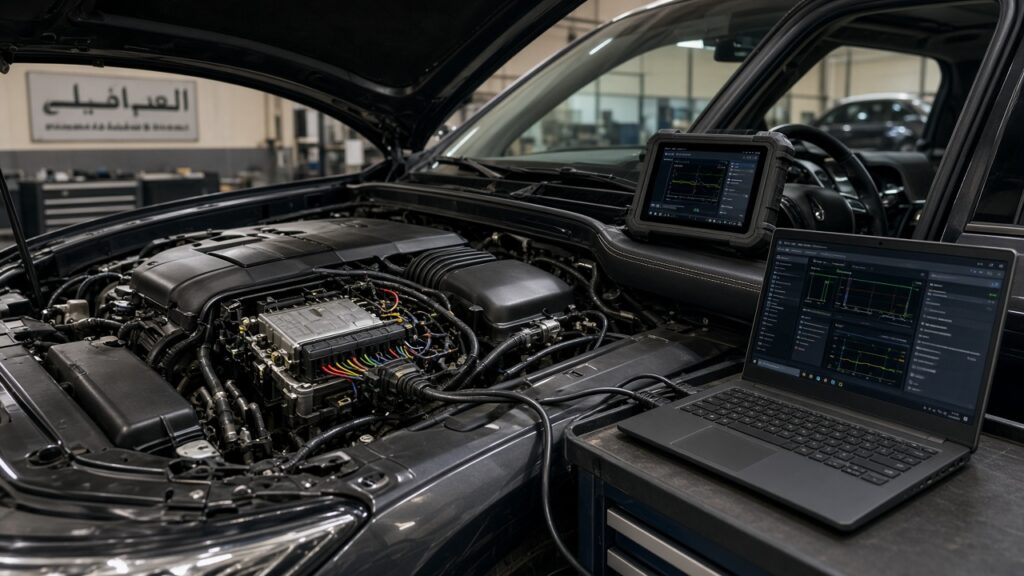
Given the high level of electronic integration in modern vehicles, a mechanical failure rarely occurs in isolation. A thermal spike in the transmission or a minor voltage drop across the battery terminal can trigger a cascade of error codes across multiple control units, requiring a comprehensive car diagnostic service Sharjah to trace hidden communication errors across the vehicle’s network.

Generic OBD-II scanners are often unable to access the deep-tier, manufacturer-specific control modules required to diagnose these complex systems. For modern luxury and performance vehicles, utilizing dealer-grade diagnostic ecosystems is critical to accurately isolate faults without resorting to speculative parts replacement.

At Smart Garage UAE, located in Sharjah Industrial Area 6, master technicians employ advanced, dedicated manufacturer diagnostic interfaces to map the vehicle’s electrical and mechanical systems. These specialized dealer-level ecosystems allow for deep-tier access and precise coding capabilities:

  • ODIS (Offboard Diagnostic Information System): Used to access the complete controller area network (CAN-bus) of Audi, Volkswagen, and Bentley vehicles, allowing technicians to recalibrate engine actuators and code new comfort modules.

  • ISTA/D (Integrated Service Technical Application): Utilized for BMW and Mini vehicles to conduct live data graphing of coolant temperatures, variable valve timing (VANOS) angles, and battery state-of-charge parameters.

  • XENTRY STAR: The dedicated proprietary diagnostic environment for Mercedes-Benz, which allows for exact component testing of air suspension compressors, multi-zone climate control sensors, and transmission control units.

  • PIWIS III (Porsche Integrated Workshop Information System): Designed specifically for Porsche models to monitor dual-clutch (PDK) clutch wear profiles, oil pressure dynamics under thermal stress, and battery management parameters.

By utilizing these precise manufacturer-specific platforms, technicians can run automated test plans to identify if a vehicle’s rough idling or poor acceleration is caused by a failing throttle position sensor, a vacuum leak from a heat-cracked intake hose, or a communication failure in the CAN-bus architecture. This level of diagnostic precision is crucial for high-quality luxury car repair Sharjah, where sophisticated electronics govern every aspect of vehicle dynamics.

7. Restorative Solutions and Preventative Maintenance at Smart Garage UAE

The physical and chemical tolls of stop-and-go driving are severe, but they can be managed with a structured approach to preventative care. Because the extreme Sharjah environment accelerates component wear, standard manufacturer service intervals are often insufficient.

Adopting specialized service intervals is essential to protect critical vehicle systems:

  • Lubrication and Fluid Management: Engine and transmission oils degrade rapidly under continuous heat and shear stress. Motor oil should be replaced every 5,000 to 7,000 kilometers using fully synthetic lubricants designed for high-temperature climates. Similarly, transmission fluids should be flushed regularly to maintain necessary viscosity and protect internal gears.

  • Cooling System Maintenance: The vehicle’s cooling system requires a full inspection and pressure test every 12 to 18 months. This process identifies hairline cracks in plastic expansion tanks, weak hose clamps, and minor radiator leaks before they lead to roadside failures. A periodic radiator flush removes internal scale, while external cleaning clears away sand and dust to restore proper airflow.

  • Filtration and Airflow Optimization: Given the high dust and sand levels in Sharjah, the engine air filter and cabin AC filter should be inspected and cleaned every 3 months, and replaced promptly if clogged. Clean filters improve engine breathing, reduce thermal stress, and help the AC system run more efficiently.

  • Battery and Electrical System Care: Batteries should undergo professional load testing every 6 months to monitor their State of Health (SoH) and charging capacity. Cleaning the battery terminals removes corrosion, ensuring proper voltage delivery. For modern stop-start vehicles, using high-quality AGM or EFB batteries is essential to withstand the constant cycling under high temperatures.

When routine maintenance is deferred, minor issues can quickly develop into expensive mechanical failures. When components fail, prompt and professional car repair Sharjah is necessary to restore vehicle safety and performance.

Smart Garage UAE, located in Sharjah Industrial Area 6, near the Flying Saucer Intersection, is a dedicated facility for complex mechanical and electrical restoration. With over 20 years of technical expertise, their master technicians specialize in high-precision engine repair Sharjah, transmission overhauls, and complete cooling system restorations.

Conveniently located near key urban communities including Al Khan, Al Majaz, Al Nahda, Al Taawun, and Muwaileh, Smart Garage UAE provides dealer-level diagnostic accuracy combined with clear, upfront pricing. To support drivers during roadside emergencies, they also offer a mobile garage service that can perform on-site diagnostics, battery replacements, and minor mechanical repairs.

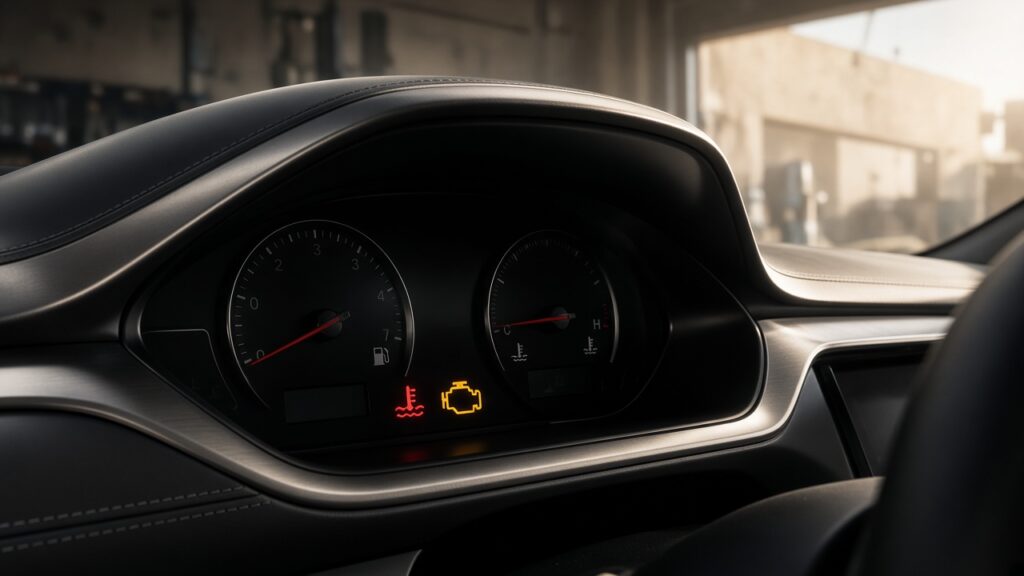
For motorists dealing with check engine lights, shifting delays, or cooling system issues, professional car maintenance Sharjah ensures that the vehicle is restored using high-quality OEM parts, protecting its reliability and long-term resale value.

Frequently Asked Questions (FAQs)

Why does my car engine overheat specifically when I am stuck in Sharjah traffic?

In stop-and-go traffic, your car loses the natural, passive airflow that enters the engine bay while driving at higher speeds. The cooling system becomes entirely reliant on electric cooling fans. When ambient temperatures exceed 45°C and heat radiates off the asphalt, the temperature difference between the radiator and the air drops, making it incredibly difficult for the system to reject heat.

How often should I change my engine oil if I commute through heavy traffic daily?

If your daily commute involves heavy traffic corridors like Al Nahda or Al Khan, you should follow a “severe driving conditions” schedule. It is highly recommended to shorten your oil drain intervals to every 5,000 to 7,000 kilometers using premium, high-temperature fully synthetic oil.

Why does my automatic or DCT transmission feel jerky during rush hour?

In heavy traffic, transmission fluid temperatures quickly spike. Extreme heat thins the fluid, reducing its ability to lubricate effectively and causing internal clutches to slip or engage roughly. In Dual-Clutch Transmissions (DCTs), continuous low-speed “creeping” causes the clutch plates to slip constantly, creating rapid heat buildup and jerky gear shifts.

Why do car batteries fail so suddenly in the UAE compared to other regions?

The combination of low alternator output during prolonged engine idling and extreme under-hood temperatures (which often exceed 75°C) accelerates internal battery grid corrosion and fluid evaporation. This doubles the chemical degradation rate of the battery, leading to sudden voltage drops and unexpected starting failures.

What is the difference between a generic OBD-II scan and dealer-grade diagnostics?

Generic scanners only read basic, standardized emissions-related trouble codes. Dealer-grade software (like ODIS, ISTA, XENTRY, and PIWIS) provides deep-tier access to proprietary manufacturer modules. This allows technicians to view live data streams, check individual sensor tolerances, map complex communication errors across the CAN-bus, and perform component coding or recalibrations.
 Why Modern Cars Struggle in Sharjah Traffic: A Technical Guide to Surviving the Gridlock

Why Modern Cars Struggle in Sharjah Traffic: A Technical Guide to Surviving the Gridlock

The interaction of extreme environmental factors and dense urban gridlock significantly accelerates the vehicle problems Sharjah motorists encounter on a daily basis. While contemporary automotive engineering has made substantial progress in optimizing fuel efficiency and passenger comfort, modern vehicles are validated under standardized driving cycles that assume temperate climates.

When subjected to the localized microclimate of the Arabian Peninsula where ambient temperatures frequently exceed 45°C, relative humidity is elevated, and airborne sand is constantly present—the operating envelopes of these vehicles are pushed to their absolute limits.

In highly populated urban centers like Sharjah, particularly within high-density residential and commercial transit corridors such as Al Khan, Al Majaz, Al Nahda, and Muwaileh, vehicles are subjected to prolonged idling and low-speed stop-and-start commuting. This continuous low-velocity operation alters the thermal dissipation, mechanical lubrication, and electrical generation cycles of the vehicle.

This comprehensive guide breaks down the distinct traffic-related car problems Sharjah workshops must systematically resolve to keep vehicles operational.

1. Urban Congestion and Extreme Environmental Variables in Sharjah

The geographical and structural layout of Sharjah creates a unique set of challenges for automotive engineering. High coastal humidity originating from the Arabian Gulf combines with blistering ambient temperatures to create a dense heat-island effect across the city’s major transit routes. During rush hours, major arterial highways such as the E11 and E311 experience severe congestion. In these conditions, vehicles operate in close proximity, creating localized zones of elevated temperature that are significantly hotter than regional weather forecasts suggest.

Furthermore, the atmosphere in Sharjah contains high concentrations of fine desert sand and industrial dust. These microscopic silica particles are drawn into engine bays and air intake systems, where they:

  • Degrade mechanical seals.

  • Accumulate in heat exchangers.

  • Clog filtration media.

Modern luxury and family cars, which rely on highly sensitive sensors, variable valve timing, and tight mechanical tolerances, are highly vulnerable to these airborne contaminants. When these particles combine with prolonged idling, the mechanical and electronic systems of the vehicle degrade much faster than they would under highway driving conditions.

2. Cooling System Bottlenecks and Engine Overheating Mechanics

The principal engineering challenge of operating an internal combustion engine or a hybrid powertrain in congested urban environments is heat rejection. Under normal driving conditions, an engine relies on the passive movement of ambient air through the front grille to cool the radiator.

In stop-and-go traffic, the velocity of the incoming air stream drops to near zero. Consequently, the entire cooling system becomes entirely dependent on the mechanical or electrical pull of the radiator cooling fans. This technical bottleneck is the primary cause of sudden car overheating in Sharjah traffic, particularly when the ambient heat index is elevated by heat radiating from the asphalt road surface.

Cooling System Component Failures in Traffic

Cooling System Component Primary Failure Mechanism in Traffic Resulting Operational Symptom Long-Term Consequence
Cooling Fan Motor Thermal overload from continuous maximum duty cycle Inability to pull air through radiator at standstill Rapid spike in engine operating temperatures
Radiator Core Fins Physical accumulation of airborne sand, dust, and debris Reduced effective heat-exchanging surface area Gradual decrease in cooling system efficiency
Expansion Tank Cap Elastic degradation of rubber seals under high pressure Slow loss of system pressure, lowering coolant boiling point Coolant vaporization, boil-over, and vapor lock
Water Pump Assembly Impeller cavitation and bearing wear under high thermal loads Reduced fluid circulation velocity throughout the block Localized hot spots in the cylinder head

Additionally, the cabin air conditioning compressor operates at maximum capacity to maintain passenger comfort, adding an immense parasitic load to the engine. The AC condenser, positioned directly in front of the engine radiator, rejects its accumulated heat into the incoming air stream. This means the air reaching the radiator is already pre-heated, causing the engine cooling system to struggle further.

Over time, this continuous thermal stress leads to distinct car cooling system problems. The coolant itself degrades rapidly under high operating temperatures, accelerating the depletion of protective corrosion inhibitors.

Furthermore, minor leaks in the pressurized expansion tank, radiator hoses, or water pump seals lead to localized pressure drops. Any loss in pressure causes the fluid to boil and vaporize. Once vapor pockets form within the cylinder head, localized hot spots develop, causing warped cylinder heads or blown head gaskets. To prevent catastrophic engine failure, vehicle owners must ensure that these components undergo regular pressure testing and debris removal via specialized car radiator repair Sharjah services.

3. Transmission Stress and Fluid Degradation Under Constant Shear

Modern vehicles are increasingly equipped with multi-stage automatic transmissions, Continuously Variable Transmissions (CVTs), or Dual-Clutch Transmissions (DCTs) designed to optimize fuel economy. However, the fluid dynamics and mechanical friction generated within these gearboxes in congested traffic conditions present a major engineering challenge. The constant shifting between first, second, and neutral gears under high thermal loads places immense pressure on transmission fluid and mechanical clutch packs.

Automatic transmission fluid (ATF) serves multiple functions: it acts as a hydraulic fluid to actuate gear changes, a coolant to carry heat away from internal components, and a lubricant to prevent metal-on-metal wear.

In stop-and-go traffic, the lack of cooling airflow causes transmission fluid temperatures to spike past safe operating limits. At these elevated temperatures, the fluid experiences severe thermal shear-thinning, which drastically reduces its viscosity and film strength.

This reduction in viscosity leads to regimes where gear teeth directly contact each other, generating micro-abrasions and internal debris. This process rapidly degrades the clutch friction modifiers, ultimately leading to severe car transmission problems Sharjah commuters face daily, characterized by:

  • Jerky shifts or rough engagement

  • Delayed acceleration

  • Gear slipping or unexpected revving

The mechanical wear on clutches and gear teeth is a major source of the cumulative stop and go traffic car damage vehicles suffer over time.

For vehicles equipped with Dual-Clutch Transmissions (DCTs), the failure mechanics are even more acute. In traffic, drivers frequently “creep” forward by slightly releasing the brake pedal without fully engaging the accelerator. This crawling motion forces the clutch plates to slip continuously to match the low wheel speed, generating extreme friction-induced thermal spikes. If the clutch temperature exceeds safety thresholds, the transmission control module enters a protective “limp mode,” disabling engagement until the assembly cools down. Over time, this requires specialized transmission repair Sharjah services to replace worn components and recalibrate the electro-hydraulic solenoids.

4. Electro-Chemical Strain on Batteries and Control Modules

Modern luxury and family vehicles are highly reliant on stable electrical current to power advanced driver assistance systems (ADAS), electric power steering motors, dual-zone climate control blowers, and multiple engine control units (ECUs). The primary source of this electrical energy when the engine is running is the alternator.

However, at idle speeds in heavy traffic, the alternator’s rotational velocity is at its lowest, which significantly reduces its maximum current output capacity. Concurrently, the electrical demand from comfort systems, cooling fans, and safety sensors is at its peak. This imbalance forces the car battery to act as a secondary buffer, continuously discharging to meet the electrical deficit.

This continuous discharge occurs in an environment where under-hood temperatures frequently exceed 75°C due to heat radiation from the engine block. High ambient temperatures accelerate the evaporation of the liquid electrolyte in flooded batteries and speed up grid oxidation in sealed AGM batteries. Every significant rise in under-hood temperature drastically accelerates internal grid corrosion and plate sulfation. This rapid decay is the primary catalyst for severe car battery drain problems Sharjah motorists experience, often leading to sudden starting failures.

Additionally, modern “start-stop” systems, designed to shut down the engine at traffic lights, place a massive cyclic load on the battery. In Sharjah’s heavy traffic, a vehicle may cycle its starter motor dozens of times over a short commute. If the battery’s state of health is already compromised, the energy management system will begin disabling non-essential modules—including the start-stop function and components of the climate control—directly triggering the complex car ac problems drivers experience during peak summer afternoons.

5. Elevated Brake Wear and Brake Fluid Failure

Stop-and-go driving represents a continuous cycle of kinetic energy transformation. The energy generated by the engine is repeatedly converted into kinetic energy to move the vehicle forward, only to be immediately converted into thermal energy by the braking system during deceleration.

In dense traffic, this transformation occurs hundreds of times per hour. Because the vehicle’s speed between stops is insufficient to generate high-velocity airflow through the brake discs, the thermal energy cannot be effectively dissipated. Instead, the heat accumulates within the brake pads and rotors, driving temperatures up significantly.

At these extreme temperatures, standard brake pads begin to experience thermal fade. The binding resins within the pad material begin to vaporize under extreme heat, creating a thin layer of gas between the pad and the rotor. This gas layer acts as an unintended lubricant, reducing the coefficient of friction and requiring significantly higher pedal pressure to achieve the same stopping force.

Furthermore, the structural steel of the brake discs undergoes uneven thermal expansion, leading to disc warping. This warping manifests as steering wheel vibrations and pulsing brake pedals under deceleration, escalating the severe brake wear problems traffic conditions demand.

This persistent thermal stress also affects the hydraulic fluid within the braking system. Brake fluids are hygroscopic, meaning they naturally absorb moisture from the atmosphere over time. Sharjah’s coastal humidity accelerates this moisture absorption process.

When brake temperatures spike during heavy traffic congestion, the absorbed water content within the fluid reaches its boiling point and converts into highly compressible steam pockets within the hydraulic lines. This leads to a spongy brake pedal feel and a critical drop in overall braking efficiency, compounding the sudden car performance issues commuters face.

6. Dealer-Grade Diagnostics for Modern Vehicle Architectures

Given the high level of electronic integration in modern vehicles, a mechanical failure rarely occurs in isolation. A thermal spike in the transmission or a minor voltage drop across the battery terminal can trigger a cascade of error codes across multiple control units, requiring a comprehensive car diagnostic service Sharjah to trace hidden communication errors across the vehicle’s network.

Generic OBD-II scanners are often unable to access the deep-tier, manufacturer-specific control modules required to diagnose these complex systems. For modern luxury and performance vehicles, utilizing dealer-grade diagnostic ecosystems is critical to accurately isolate faults without resorting to speculative parts replacement.

At Smart Garage UAE, located in Sharjah Industrial Area 6, master technicians employ advanced, dedicated manufacturer diagnostic interfaces to map the vehicle’s electrical and mechanical systems. These specialized dealer-level ecosystems allow for deep-tier access and precise coding capabilities:

  • ODIS (Offboard Diagnostic Information System): Used to access the complete controller area network (CAN-bus) of Audi, Volkswagen, and Bentley vehicles, allowing technicians to recalibrate engine actuators and code new comfort modules.

  • ISTA/D (Integrated Service Technical Application): Utilized for BMW and Mini vehicles to conduct live data graphing of coolant temperatures, variable valve timing (VANOS) angles, and battery state-of-charge parameters.

  • XENTRY STAR: The dedicated proprietary diagnostic environment for Mercedes-Benz, which allows for exact component testing of air suspension compressors, multi-zone climate control sensors, and transmission control units.

  • PIWIS III (Porsche Integrated Workshop Information System): Designed specifically for Porsche models to monitor dual-clutch (PDK) clutch wear profiles, oil pressure dynamics under thermal stress, and battery management parameters.

By utilizing these precise manufacturer-specific platforms, technicians can run automated test plans to identify if a vehicle’s rough idling or poor acceleration is caused by a failing throttle position sensor, a vacuum leak from a heat-cracked intake hose, or a communication failure in the CAN-bus architecture. This level of diagnostic precision is crucial for high-quality luxury car repair Sharjah, where sophisticated electronics govern every aspect of vehicle dynamics.

7. Restorative Solutions and Preventative Maintenance at Smart Garage UAE

The physical and chemical tolls of stop-and-go driving are severe, but they can be managed with a structured approach to preventative care. Because the extreme Sharjah environment accelerates component wear, standard manufacturer service intervals are often insufficient.

Adopting specialized service intervals is essential to protect critical vehicle systems:

  • Lubrication and Fluid Management: Engine and transmission oils degrade rapidly under continuous heat and shear stress. Motor oil should be replaced every 5,000 to 7,000 kilometers using fully synthetic lubricants designed for high-temperature climates. Similarly, transmission fluids should be flushed regularly to maintain necessary viscosity and protect internal gears.

  • Cooling System Maintenance: The vehicle’s cooling system requires a full inspection and pressure test every 12 to 18 months. This process identifies hairline cracks in plastic expansion tanks, weak hose clamps, and minor radiator leaks before they lead to roadside failures. A periodic radiator flush removes internal scale, while external cleaning clears away sand and dust to restore proper airflow.

  • Filtration and Airflow Optimization: Given the high dust and sand levels in Sharjah, the engine air filter and cabin AC filter should be inspected and cleaned every 3 months, and replaced promptly if clogged. Clean filters improve engine breathing, reduce thermal stress, and help the AC system run more efficiently.

  • Battery and Electrical System Care: Batteries should undergo professional load testing every 6 months to monitor their State of Health (SoH) and charging capacity. Cleaning the battery terminals removes corrosion, ensuring proper voltage delivery. For modern stop-start vehicles, using high-quality AGM or EFB batteries is essential to withstand the constant cycling under high temperatures.

When routine maintenance is deferred, minor issues can quickly develop into expensive mechanical failures. When components fail, prompt and professional car repair Sharjah is necessary to restore vehicle safety and performance.

Smart Garage UAE, located in Sharjah Industrial Area 6, near the Flying Saucer Intersection, is a dedicated facility for complex mechanical and electrical restoration. With over 20 years of technical expertise, their master technicians specialize in high-precision engine repair Sharjah, transmission overhauls, and complete cooling system restorations.

Conveniently located near key urban communities including Al Khan, Al Majaz, Al Nahda, Al Taawun, and Muwaileh, Smart Garage UAE provides dealer-level diagnostic accuracy combined with clear, upfront pricing. To support drivers during roadside emergencies, they also offer a mobile garage service that can perform on-site diagnostics, battery replacements, and minor mechanical repairs.

For motorists dealing with check engine lights, shifting delays, or cooling system issues, professional car maintenance Sharjah ensures that the vehicle is restored using high-quality OEM parts, protecting its reliability and long-term resale value.

Frequently Asked Questions (FAQs)

Why does my car engine overheat specifically when I am stuck in Sharjah traffic?

In stop-and-go traffic, your car loses the natural, passive airflow that enters the engine bay while driving at higher speeds. The cooling system becomes entirely reliant on electric cooling fans. When ambient temperatures exceed 45°C and heat radiates off the asphalt, the temperature difference between the radiator and the air drops, making it incredibly difficult for the system to reject heat.

How often should I change my engine oil if I commute through heavy traffic daily?

If your daily commute involves heavy traffic corridors like Al Nahda or Al Khan, you should follow a “severe driving conditions” schedule. It is highly recommended to shorten your oil drain intervals to every 5,000 to 7,000 kilometers using premium, high-temperature fully synthetic oil.

Why does my automatic or DCT transmission feel jerky during rush hour?

In heavy traffic, transmission fluid temperatures quickly spike. Extreme heat thins the fluid, reducing its ability to lubricate effectively and causing internal clutches to slip or engage roughly. In Dual-Clutch Transmissions (DCTs), continuous low-speed “creeping” causes the clutch plates to slip constantly, creating rapid heat buildup and jerky gear shifts.

Why do car batteries fail so suddenly in the UAE compared to other regions?

The combination of low alternator output during prolonged engine idling and extreme under-hood temperatures (which often exceed 75°C) accelerates internal battery grid corrosion and fluid evaporation. This doubles the chemical degradation rate of the battery, leading to sudden voltage drops and unexpected starting failures.

What is the difference between a generic OBD-II scan and dealer-grade diagnostics?

Generic scanners only read basic, standardized emissions-related trouble codes. Dealer-grade software (like ODIS, ISTA, XENTRY, and PIWIS) provides deep-tier access to proprietary manufacturer modules. This allows technicians to view live data streams, check individual sensor tolerances, map complex communication errors across the CAN-bus, and perform component coding or recalibrations.
Leave a Reply

Your email address will not be published. Required fields are marked *

Smart Garage
Service Advisor
Online
Smart Garage
Hello! How can we help you with your car today? 👋
Just now
1