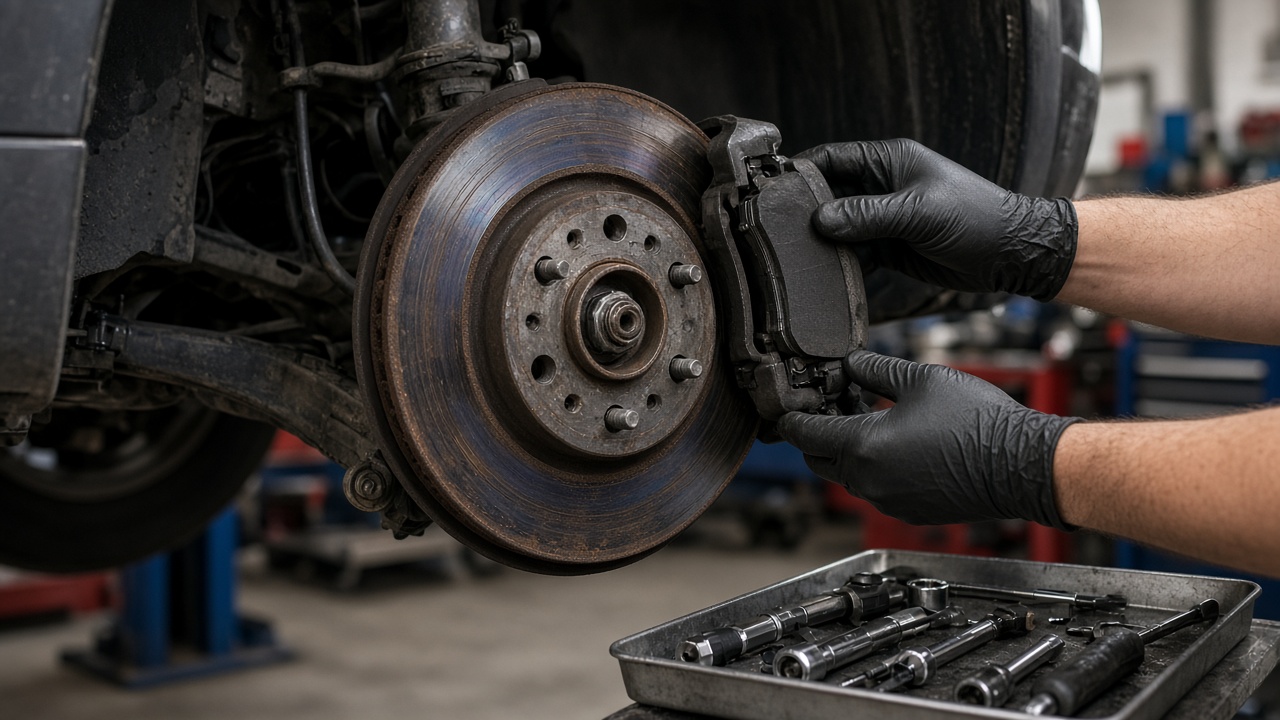
It begins innocently enough. A high-pitched squeal or chirp when you pull up to a stop sign. It’s annoying, but the car still stops, so you turn up the radio and promise yourself you’ll get it checked “soon.”
Weeks pass. Then, one day, the sound changes.
That high-frequency whistle deepens into a guttural, harsh, metallic growl. Now, every time you press the pedal, it sounds and feels like stones are being crushed in a blender directly beneath your feet.
If your squeaking brakes have turned into grinding sounds, you have moved past the warning stage and entered a phase of active mechanical failure. The transition in sound is not just a nuisance; it is a physical alarm bell indicating that the wearable components of your braking system are gone, and structural damage is occurring right now.
Driving with grinding brakes is terrifying, dangerous, and increasingly expensive with every mile you travel. In this in-depth guide, we will move beyond surface-level symptoms to explore the physics of brake failure, why the sound changed, the specific risks of driving on “metal-on-metal,” and why immediate professional repair is non-negotiable.
The Brake Noise Decoder: Is It Grinding or Something Else?
Before diving into the mechanics of failure, it is crucial to confirm what you are hearing. Not all brake noises indicate the same problem. Use this diagnostic table to identify your specific issue.
| Sound Description | Likely Mechanical Cause | Urgency Level |
| High-Pitched Squeal/Chirp | The wear indicator tab is contacting the rotor, OR pads are “glazed” (see below). | Moderate: Book an appointment soon. |
| Harsh, Metallic Grind | Friction material is gone. Steel backing plate is destroying the iron rotor. | Critical: Stop driving immediately. |
| Rhythmic Thumping/Pulsing | Warped rotors caused by heat, or rust buildup on one section of the disc. | High: Safety risk due to reduced contact. |
| Clicking or Clunking | Loose hardware. Anti-rattle clips may be missing, causing pads to shift. | Moderate: Needs inspection. |
| Scraping at Low Speed | Often a bent dust shield lightly touching the rotor, or a small rock trapped behind it. | Low: Annoying, but rarely dangerous. |
If your sound matches the “Harsh, Metallic Grind,” continue reading immediately.
Phase 1: The Squeak (The Engineered Warning)
To understand the severity of the grind, we must first understand what you ignored: the squeak. Brakes are designed to be relatively quiet, but they are also engineered to communicate with you when they need attention.
The Mechanics of the Wear Indicator
Most modern disc brake pads are equipped with a mechanical wear indicator. This is a small, spring-steel tab attached to the brake pad’s backing plate.
When your pads are healthy, a thick layer of friction compound (ceramic, semi-metallic, or organic material) separates the steel caliper from the iron rotor. As you drive over thousands of miles, this compound wears away.
When the material reaches a critically low level usually 3mm to 4mm that metal wear indicator tab begins to graze the surface of the spinning rotor. This light, vibrating contact creates that high-pitched squealing sound. This sound is intentional. It is designed to be annoying enough to compel you to visit a mechanic before damage occurs.
The “False Positive”: Squeaking Without Wear (Glazing)
A common point of confusion is when brakes squeak loudly, but a visual inspection shows plenty of pad thickness remaining. This is often due to Brake Glazing.
Glazing occurs when brake pads are subjected to extreme heat (e.g., riding brakes down a mountain or repeated panic stops). The heat cooks the resin in the friction material, causing it to crystallize and harden into a smooth, glass-like surface
A glazed pad cannot generate friction efficiently. Instead of gripping the rotor, it skids across it, creating a high-pitched squeal. While the pad isn’t “worn out” in terms of thickness, it is ruined chemically and needs replacement.
Phase 2: The Transition to Grinding (The Failure)
If the squeaking has stopped and been replaced by grinding, you have likely worn through or snapped off the wear indicator entirely. You are no longer in the warning phase; you are in the destruction phase.
The Anatomy of a Grind: What is “Metal-on-Metal”?
When mechanics use the ominous term “metal-on-metal,” they are referring to the complete depletion of the consumable friction material.
A brake pad consists of two main parts bonded together:
-
The Friction Material: The consumable block that stops the car.
-
The Backing Plate: A rigid steel plate that holds the friction material and sits inside the caliper piston.
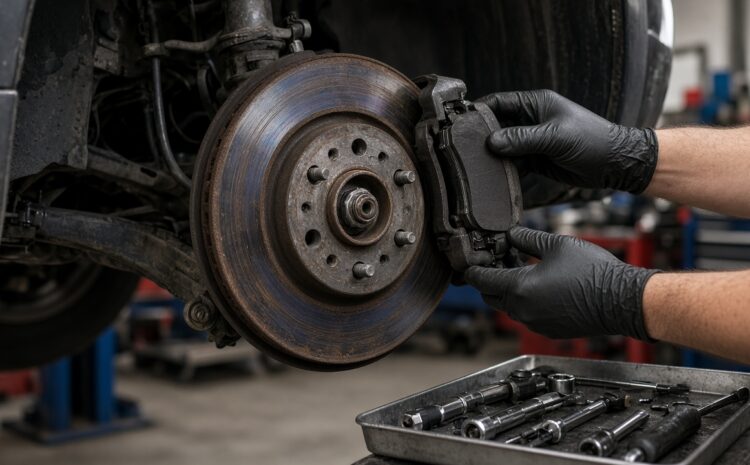
When you hear grinding, the friction material is gone. You are no longer pressing a scientifically formulated compound against the rotor; you are clamping a raw steel backing plate directly against a spinning cast iron rotor.
Why the Sound Changes Pitch
The shift from squeak to grind is a shift in physics.
-
The Squeak was a high-frequency vibration caused by a lightweight metal tab vibrating against the rotor surface.
-
The Grind is a low-frequency, high-intensity sound caused by two heavy, rigid metals forcefully gouging into each other.
This sound is guttural because the steel backing plate is literally behaving like a milling machine, cutting deep grooves and furrows into the smooth surface of your brake rotor.
Why Driving on Grinding Brakes is a Critical Risk
Many drivers falsely assume that because the car is still stopping, they are safe to drive “just until the weekend.” This is a dangerous misconception. When brakes grind, the physics of stopping your vehicle change drastically, introducing catastrophic risks.
1. Significant Increase in Stopping Distance
Braking relies on friction. Steel-on-iron has a significantly lower coefficient of friction than brake material-on-iron. Furthermore, the grinding process creates a rough, uneven surface on the rotor, reducing the contact patch area.
To achieve the same stopping force you are used to, you must press the pedal significantly harder. In a panic braking situation, your vehicle will travel much further before coming to a halt, dramatically increasing the likelihood of a collision.
2. Thermodynamic Failure: Brake Fade
Friction generates heat. Brake systems are designed to dissipate this heat. However, the brute-force friction of metal-on-metal generates temperatures far exceeding what the system is designed to handle often glowing red hot.
This extreme heat transfers from the backing plate, through the caliper piston, and into the brake fluid. Brake fluid is hygroscopic (it absorbs moisture over time).5 If the fluid gets hot enough, that trapped moisture boils and turns into steam. Unlike liquid, steam is compressible.
When you press the brake pedal, instead of moving the caliper, your foot simply compresses the steam bubbles. The pedal will feel “spongey” or sink all the way to the floor without stopping the car. This is known as Brake Fade.
3. Catastrophic Failure: The “Caliper Pop”
This is the ultimate consequence of ignoring a grind. The brake caliper piston has a limited range of travel. It is designed to push a pad of a certain thickness.
If the friction material is gone, and you continue to wear down the steel backing plate, the piston must extend further and further out of its housing to make contact. Eventually, the piston can hyperextend, push past its rubber seal, and pop out of the caliper entirely.
If this happens, you will instantly lose all brake fluid and all hydraulic pressure in that circuit. Your brakes will fail completely and immediately.
Secondary Signs That Confirm the Grind
While the sound is the most obvious indicator, a vehicle undergoing metal-on-metal grinding will usually present other symptoms confirming the diagnosis.
-
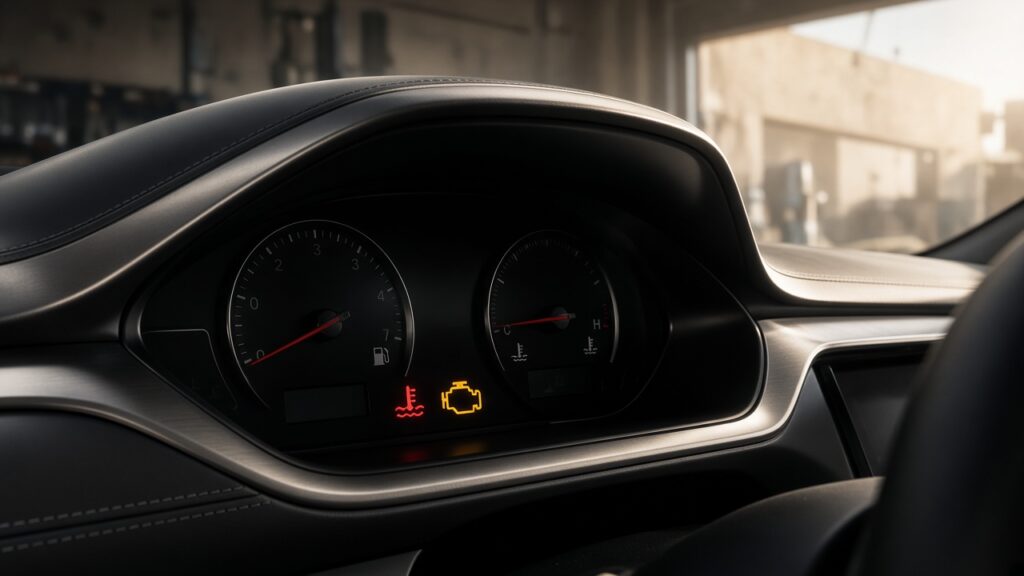
Dashboard Warning Lights: Modern cars are equipped with sensors that may detect this failure.
-
The Red “BRAKE” Light: This often indicates a drop in hydraulic pressure or low fluid level both common side-effects of caliper pistons overextending due to worn pads.
-
The Amber “ABS” Light: The grinding process sheds metal shavings. These metallic particles can stick to the magnetic wheel speed sensors, confusing the car’s computer and disabling the Anti-Lock Braking System.
-
-
Pedal Vibration: As the rotor becomes deeply scored and uneven from grinding, it will kick back against the pads, causing a distinct pulsation felt through the brake pedal.
-
A Sharp Burning Smell: A distinct, acrid chemical odor after driving indicates the brakes are overheating severely, often because the heat has caused the caliper to seize, making the brakes drag constantly.
The Financial Reality: The “Price of Procrastination”
Aside from safety, the most compelling reason to address squeaks before they become grinds is financial. Brake repair costs operate on a tiered system the longer you wait, the exponentially more expensive the repair becomes.
Tier 1: The Squeak (Maintenance)
If you address the issue when it is just squeaking, you usually only need pads. The rotors are likely still smooth and within spec.
-
The Repair: Pad replacement.
-
The Cost: Relatively Low ($)
Tier 2: The Grind (Damage)
Once grinding starts, the rotors are being actively destroyed. They will be deeply scored and gouged. They cannot be “turned” or resurfaced; they must be thrown away.
-
The Repair: New Pads + New Rotors.
-
The Cost: Moderate to High ($$)
Tier 3: The Ignored Grind (System Failure)
If you drive on grinding brakes until heat seizes the caliper or the piston overextends, you need a partial hydraulic system overhaul.
-
The Repair: Pads + Rotors + New Calipers + Hydraulic System Bleed.
-
The Cost: Very High ($$$)
Conclusion: Stop Driving and Act Now
The transition from a squeak to a grind is your vehicle’s way of escalating a request to a demand. A squeak is a polite suggestion: “Please check the wearable parts soon.” A grind is a mechanical scream: “I am destroying myself to stop this car.”
Ignoring this sound does not make the problem go away; it only accelerates the damage to your rotors, calipers, and suspension components. More importantly, it puts you, your passengers, and other road users at significant risk of brake failure.
If you are hearing grinding sounds, the time for “waiting and seeing” is over. Do not commute. Do not drive on the highway. Seek professional intervention immediately.