Home About Services Brands Blog Contact
November 11, 2025 • Engine Services

The Ultimate Guide to Engine & Transmission Services in Sharjah

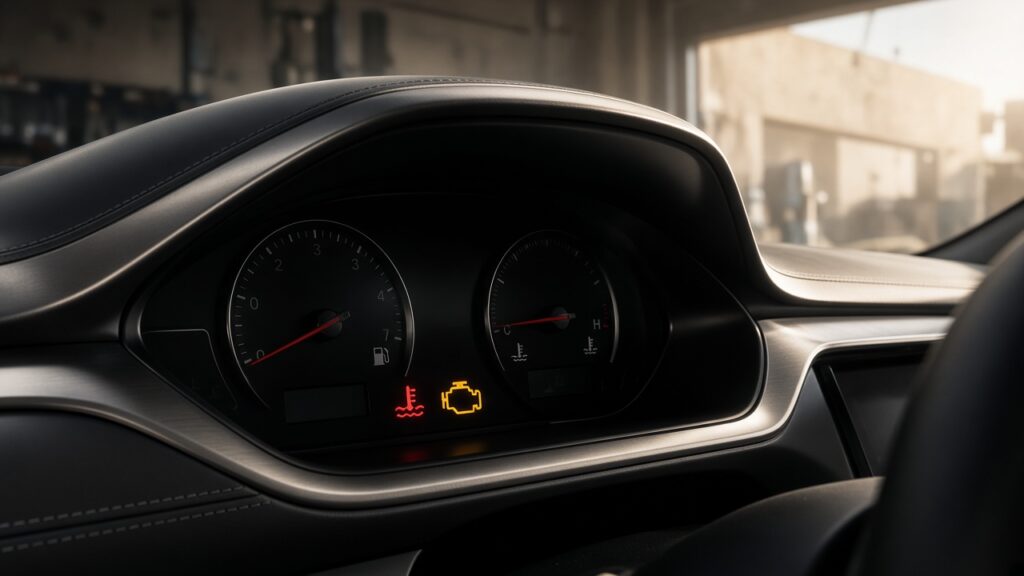
A sudden clunk as you merge onto the highway. The temperature gauge creeping into the red during a standstill in traffic. That dreaded, illuminated Check Engine light glowing on your dashboard. These are not just inconveniences; they are your car’s most vital systems the engine and transmission crying for help.

For most drivers, engine and transmission issues are the most complex, expensive, and intimidating problems you can face. The fear of a massive, unexpected repair bill or being misled by a workshop is real. It’s the number one reason drivers feel anxious about car maintenance.

This is where we step in. As Sharjah’s dedicated powertrain specialists, the Smart Garage team has created this comprehensive guide to demystify the noises, translate the warning signs, and explain your repair options with expert clarity. This guide covers everything you need to know about Engine & Transmission Services, empowering you to make informed decisions for your vehicle. We believe an educated customer is our best customer.

The Unseen Enemy: Why the UAE Climate is Your Car’s Biggest Challenge

The first thing to understand is that your car is in a constant battle with its environment. The primary antagonist for any vehicle in Sharjah is the climate itself. This isn’t just a minor factor; it’s the defining problem our technicians see every single day. This is where our Experience becomes your greatest asset.

Extreme Heat and Fluid Breakdown

When ambient temperatures soar past 45°C, the temperature inside your engine bay can become extreme. This places an enormous, relentless strain on every component. Heat is the number one enemy of all automotive fluids. Your engine oil and automatic transmission fluid (ATF) are designed to operate within a specific temperature range. The relentless heat of the UAE breaks down these fluids’ viscosity (their ability to lubricate) and protective additives far faster than in a moderate climate.

Constant Cooling System Strain

Your car’s cooling system the radiator, water pump, thermostat, and fans is under constant, maximum load. A minor coolant leak or a slightly weak radiator fan that might go unnoticed in Europe can lead to catastrophic engine overheating and failure in a Sharjah summer. This is the #1 killer of engines in the UAE.

Sand, Dust, and Air Filters

The fine dust and sand in the air are inhaled by your engine. This clogs air filters, choking the engine of clean air and forcing it to work harder, run hotter, and consume more fuel. Sand can also work its way into belts and pulleys, accelerating wear and tear.

The expert takeaway is simple: standard manufacturer service intervals are often based on European or American climates. Here in Sharjah, your vehicle is in a “severe service” category 24/7. Your maintenance plan must be adjusted to match.

Listening to Your Car: An Expert’s Guide to Early Warning Signs

Your car rarely fails without warning. It speaks a language of subtle (and not-so-subtle) sounds, smells, and sensations. Ignoring them is the fastest way to turn a minor repair into a major overhaul. As master technicians, part of our expertise is translating this “language” for you.

Critical Transmission Symptoms You Must Not Ignore

  • Gears Slipping or Delayed Shifting: This is the most common and alarming symptom. You press the gas, the engine revs high, but the car doesn’t accelerate properly. Or, when you shift from Park to Drive, there’s a long, unnerving pause before the gear engages. This is an urgent sign of low or burnt transmission fluid, or worn-out internal components.
  • Grinding, Shaking, or Clunking: You feel a physical jerk, lurch or clunk when the transmission shifts gears. This indicates a potential mechanical problem, such as worn-out gear teeth or a failing torque converter.
  • A Telltale Burning Smell: A sharp, acrid smell, often like burning rubber or burnt toast. This is the smell of overheated, burnt transmission fluid. The friction material on your clutches is burning away. This is an emergency. Stop driving and call for a tow.
  • Red Fluid Leak: Transmission fluid is typically bright red (or dark, dirty brown if old). If you see puddles of this color under your car, you have a leak. Driving with low fluid will rapidly destroy your transmission.

Common Engine Trouble Symptoms

  • The Check Engine Light (CEL) is On: This light is your car’s computer telling you it has detected a fault. A solid light means “get it checked soon.” A flashing light means “stop driving now.” A flashing light indicates a severe problem, like a misfire, that can destroy your expensive catalytic converter.
  • Engine Overheating: The temperature gauge on your dashboard spikes into the red zone, or you see steam pouring from under the hood. This is often caused by low coolant (from a leak), a faulty thermostat, or a broken water pump. Pull over immediately to prevent a cracked engine block.
  • Decoding Strange Engine Noises:
    • Clicking/Tapping: A light, fast, repetitive “tick-tick-tick” that speeds up with the engine. This is often low engine oil or a problem with the valvetrain.
    • Knocking/Pinging: A deep, heavy, metallic “knock” from deep within the engine, often under acceleration. This is serious and can be a failing rod bearing. Stop driving immediately.
    • Squealing: A high-pitched squeal, especially on startup or when you turn the A/C on. This is almost always a worn-out serpentine belt or a failing pulley.
    • Hissing/Sizzling: A “hsssss” sound from the engine bay, especially after you’ve shut the car off. This indicates fluid leaking onto a hot engine component, most commonly a coolant leak.

Our Diagnostic Process: How We Find the Real Problem

This is where we build *Trust*. Many drivers fear mechanics because they fear being told they need a new transmission when all they needed was a new sensor. At Smart Garage, we are transparent. We don’t guess; we *prove*.

Engine Diagnostics: Beyond the Code Reader

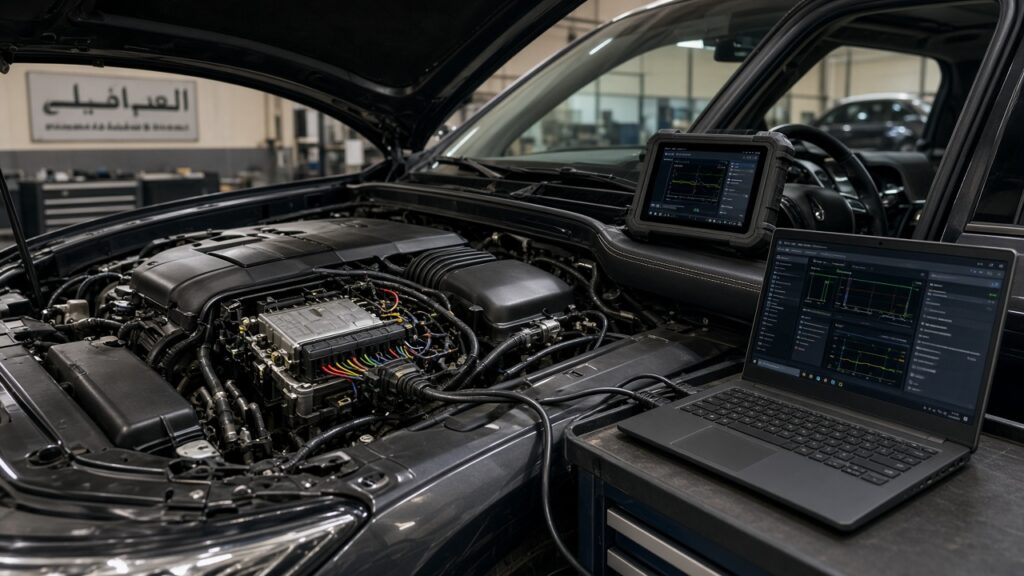
When your Check Engine Light comes on, any workshop can plug in a cheap scanner and read the fault code. This code is a *symptom*, not the *cause*. For example, a code for an “oxygen sensor fault” doesn’t always mean the sensor is bad; it could be a vacuum leak *causing* the sensor to read incorrectly. Our expert process involves:

  1. The Interview: We listen to you. When does the noise happen? Is the engine hot or cold? Your description provides the most critical clues.
  2. Digital Analysis: We connect our professional-grade, dealer-level diagnostic scanner to your car’s On-Board Diagnostics (OBD-II) port. This retrieves the codes, but more importantly, allows us to see *live data* from all your engine’s sensors.
  3. Physical Inspection: We confirm the cause with physical tests, such as a compression test (to check cylinder health), a vacuum test (to find air leaks), or a smoke test.

Transmission Diagnostics: A Multi-Point Assessment

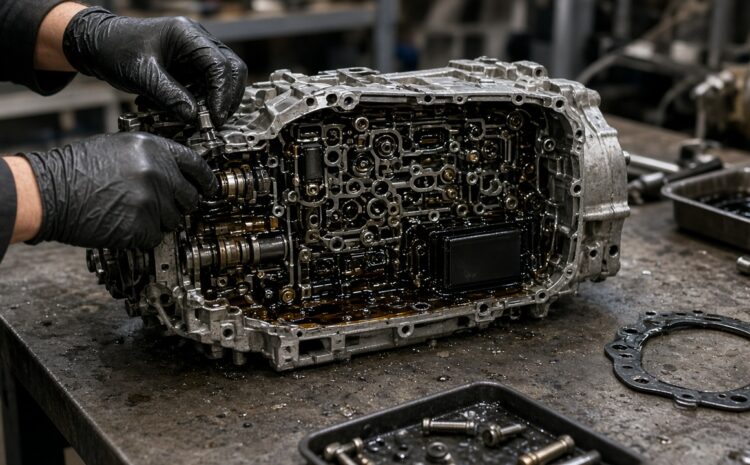
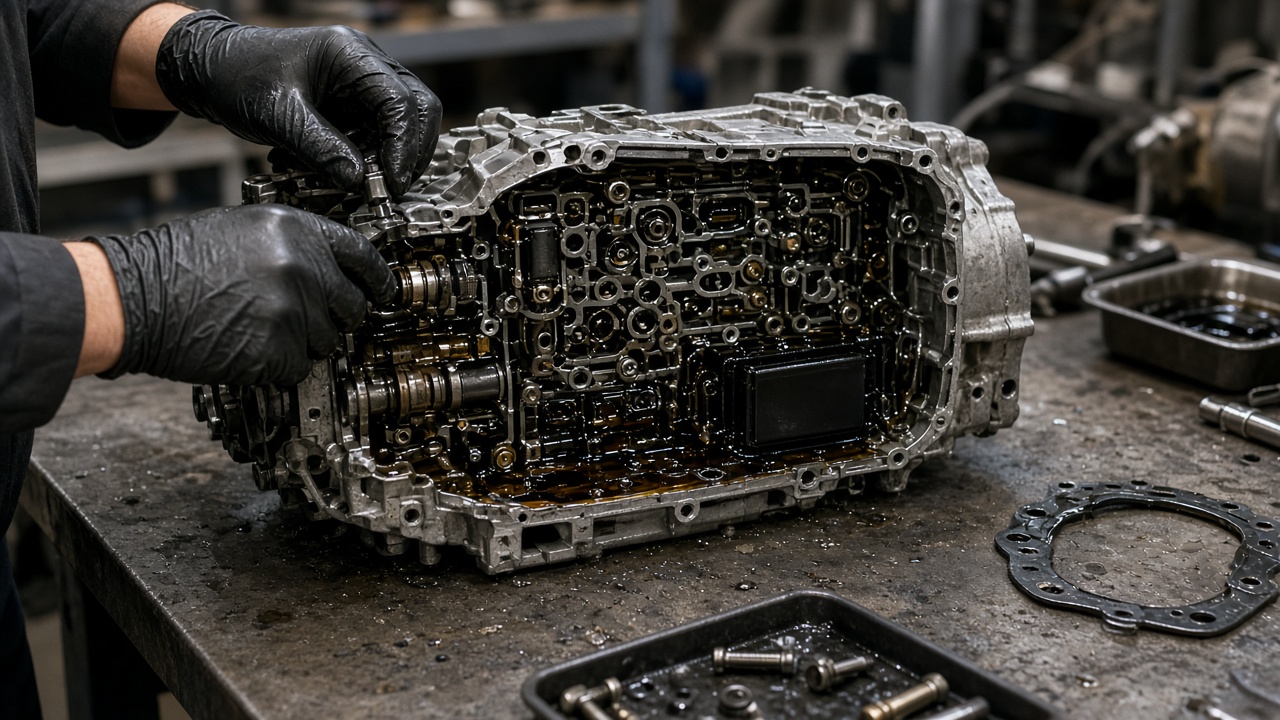
Automatic transmissions are complex hydraulic and electronic systems. Our diagnostic process is equally sophisticated. We perform a road test to experience the problem firsthand, a detailed fluid analysis (checking for level, color, and smell), and hydraulic pressure tests at specific ports to measure the internal pump’s health. Only then can we accurately pinpoint the problem, whether it’s a simple solenoid or a more complex internal issue.

Your Guide to Major Engine & Transmission Services at Smart Garage

This is where our Expertise shines. We want you to understand the high-stakes decisions you’re facing.

The Great Debate: Transmission Fluid Flush vs. Change?

You have probably heard conflicting advice on this. The terminology is confusing, and the wrong choice can be ineffective or even damaging.

  • Fluid Change (Drain & Fill): This is the “traditional” service. We drop the transmission pan, drain the fluid, and refill it. The problem? This only removes about 40-60% of the total fluid. The rest remains trapped in the torque converter and cooler lines. It’s like only emptying half of a dirty bathtub and topping it off with clean water.
  • High-Pressure “Flush”: This is an outdated method we *do not* recommend. It uses a high-pressure machine to force fluid and solvents through the transmission. On a high-mileage vehicle, this pressure can dislodge built-up sludge, which then clogs narrow passages and solenoids, causing a failure.
  • THE SMART GARAGE WAY (The Fluid *Exchange*): We use a modern, advanced “fluid exchange” machine. This device connects to your transmission’s cooler lines and operates *at the transmission’s own operating pressure*. It safely pumps 100% of the old, degraded fluid out while simultaneously pumping 100% of the new, clean fluid in. It’s the safest, most effective, and only method we recommend for a complete transmission service.

The Big Decision: Engine Rebuild vs. Replacement?

If your engine has suffered a major failure (like a blown head gasket or a knocking rod), you have two main options. We provide an honest breakdown to help you decide.

  • Engine Rebuild: A rebuild is a meticulous process where our technicians remove and completely disassemble your original engine. We inspect, clean, and machine key components, then reassemble it with new, high-quality replacement parts (pistons, rings, bearings, gaskets, etc.). This is often more cost-effective if the damage is localized and is the best choice for preserving the originality of a classic or high-end vehicle.
  • Engine Replacement: This involves removing your entire failed engine and “swapping” it with another one. This is typically a *remanufactured* engine (rebuilt in a factory setting) or a tested, low-mileage *used* engine. This process is much faster (days vs. a week or more for a rebuild) and comes with a predictable cost and solid warranty. It’s an excellent choice for catastrophic failures or if you need your car back quickly.

What Are Engine Overhauling & Tuning?

Engine Overhauling: Think of this as a “deep refresh” for a high-mileage engine that’s losing power, smoking, or burning excessive oil. It’s less intensive than a full rebuild but involves replacing key components like piston rings, bearings, and all seals and gaskets to restore factory performance and stop oil consumption.

Engine Tuning: This is about optimizing your engine’s performance. For modern cars, this is “ECU Remapping” or “Chip Tuning.” By modifying the engine’s computer software, we can safely increase horsepower and torque or even improve fuel efficiency. We perform advanced tuning to calibrate your engine after installing performance modifications, like a new air intake or exhaust system. For more on the principles behind this, engineering authorities like SAE International provide deep technical resources.

Proactive Maintenance: The Smart Garage Plan for a Long-Lasting Vehicle

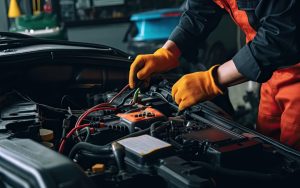
As experts, we believe *preventing* a failure is always better than fixing one. This is the free advice we give our best customers to keep their cars safe and reliable in Sharjah.
The UAE-Specific Maintenance Schedule

  • Engine Oil: Forget 15,000 km. In the UAE’s heat, we recommend a high-quality, full-synthetic oil change every 5,000-7,500 km. Oil is the lifeblood of your engine.
  • Cooling System: This is your #1 priority. Get in the habit of visually checking your coolant reservoir level weekly. We recommend a full cooling system flush (draining and replacing all coolant) every 2 years to prevent corrosion.
  • Air Filter: Your engine is breathing in desert dust. A clogged filter chokes it. Have it inspected at *every* oil change and replaced at least every 15,000 km.

Driving Habits That Save Your Transmission

  • NEVER Shift from Reverse to Drive (or vice-versa) While the Car is Still Moving. This is the #1 way to destroy your transmission bands and clutches. Always, always come to a *complete stop* first.
  • NEVER Coast Downhill in ‘Neutral’. This is a dangerous myth. In a modern automatic, this starves the internal components of lubrication, causing them to overheat and burn out.
  • ALWAYS Use Your Parking Brake (Handbrake) Before Shifting to Park. When you park on an incline and only use ‘Park,’ a small metal pin takes the entire 2-ton weight of your car. The correct way: 1. Come to a stop. 2. With your foot on the brake, engage the parking brake. 3. Let your foot off the brake; let the car “rest” on the parking brake. 4. *Now* shift into ‘Park.’ This puts the car’s weight on the brakes, not your transmission.

Easy DIY Checks for Every Car Owner

  • How to Check Engine Oil: Park on level ground. Wait 15 minutes for the engine to cool. Pull the dipstick, wipe it clean, re-insert it fully, then pull it out again. The oil level should be between the ‘Full’ and ‘Low’ marks.
  • How to Check Transmission Fluid: Many cars require the engine to be warm and *idling* in ‘Park’ to check this. The fluid should be bright pink and clear, not dark brown or smelling burnt.
  • A Note on “Sealed Transmissions”: Many modern cars (especially German models) have no transmission dipstick. This *does not* mean the fluid lasts forever. It means the fluid level *must* be checked by a professional workshop with the car on a lift.

Frequently Asked Questions (Your Questions Answered)

Q: How much does an engine repair cost in the UAE?
A: The cost varies widely. A minor fix like a sensor might be AED 300-700. A more serious repair like a head gasket can range from AED 2,500 to AED 7,000. A full engine overhaul or replacement can be AED 7,000 or much more, depending on the vehicle’s make.

Q: What are the first signs of transmission failure?
A: The most common first signs are: 1. Delayed or rough, jerky gear shifting. 2. A new whining, humming, or clunking noise. 3. A burning smell, like burnt rubber. 4. Your car “slipping” out of gear, where the engine revs but the car doesn’t go faster.

Q: How often should I service my transmission in hot weather?
A: Because the UAE’s heat is a “severe” driving condition, you cannot follow the “lifetime fluid” myth. We recommend a full transmission fluid and filter service (an exchange, not just a change) every 50,000-60,000 km.

Q: Is it worth rebuilding my engine?
A: In many cases, yes. If the engine’s core (the block) is undamaged, rebuilding is often more cost-effective than replacing the entire engine. It also preserves your car’s originality. We always provide a full inspection and an honest quote to help you decide.

Q: What happens if I keep driving with the ‘Check Engine Light’ on?
A: A solid ‘Check Engine Light’ indicates a non-emergency fault. Ignoring it will lead to poor fuel economy and can cause other components (like your catalytic converter) to fail over time. A flashing light is a critical warning, usually for an engine misfire. You must stop driving immediately.

Why Choose Smart Garage for Your Engine & Transmission Services in Sharjah?

You have many choices for auto repair in Sharjah, from expensive dealerships to small local workshops. We built Smart Garage to be the *smarter* choice, based on Expertise, Trust, and Value.

  • Expertise: Our technicians aren’t just “trained” they are *master specialists* certified on a wide range of German, Japanese, and American powertrains. We are the experts that other garages turn to for complex diagnostic problems.
  • Trust & Transparency: We don’t just *list* services; we *explain* them, as this guide demonstrates. We will show you the diagnostic data. We will show you the failed part. We provide clear, itemized quotes *before* any work begins. No surprises, ever.
  • Value: We are not just a “cheaper alternative” to the dealer; we are a *smarter* one. We provide dealer-level expertise and use only Genuine or OEM-grade parts (like Bosch and ZF) without the dealer-level overhead. We deliver the best *value* by diagnosing the problem correctly the *first* time.
  • Convenience: We understand your time is valuable. We offer free, hassle-free vehicle pickup and delivery across Sharjah.

Don’t Risk a Breakdown. Trust Your Powertrain to Sharjah’s Experts.

Your engine and transmission are the heart and soul of your vehicle. In the demanding Sharjah climate, proactive care and expert diagnostics are not a luxury—they are essential for your safety, your car’s longevity, and your peace of mind.

At Smart Garage, we don’t just fix parts; we solve problems. We’ve built our reputation on expert knowledge, honest advice, and unparalleled technical skill.

Is your car sending you a warning sign? Don’t wait for it to get worse. Call us now or Book Your Free, No-Obligation Inspection online. Our expert technicians will diagnose the issue and give you a clear, honest plan.


The Ultimate Guide to Engine & Transmission Services in Sharjah

A sudden clunk as you merge onto the highway. The temperature gauge creeping into the red during a standstill in traffic. That dreaded, illuminated Check Engine light glowing on your dashboard. These are not just inconveniences; they are your car’s most vital systems the engine and transmission crying for help.

For most drivers, engine and transmission issues are the most complex, expensive, and intimidating problems you can face. The fear of a massive, unexpected repair bill or being misled by a workshop is real. It’s the number one reason drivers feel anxious about car maintenance.

This is where we step in. As Sharjah’s dedicated powertrain specialists, the Smart Garage team has created this comprehensive guide to demystify the noises, translate the warning signs, and explain your repair options with expert clarity. This guide covers everything you need to know about Engine & Transmission Services, empowering you to make informed decisions for your vehicle. We believe an educated customer is our best customer.

The Unseen Enemy: Why the UAE Climate is Your Car’s Biggest Challenge

The first thing to understand is that your car is in a constant battle with its environment. The primary antagonist for any vehicle in Sharjah is the climate itself. This isn’t just a minor factor; it’s the defining problem our technicians see every single day. This is where our Experience becomes your greatest asset.

Extreme Heat and Fluid Breakdown

When ambient temperatures soar past 45°C, the temperature inside your engine bay can become extreme. This places an enormous, relentless strain on every component. Heat is the number one enemy of all automotive fluids. Your engine oil and automatic transmission fluid (ATF) are designed to operate within a specific temperature range. The relentless heat of the UAE breaks down these fluids’ viscosity (their ability to lubricate) and protective additives far faster than in a moderate climate.

Constant Cooling System Strain

Your car’s cooling system the radiator, water pump, thermostat, and fans is under constant, maximum load. A minor coolant leak or a slightly weak radiator fan that might go unnoticed in Europe can lead to catastrophic engine overheating and failure in a Sharjah summer. This is the #1 killer of engines in the UAE.

Sand, Dust, and Air Filters

The fine dust and sand in the air are inhaled by your engine. This clogs air filters, choking the engine of clean air and forcing it to work harder, run hotter, and consume more fuel. Sand can also work its way into belts and pulleys, accelerating wear and tear.

The expert takeaway is simple: standard manufacturer service intervals are often based on European or American climates. Here in Sharjah, your vehicle is in a “severe service” category 24/7. Your maintenance plan must be adjusted to match.

Listening to Your Car: An Expert’s Guide to Early Warning Signs

Your car rarely fails without warning. It speaks a language of subtle (and not-so-subtle) sounds, smells, and sensations. Ignoring them is the fastest way to turn a minor repair into a major overhaul. As master technicians, part of our expertise is translating this “language” for you.

Critical Transmission Symptoms You Must Not Ignore

  • Gears Slipping or Delayed Shifting: This is the most common and alarming symptom. You press the gas, the engine revs high, but the car doesn’t accelerate properly. Or, when you shift from Park to Drive, there’s a long, unnerving pause before the gear engages. This is an urgent sign of low or burnt transmission fluid, or worn-out internal components.
  • Grinding, Shaking, or Clunking: You feel a physical jerk, lurch or clunk when the transmission shifts gears. This indicates a potential mechanical problem, such as worn-out gear teeth or a failing torque converter.
  • A Telltale Burning Smell: A sharp, acrid smell, often like burning rubber or burnt toast. This is the smell of overheated, burnt transmission fluid. The friction material on your clutches is burning away. This is an emergency. Stop driving and call for a tow.
  • Red Fluid Leak: Transmission fluid is typically bright red (or dark, dirty brown if old). If you see puddles of this color under your car, you have a leak. Driving with low fluid will rapidly destroy your transmission.

Common Engine Trouble Symptoms

  • The Check Engine Light (CEL) is On: This light is your car’s computer telling you it has detected a fault. A solid light means “get it checked soon.” A flashing light means “stop driving now.” A flashing light indicates a severe problem, like a misfire, that can destroy your expensive catalytic converter.
  • Engine Overheating: The temperature gauge on your dashboard spikes into the red zone, or you see steam pouring from under the hood. This is often caused by low coolant (from a leak), a faulty thermostat, or a broken water pump. Pull over immediately to prevent a cracked engine block.
  • Decoding Strange Engine Noises:
    • Clicking/Tapping: A light, fast, repetitive “tick-tick-tick” that speeds up with the engine. This is often low engine oil or a problem with the valvetrain.
    • Knocking/Pinging: A deep, heavy, metallic “knock” from deep within the engine, often under acceleration. This is serious and can be a failing rod bearing. Stop driving immediately.
    • Squealing: A high-pitched squeal, especially on startup or when you turn the A/C on. This is almost always a worn-out serpentine belt or a failing pulley.
    • Hissing/Sizzling: A “hsssss” sound from the engine bay, especially after you’ve shut the car off. This indicates fluid leaking onto a hot engine component, most commonly a coolant leak.

Our Diagnostic Process: How We Find the Real Problem

This is where we build *Trust*. Many drivers fear mechanics because they fear being told they need a new transmission when all they needed was a new sensor. At Smart Garage, we are transparent. We don’t guess; we *prove*.

Engine Diagnostics: Beyond the Code Reader

When your Check Engine Light comes on, any workshop can plug in a cheap scanner and read the fault code. This code is a *symptom*, not the *cause*. For example, a code for an “oxygen sensor fault” doesn’t always mean the sensor is bad; it could be a vacuum leak *causing* the sensor to read incorrectly. Our expert process involves:

  1. The Interview: We listen to you. When does the noise happen? Is the engine hot or cold? Your description provides the most critical clues.
  2. Digital Analysis: We connect our professional-grade, dealer-level diagnostic scanner to your car’s On-Board Diagnostics (OBD-II) port. This retrieves the codes, but more importantly, allows us to see *live data* from all your engine’s sensors.
  3. Physical Inspection: We confirm the cause with physical tests, such as a compression test (to check cylinder health), a vacuum test (to find air leaks), or a smoke test.

Transmission Diagnostics: A Multi-Point Assessment

Automatic transmissions are complex hydraulic and electronic systems. Our diagnostic process is equally sophisticated. We perform a road test to experience the problem firsthand, a detailed fluid analysis (checking for level, color, and smell), and hydraulic pressure tests at specific ports to measure the internal pump’s health. Only then can we accurately pinpoint the problem, whether it’s a simple solenoid or a more complex internal issue.

Your Guide to Major Engine & Transmission Services at Smart Garage

This is where our Expertise shines. We want you to understand the high-stakes decisions you’re facing.

The Great Debate: Transmission Fluid Flush vs. Change?

You have probably heard conflicting advice on this. The terminology is confusing, and the wrong choice can be ineffective or even damaging.

  • Fluid Change (Drain & Fill): This is the “traditional” service. We drop the transmission pan, drain the fluid, and refill it. The problem? This only removes about 40-60% of the total fluid. The rest remains trapped in the torque converter and cooler lines. It’s like only emptying half of a dirty bathtub and topping it off with clean water.
  • High-Pressure “Flush”: This is an outdated method we *do not* recommend. It uses a high-pressure machine to force fluid and solvents through the transmission. On a high-mileage vehicle, this pressure can dislodge built-up sludge, which then clogs narrow passages and solenoids, causing a failure.
  • THE SMART GARAGE WAY (The Fluid *Exchange*): We use a modern, advanced “fluid exchange” machine. This device connects to your transmission’s cooler lines and operates *at the transmission’s own operating pressure*. It safely pumps 100% of the old, degraded fluid out while simultaneously pumping 100% of the new, clean fluid in. It’s the safest, most effective, and only method we recommend for a complete transmission service.

The Big Decision: Engine Rebuild vs. Replacement?

If your engine has suffered a major failure (like a blown head gasket or a knocking rod), you have two main options. We provide an honest breakdown to help you decide.

  • Engine Rebuild: A rebuild is a meticulous process where our technicians remove and completely disassemble your original engine. We inspect, clean, and machine key components, then reassemble it with new, high-quality replacement parts (pistons, rings, bearings, gaskets, etc.). This is often more cost-effective if the damage is localized and is the best choice for preserving the originality of a classic or high-end vehicle.
  • Engine Replacement: This involves removing your entire failed engine and “swapping” it with another one. This is typically a *remanufactured* engine (rebuilt in a factory setting) or a tested, low-mileage *used* engine. This process is much faster (days vs. a week or more for a rebuild) and comes with a predictable cost and solid warranty. It’s an excellent choice for catastrophic failures or if you need your car back quickly.

What Are Engine Overhauling & Tuning?

Engine Overhauling: Think of this as a “deep refresh” for a high-mileage engine that’s losing power, smoking, or burning excessive oil. It’s less intensive than a full rebuild but involves replacing key components like piston rings, bearings, and all seals and gaskets to restore factory performance and stop oil consumption.

Engine Tuning: This is about optimizing your engine’s performance. For modern cars, this is “ECU Remapping” or “Chip Tuning.” By modifying the engine’s computer software, we can safely increase horsepower and torque or even improve fuel efficiency. We perform advanced tuning to calibrate your engine after installing performance modifications, like a new air intake or exhaust system. For more on the principles behind this, engineering authorities like SAE International provide deep technical resources.

Proactive Maintenance: The Smart Garage Plan for a Long-Lasting Vehicle

As experts, we believe *preventing* a failure is always better than fixing one. This is the free advice we give our best customers to keep their cars safe and reliable in Sharjah.

The UAE-Specific Maintenance Schedule

  • Engine Oil: Forget 15,000 km. In the UAE’s heat, we recommend a high-quality, full-synthetic oil change every 5,000-7,500 km. Oil is the lifeblood of your engine.
  • Cooling System: This is your #1 priority. Get in the habit of visually checking your coolant reservoir level weekly. We recommend a full cooling system flush (draining and replacing all coolant) every 2 years to prevent corrosion.
  • Air Filter: Your engine is breathing in desert dust. A clogged filter chokes it. Have it inspected at *every* oil change and replaced at least every 15,000 km.

Driving Habits That Save Your Transmission

  • NEVER Shift from Reverse to Drive (or vice-versa) While the Car is Still Moving. This is the #1 way to destroy your transmission bands and clutches. Always, always come to a *complete stop* first.
  • NEVER Coast Downhill in ‘Neutral’. This is a dangerous myth. In a modern automatic, this starves the internal components of lubrication, causing them to overheat and burn out.
  • ALWAYS Use Your Parking Brake (Handbrake) Before Shifting to Park. When you park on an incline and only use ‘Park,’ a small metal pin takes the entire 2-ton weight of your car. The correct way: 1. Come to a stop. 2. With your foot on the brake, engage the parking brake. 3. Let your foot off the brake; let the car “rest” on the parking brake. 4. *Now* shift into ‘Park.’ This puts the car’s weight on the brakes, not your transmission.

Easy DIY Checks for Every Car Owner

  • How to Check Engine Oil: Park on level ground. Wait 15 minutes for the engine to cool. Pull the dipstick, wipe it clean, re-insert it fully, then pull it out again. The oil level should be between the ‘Full’ and ‘Low’ marks.
  • How to Check Transmission Fluid: Many cars require the engine to be warm and *idling* in ‘Park’ to check this. The fluid should be bright pink and clear, not dark brown or smelling burnt.
  • A Note on “Sealed Transmissions”: Many modern cars (especially German models) have no transmission dipstick. This *does not* mean the fluid lasts forever. It means the fluid level *must* be checked by a professional workshop with the car on a lift.

Frequently Asked Questions (Your Questions Answered)

Q: How much does an engine repair cost in the UAE?
A: The cost varies widely. A minor fix like a sensor might be AED 300-700. A more serious repair like a head gasket can range from AED 2,500 to AED 7,000. A full engine overhaul or replacement can be AED 7,000 or much more, depending on the vehicle’s make.

Q: What are the first signs of transmission failure?
A: The most common first signs are: 1. Delayed or rough, jerky gear shifting. 2. A new whining, humming, or clunking noise. 3. A burning smell, like burnt rubber. 4. Your car “slipping” out of gear, where the engine revs but the car doesn’t go faster.

Q: How often should I service my transmission in hot weather?
A: Because the UAE’s heat is a “severe” driving condition, you cannot follow the “lifetime fluid” myth. We recommend a full transmission fluid and filter service (an exchange, not just a change) every 50,000-60,000 km.

Q: Is it worth rebuilding my engine?
A: In many cases, yes. If the engine’s core (the block) is undamaged, rebuilding is often more cost-effective than replacing the entire engine. It also preserves your car’s originality. We always provide a full inspection and an honest quote to help you decide.

Q: What happens if I keep driving with the ‘Check Engine Light’ on?
A: A solid ‘Check Engine Light’ indicates a non-emergency fault. Ignoring it will lead to poor fuel economy and can cause other components (like your catalytic converter) to fail over time. A flashing light is a critical warning, usually for an engine misfire. You must stop driving immediately.

Why Choose Smart Garage for Your Engine & Transmission Services in Sharjah?

You have many choices for auto repair in Sharjah, from expensive dealerships to small local workshops. We built Smart Garage to be the *smarter* choice, based on Expertise, Trust, and Value.

  • Expertise: Our technicians aren’t just “trained” they are *master specialists* certified on a wide range of German, Japanese, and American powertrains. We are the experts that other garages turn to for complex diagnostic problems.
  • Trust & Transparency: We don’t just *list* services; we *explain* them, as this guide demonstrates. We will show you the diagnostic data. We will show you the failed part. We provide clear, itemized quotes *before* any work begins. No surprises, ever.
  • Value: We are not just a “cheaper alternative” to the dealer; we are a *smarter* one. We provide dealer-level expertise and use only Genuine or OEM-grade parts (like Bosch and ZF) without the dealer-level overhead. We deliver the best *value* by diagnosing the problem correctly the *first* time.
  • Convenience: We understand your time is valuable. We offer free, hassle-free vehicle pickup and delivery across Sharjah.

Don’t Risk a Breakdown. Trust Your Powertrain to Sharjah’s Experts.

Your engine and transmission are the heart and soul of your vehicle. In the demanding Sharjah climate, proactive care and expert diagnostics are not a luxury—they are essential for your safety, your car’s longevity, and your peace of mind.

At Smart Garage, we don’t just fix parts; we solve problems. We’ve built our reputation on expert knowledge, honest advice, and unparalleled technical skill.

Is your car sending you a warning sign? Don’t wait for it to get worse. Call us now or Book Your Free, No-Obligation Inspection online. Our expert technicians will diagnose the issue and give you a clear, honest plan.


Leave a Reply

Your email address will not be published. Required fields are marked *

Smart Garage
Service Advisor
Online
Smart Garage
Hello! How can we help you with your car today? 👋
Just now
1