The Mercedes-Benz GLC-Class is a global benchmark for luxury compact SUVs, combining refined styling, exceptional cabin comfort, and cutting-edge engineering. Among its various configurations, the turbo diesel variants (such as the GLC 220d and GLC 300d) are highly celebrated in many markets for their massive torque delivery, robust build quality, and incredible highway fuel economy.
However, operating a modern luxury diesel vehicle in urban environments requires a specific set of driving conditions to keep its complex emissions systems functioning correctly. In the United Arab Emirates specifically within the dense, high-traffic corridors of Dubai and Sharjah owners of diesel SUVs frequently encounter a specific set of mechanical challenges.
If you drive a diesel GLC primarily for short commutes, school runs, or in heavy bumper-to-bumper traffic, you might find yourself facing a familiar dashboard warning. At Smart Garage, we routinely diagnose and resolve these exact European emissions complications. Let’s explore the technical reasons why modern Mercedes-Benz GLC-Class diesel models experience elevated Diesel Particulate Filter (DPF) complications when subjected to UAE city driving, and how you can prevent or resolve them.
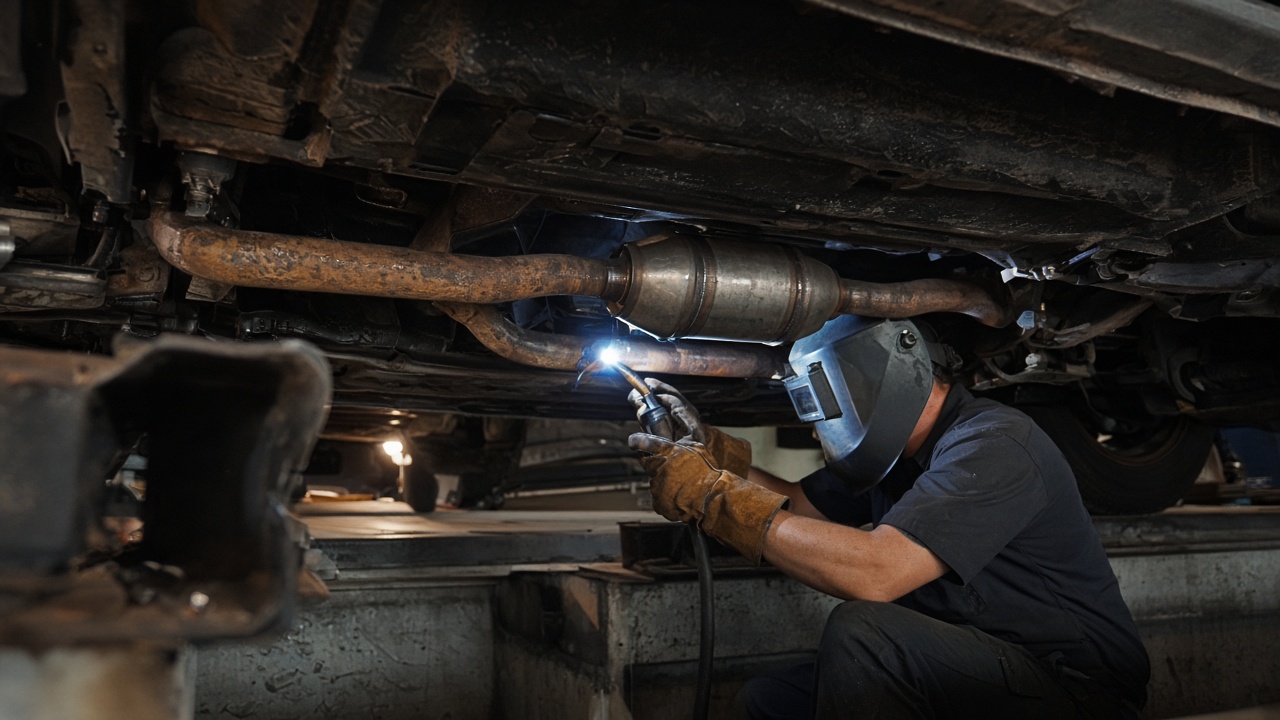
Mercedes Diesel Particulate Filter (DPF)
To understand why the Mercedes diesel particulate filter problem occurs so frequently in urban UAE environments, it helps to understand what a DPF does and how it functions under normal operating parameters.
What is a Diesel Particulate Filter?
A Diesel Particulate Filter is a specialized mechanical component integrated into the exhaust system of modern diesel engines. Its primary purpose is to capture and trap soot, ash, and fine particulate matter generated during the diesel combustion process, preventing these harmful pollutants from entering the atmosphere. The internal structure of a DPF resembles a fine ceramic honeycomb. As exhaust gases pass through this honeycomb, the soot particles are trapped on the cell walls.
The Critical Role of Filter Regeneration
Because a DPF acts as a physical trap, it has a finite capacity. If soot accumulates indefinitely, it creates massive exhaust backpressure, causing a severe Mercedes GLC performance loss issue and potentially ruining the turbocharger. To prevent this, the engine management system must periodically clear the trapped soot through a process known as “regeneration.”
There are two primary types of DPF regeneration:
-
Passive Regeneration: This occurs naturally when the vehicle is driven at sustained high speeds (such as on open highways) for an extended period. The exhaust gas temperatures naturally rise to around 350°C to 500°C, which is hot enough to continuously burn off the trapped soot, converting it into harmless, microscopic ash.
-
Active Regeneration: If the vehicle’s computer senses that the soot load has reached a specific threshold (usually around 45% to 60%) and passive regeneration hasn’t occurred, it initiates active regeneration. The engine control unit (ECU) alters fuel injection timing and injects extra fuel directly into the cylinders or the exhaust stroke. This deliberate over-fueling raises exhaust temperatures artificially to over 600°C to incinerate the accumulated soot.
Why UAE City Driving Triggers Mercedes GLC DPF Issues
The engineering behind the Mercedes Om651 and OM654 turbo diesel engines used in the GLC is exceptional, but these powertrains were designed with European long-distance commuting in mind. When transplanted into the dense urban landscapes of the UAE, several localized environmental and driving factors conspire to disrupt the DPF system.
1. Stop-and-Go Traffic and the Deficit of Exhaust Heat
The fundamental cause of the Mercedes GLC city driving issues is the lack of sustained exhaust temperature. Driving down crowded city streets, idling at long traffic lights, and creeping along during rush hour means the engine rarely operates under significant load.
Under these low-load conditions, exhaust gas temperatures remain far too low to trigger passive regeneration. Instead of burning off, diesel soot continuously accumulates on the ceramic walls of the filter, accelerating the path toward a complete blockage.
2. Micro-Commutes and Aborted Active Regeneration Cycles
A major catalyst for a severe Mercedes GLC regeneration problem is the frequent short-trip driving style common in urban UAE centers. An active regeneration cycle requires roughly 15 to 25 minutes of continuous driving to complete successfully.
If your daily commute consists of a quick 10-minute drive to a local shopping mall or a nearby school, the vehicle’s ECU may initiate an active regeneration cycle, only for you to park the car and turn off the engine midway through the process. When a regeneration cycle is repeatedly aborted, unburnt fuel can seep down the cylinder walls into the engine oil, diluting it, while the unburnt soot in the exhaust hardens, transforming a minor restriction into a critical blockage.
3. High Ambient Temperatures and Thermal Loading
The UAE’s extreme summer climate places massive secondary stress on all automotive systems. While high ambient temperatures might make you think the exhaust stays hot, the heavy reliance on maximum air conditioning creates a unique engine load dynamic.
The combination of intense external heat, continuous low-speed idling, and interrupted thermal cycles alters how cleanly diesel fuel burns. This accelerated thermal loading can cause the computerized sensors tracking the pressure variations within the exhaust to fail prematurely, triggering a false or erratic Mercedes GLC engine warning light.
Common Symptoms of a Blocked Mercedes DPF
When your luxury SUV begins struggling with a Mercedes diesel soot buildup issue, it won’t happen completely silently. The vehicle’s onboard diagnostic systems and mechanical behavior will provide clear warning signs that it is time to seek professional Mercedes diesel diagnostics Dubai.
The Illumination of Dashboard Warning Indicators
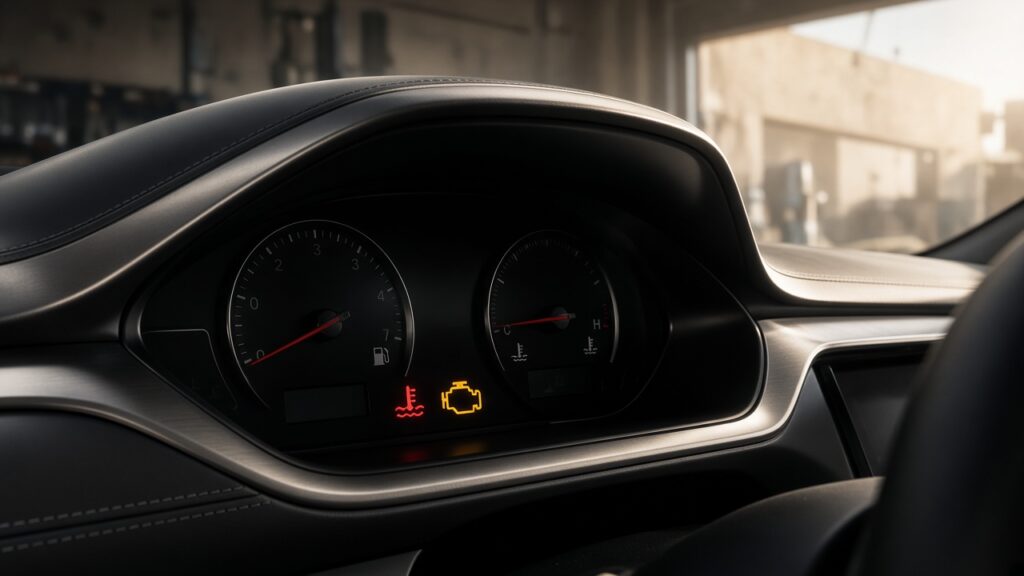
The first definitive sign of trouble is usually a dashboard indicator. Depending on the exact model year of your GLC, you may see a dedicated exhaust filter graphic or a standard Mercedes check engine light diesel warning. These lights mean that the differential pressure sensors have detected an unacceptably high pressure variance between the entry and exit points of the exhaust filter, indicating a restriction.
Drastic Performance Degradation
As the blockage worsens, you will experience a noticeable Mercedes GLC performance loss issue. The engine will feel sluggish, throttle response will become delayed, and overtaking maneuvers on urban roads will require significantly more effort. This happens because the engine is effectively choking on its own exhaust gases, unable to breathe out efficiently due to the restricted ceramic pathways.
The Dreaded “Limp Home” Mode
If the soot accumulation crosses a critical threshold (typically above 70% to 80% restriction), the vehicle’s ECU will step in to protect the engine and turbocharger from catastrophic backpressure damage. The vehicle will enter a safety state known as “Limp Mode.” In this mode, turbocharger boost is completely cut, engine RPMs are restricted, and the vehicle will operate at a fraction of its normal power. Driving a GLC in limp mode on fast-moving highways is highly dangerous and requires immediate intervention from a Mercedes diesel repair specialist Dubai.
Technical Complications: Turbo and Engine Interdependence
A prolonged Mercedes diesel particulate filter problem is rarely isolated to the exhaust pipe alone. Because modern engines rely on highly integrated ecosystems, a failure in the exhaust filter rapidly radiates upstream into other vital mechanical assemblies.
Accelerated Mercedes GLC Turbo Diesel Problems
The turbocharger on the Mercedes GLC diesel engine relies on a clean, unrestricted path to expel exhaust gases and spin its internal turbine wheels. When a DPF becomes heavily restricted, the exhaust gases back up directly into the turbo housing.
This creates extreme localized heat and excessive axial pressure on the turbocharger’s internal bearings. Over time, this chronic thermal and mechanical stress can lead to blown turbo seals, oil leaks, and eventual total turbocharger failure, turning a filter maintenance issue into an expensive mechanical overhaul.
EGR Valve Soot Contamination
The Exhaust Gas Recircirculation (EGR) valve is designed to route a portion of exhaust gases back into the engine’s intake cylinders to lower combustion temperatures and reduce NOx emissions. However, when high exhaust backpressure combines with excessive urban idling, massive amounts of sticky, wet carbon soot are pushed through the EGR valve. This leads to heavy carbon crusting, causing the EGR valve to stick open or closed, which further destabilizes the air-fuel ratio and accelerates DPF choking.

Professional Diagnostics and Repair Solutions at Smart Garage
When dealing with complex Mercedes GLC diesel problems, generic automotive garages often resort to guesswork or suggest incredibly expensive, unnecessary component replacements. At Smart Garage, we utilize dealer-level diagnostic systems and specialized workflow procedures to resolve emissions issues accurately.
Advanced Computerized Diagnostics
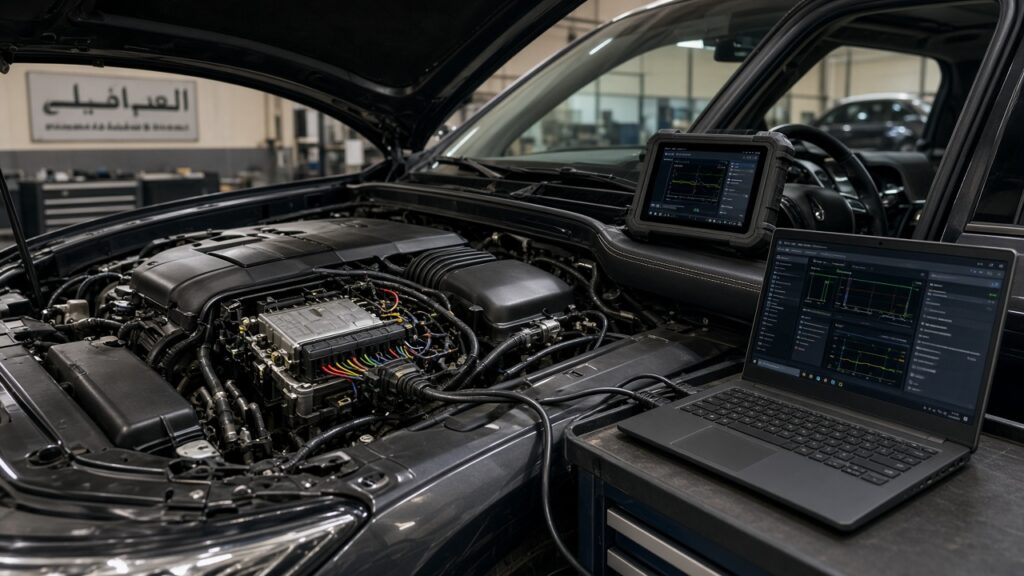
Our process always begins with thorough Mercedes diesel diagnostics Dubai. Using specialized factory-grade diagnostic software, our technicians communicate directly with your GLC’s engine control module to read live data streams. We analyze:
-
The exact soot load measured in grams.
-
The exhaust gas backpressure readings in millibars.
-
The functional health and voltage outputs of the upstream and downstream O2 and temperature sensors.
-
The operational history of recent regeneration attempts.
This forensic data approach allows our team to pinpoint whether your issue is a physical soot blockage, a failed differential pressure sensor, or an upstream engine fault causing excessive soot production.
Specialized Chemical DPF Cleaning
If your filter is heavily loaded but hasn’t sustained internal structural or melting damage, a full replacement is often unnecessary. We offer a highly effective, premium Mercedes DPF cleaning Sharjah and Dubai service.
Our technicians utilize advanced, non-destructive chemical flushing agents introduced directly into the filter assembly. This specialized formulation breaks down the hardened, compacted carbon soot matrices and rinses them away safely, restoring the factory-specified flow dynamics of the honeycomb ceramic core without damaging the delicate precious metal coatings inside.
Controlled Forced Regeneration
In instances where the DPF soot load is elevated beyond what normal driving can clear, but still below the physical destruction limit, our technicians can initiate a static forced regeneration via our diagnostic computers. This safe, highly monitored workshop procedure commands the engine to run at precise speeds and fuel parameters under static workshop conditions, safely burning off the accumulated soot while our team closely monitors real-time thermal profiles.
How to Prevent DPF Blockages: Best Practices for UAE Owners
While urban traffic conditions in cities like Dubai and Sharjah present distinct challenges, you don’t have to live in constant fear of a Mercedes diesel engine warning light. Adopting a few targeted maintenance habits can dramatically extend the operational lifespan of your exhaust filtration system.
1. Incorporate a Weekly “Highway Blast”
The single most effective preventative measure for urban diesel drivers is to intentionally simulate highway driving conditions. At least once a week, take your Mercedes GLC out of the dense city center and onto an open highway like the E11, E311, or Emirates Road.
Drive at a sustained speed of 100 to 120 km/h for approximately 25 to 30 minutes. This sustained speed allows the exhaust gases to reach the optimal temperatures required for passive regeneration, cleanly burning away the week’s accumulated urban soot before it can harden.
2. Demanded the Use of Correct Low-SAPs Engine Oils
Diesel engines equipped with DPF systems are incredibly sensitive to the type of motor oil used during routine servicing. Standard engine oils contain high levels of sulfated ash, phosphorus, and sulfur (SAPs). When an engine naturally consumes small amounts of oil during combustion, these trace elements are swept into the exhaust filter.
Unlike organic soot, chemical ash cannot be burned off during regeneration; it permanently plugs the filter. Ensure your service center uses exclusively approved Low-SAPs engine oils matching strict Mercedes-Benz Specification 229.51 or 229.52.
3. Avoid Low-Quality Fuel and Delayed Engine Maintenance
Always refuel your vehicle at high-quality, reputable service stations to ensure you are receiving ultra-low sulfur diesel (ULSD). Furthermore, never ignore minor engine faults. A leaking fuel injector, a faulty glow plug, or a restricted engine air filter can dramatically alter the fuel mixture, causing the engine to run “rich” and generate ten times the normal amount of soot, instantly overwhelming your DPF.
Trust Smart Garage for Expert Mercedes Diesel Repair in the UAE
Owning a luxury diesel vehicle in the UAE should be an enjoyable experience characterized by effortless power and excellent fuel efficiency. Don’t let chronic city traffic compromise the reliability of your SUV.
Whether you are currently dealing with an active Mercedes DPF blockage repair Sharjah, an annoying dashboard warning light, or simply want a comprehensive mechanical health check, the dedicated European automotive technicians at Smart Garage are here to assist. We offer dealer-level accuracy, premium customer support, and highly cost-effective repair strategies designed to keep your Mercedes-Benz running precisely as the engineers intended.
Contact Smart Garage today to schedule your specialized diesel diagnostics or filter maintenance appointment, and ensure your GLC remains ready for the roads ahead!
Frequently Asked Questions (FAQs)
Can I drive my Mercedes GLC permanently with the DPF light on?
No, driving your vehicle with an active DPF warning light for an extended period is highly discouraged. Ignoring the light will cause the soot levels to increase until the exhaust system becomes fully blocked. This triggers safety “limp mode,” starves the engine of airflow, increases fuel consumption, and can cause catastrophic backpressure damage to your turbocharger.
How much does it cost to clean vs. replace a Mercedes DPF in Dubai?
Professionally cleaning a DPF using advanced chemical flushing methods at a specialist center like Smart Garage is a highly cost-effective solution, usually costing a fraction of the price of a brand-new assembly. Replacing the entire DPF unit with an original OEM Mercedes-Benz part is an expensive undertaking, making early detection and chemical cleaning the preferred choice for smart owners.
Will driving fast in low gear clear a completely blocked DPF?
If the DPF is only mildly restricted, driving at sustained speeds on a highway can trigger natural regeneration and clear out soft soot accumulation. However, if the filter is completely blocked and the vehicle has already entered Limp Mode, driving fast or revving the engine excessively will not fix the issue. At this stage, the ECU has locked out the regeneration process for safety, and it requires professional workshop intervention.
How often do Mercedes GLC models require forced regeneration?
Under ideal driving conditions with plenty of highway use, a Mercedes GLC should never require a workshop-forced regeneration. However, for vehicles driven exclusively in dense city traffic, a forced regeneration or professional chemical cleaning may become necessary every 40,000 to 60,000 kilometers depending entirely on your specific driving habits and maintenance quality.