Home About Services Brands Blog Contact
January 08, 2026 • paint protection

Beyond Vinyl: Why Colored PPF is the Future of Car Customization

For decades, the automotive world has been divided into two distinct camps regarding exterior modification: those who prioritize aesthetic change and those obsessed with preservation. If you wanted to change the color of your vehicle without destroying its resale value with a permanent repaint, your only real option was a vinyl wrap. Conversely, if you wanted to protect the original factory paint from rock chips and scratches, you applied clear Paint Protection Film (PPF).

For years, car owners had to choose a lane. Did they want a flashy satin grey finish that offered virtually no protection against road debris, or did they want a glossy, protected car in the original factory color? The industry forced a compromise between style and substance.

That compromise is officially over. The emergence of Colored Paint Protection Film (Colored PPF) has fundamentally disrupted the detailing industry. It is a technological convergence that renders traditional vinyl wraps practically obsolete for high-end applications. Colored PPF is not just another trend; it is the future of automotive customization, merging the vibrant, customizable aesthetic of vinyl with the industrial-grade armor of traditional clear bra technology.

The Limits of Vinyl: Looks Over Longevity

To understand why Colored PPF is taking over, we must first understand the limitations of the incumbent technology: vinyl wrapping. Vinyl wraps have served a valuable purpose for a long time. They allowed for relatively inexpensive color changes, intricate advertising graphics for commercial fleets, and a temporary way to alter a car’s personality.

However, vinyl is remarkably fragile. It is essentially a large, thin sticker made primarily of Polyvinyl Chloride (PVC). While modern cast vinyls are better than they used to be, they offer almost zero impact resistance. A standard piece of gravel kicked up on the highway will punch right through a vinyl wrap, chipping the original paint underneath and tearing the wrap itself. Once torn, vinyl cannot be repaired; the entire panel usually needs to be re-wrapped.

Furthermore, vinyl has a notoriously short lifespan compared to modern vehicle ownership cycles. Even high-quality vinyl begins to degrade after three to four years of UV exposure. It fades, becomes brittle, and can eventually crack, making removal a nightmare that often requires aggressive solvents and scraping that risks damaging the underlying clear coat. Vinyl is a cosmetic veneer—a temporary disguise that looks good from ten feet away but offers nothing in the way of genuine defense.

Enter Colored PPF: The Evolution of Automotive Armor

The game changed when manufacturers figured out how to infuse pigment directly into Thermoplastic Polyurethane (TPU), the core material of Paint Protection Film. Unlike thin, brittle PVC vinyl, TPU is a thick, incredibly durable, and impact-resistant elastomeric polymer. It is designed specifically to absorb energy from impacts, preventing rocks from ever reaching the vehicle’s paint.

By adding color to this formidable material, the industry created a hybrid product with few downsides. This innovation fundamentally shifts the landscape of Car Detailing & Paint Protection, moving us away from choosing between style and substance. Now, an owner desiring a “Satin Frozen Black” look doesn’t have to sacrifice the front end of their car to stone chips.

Colored PPF is significantly thicker than standard vinyl—often 8 mils (200 microns) or more, compared to vinyl’s typical 3-4 mils. When you touch a car wrapped in Colored PPF, it doesn’t feel like a sticker; it feels like substantial, painted bodywork. The depth of color, the gloss levels in the clear-coated versions, and the sheen of the satin versions are vastly superior to vinyl because the material itself has more depth. It is closer to a spray-on bed liner in terms of toughness, yet it possesses the refined finish of a high-end paint job.

The Science of Self-Healing: Why PPF Wins the War on Swirls

Perhaps the most critical differentiator between the past (vinyl) and the future (Colored PPF) is the maintenance experience and longevity of the finish. Any car owner who has lived with a vinyl wrap knows the anxiety of washing it. Vinyl is incredibly soft. Using a slightly dirty microfiber towel, driving through an automatic car wash, or even brushing against the car with denim jeans will inflict fine scratches and swirl marks into the vinyl surface. Once vinyl is scratched, it stays scratched forever. Over time, this accumulation of micro-marring makes the wrap look dull, tired, and cheap.

Colored PPF completely solves this issue through self-healing technology. The top layer of high-quality PPF consists of elastomeric polymers that have a “memory.” When these polymers are disturbed by a light scratch or swirl mark, they don’t break; they displace.
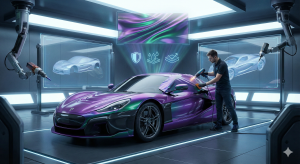
When heat is applied to the film either naturally through direct sunlight on a warm day, or intentionally with hot water or a heat gun these polymers “relax” and flow back into their original flat configuration. The scratches literally disappear before your eyes. This means a car wrapped in Colored PPF will look as pristine three years down the road as it did on day one, maintaining a flawless, swirl-free finish with minimal effort. Vinyl simply cannot compete with this level of resilient technology.

The Financial Argument: Asset Management vs. sunk Cost

For many, the initial barrier to entry for Colored PPF is cost. It is undeniably more expensive than a vinyl wrap, often costing 50% to 100% more depending on the complexity of the vehicle. This price difference is due to the higher cost of the TPU material itself and the increased difficulty of installation, as PPF is thicker and harder to manipulate around compound curves than pliable vinyl.

However, when viewed over a five-to-seven-year ownership cycle, Colored PPF often emerges as the smarter financial decision. Vinyl is a sunk cost; you pay for the look, it degrades, and you pay to remove it, hoping the paint underneath is okay.

Colored PPF is asset protection. If you own a Porsche 911 or a Tesla Model S, the original factory paint is a significant factor in its resale value. A vinyl wrap does nothing to stop front-end rock chips that require expensive resprays before selling. Colored PPF ensures that when you eventually peel the film off years later to sell the car, the paint underneath is showroom-perfect. The premium paid upfront for PPF is often recouped by avoiding paint repairs and securing a higher trade-in value.

Furthermore, the longevity of Colored PPF means you buy it once. Many high-grade colored films come with 10-year warranties against yellowing, cracking, or fading. In that same decade, a vinyl-wrapped car would likely need to be stripped and re-wrapped at least twice to maintain a decent appearance.

Conclusion: The New Standard

The era of applying thin stickers to expensive machinery is drawing to a close. While vinyl wraps will likely remain popular for commercial advertising fleets and budget builds, the high-end detailing market has already moved on.

The convergence of aesthetics and protection is what modern car owners demand. They want the ability to personalize their vehicles with stunning colors like Nardo Grey, Midnight Green, or Satin Gold, but they refuse to compromise on protecting the underlying asset. Colored PPF is the only solution that answers both demands simultaneously. It is tougher, looks better, lasts longer, and heals itself. In the world of automotive customization, Colored PPF is not just an alternative to vinyl; it is its successor.
 Beyond Vinyl: Why Colored PPF is the Future of Car Customization

Beyond Vinyl: Why Colored PPF is the Future of Car Customization

For decades, the automotive world has been divided into two distinct camps regarding exterior modification: those who prioritize aesthetic change and those obsessed with preservation. If you wanted to change the color of your vehicle without destroying its resale value with a permanent repaint, your only real option was a vinyl wrap. Conversely, if you wanted to protect the original factory paint from rock chips and scratches, you applied clear Paint Protection Film (PPF).

For years, car owners had to choose a lane. Did they want a flashy satin grey finish that offered virtually no protection against road debris, or did they want a glossy, protected car in the original factory color? The industry forced a compromise between style and substance.

That compromise is officially over. The emergence of Colored Paint Protection Film (Colored PPF) has fundamentally disrupted the detailing industry. It is a technological convergence that renders traditional vinyl wraps practically obsolete for high-end applications. Colored PPF is not just another trend; it is the future of automotive customization, merging the vibrant, customizable aesthetic of vinyl with the industrial-grade armor of traditional clear bra technology.

The Limits of Vinyl: Looks Over Longevity

To understand why Colored PPF is taking over, we must first understand the limitations of the incumbent technology: vinyl wrapping. Vinyl wraps have served a valuable purpose for a long time. They allowed for relatively inexpensive color changes, intricate advertising graphics for commercial fleets, and a temporary way to alter a car’s personality.

However, vinyl is remarkably fragile. It is essentially a large, thin sticker made primarily of Polyvinyl Chloride (PVC). While modern cast vinyls are better than they used to be, they offer almost zero impact resistance. A standard piece of gravel kicked up on the highway will punch right through a vinyl wrap, chipping the original paint underneath and tearing the wrap itself. Once torn, vinyl cannot be repaired; the entire panel usually needs to be re-wrapped.

Furthermore, vinyl has a notoriously short lifespan compared to modern vehicle ownership cycles. Even high-quality vinyl begins to degrade after three to four years of UV exposure. It fades, becomes brittle, and can eventually crack, making removal a nightmare that often requires aggressive solvents and scraping that risks damaging the underlying clear coat. Vinyl is a cosmetic veneer—a temporary disguise that looks good from ten feet away but offers nothing in the way of genuine defense.

Enter Colored PPF: The Evolution of Automotive Armor

The game changed when manufacturers figured out how to infuse pigment directly into Thermoplastic Polyurethane (TPU), the core material of Paint Protection Film. Unlike thin, brittle PVC vinyl, TPU is a thick, incredibly durable, and impact-resistant elastomeric polymer. It is designed specifically to absorb energy from impacts, preventing rocks from ever reaching the vehicle’s paint.

By adding color to this formidable material, the industry created a hybrid product with few downsides. This innovation fundamentally shifts the landscape of Car Detailing & Paint Protection, moving us away from choosing between style and substance. Now, an owner desiring a “Satin Frozen Black” look doesn’t have to sacrifice the front end of their car to stone chips.

Colored PPF is significantly thicker than standard vinyl—often 8 mils (200 microns) or more, compared to vinyl’s typical 3-4 mils. When you touch a car wrapped in Colored PPF, it doesn’t feel like a sticker; it feels like substantial, painted bodywork. The depth of color, the gloss levels in the clear-coated versions, and the sheen of the satin versions are vastly superior to vinyl because the material itself has more depth. It is closer to a spray-on bed liner in terms of toughness, yet it possesses the refined finish of a high-end paint job.

The Science of Self-Healing: Why PPF Wins the War on Swirls

Perhaps the most critical differentiator between the past (vinyl) and the future (Colored PPF) is the maintenance experience and longevity of the finish. Any car owner who has lived with a vinyl wrap knows the anxiety of washing it. Vinyl is incredibly soft. Using a slightly dirty microfiber towel, driving through an automatic car wash, or even brushing against the car with denim jeans will inflict fine scratches and swirl marks into the vinyl surface. Once vinyl is scratched, it stays scratched forever. Over time, this accumulation of micro-marring makes the wrap look dull, tired, and cheap.

Colored PPF completely solves this issue through self-healing technology. The top layer of high-quality PPF consists of elastomeric polymers that have a “memory.” When these polymers are disturbed by a light scratch or swirl mark, they don’t break; they displace.

When heat is applied to the film either naturally through direct sunlight on a warm day, or intentionally with hot water or a heat gun these polymers “relax” and flow back into their original flat configuration. The scratches literally disappear before your eyes. This means a car wrapped in Colored PPF will look as pristine three years down the road as it did on day one, maintaining a flawless, swirl-free finish with minimal effort. Vinyl simply cannot compete with this level of resilient technology.

The Financial Argument: Asset Management vs. sunk Cost

For many, the initial barrier to entry for Colored PPF is cost. It is undeniably more expensive than a vinyl wrap, often costing 50% to 100% more depending on the complexity of the vehicle. This price difference is due to the higher cost of the TPU material itself and the increased difficulty of installation, as PPF is thicker and harder to manipulate around compound curves than pliable vinyl.

However, when viewed over a five-to-seven-year ownership cycle, Colored PPF often emerges as the smarter financial decision. Vinyl is a sunk cost; you pay for the look, it degrades, and you pay to remove it, hoping the paint underneath is okay.

Colored PPF is asset protection. If you own a Porsche 911 or a Tesla Model S, the original factory paint is a significant factor in its resale value. A vinyl wrap does nothing to stop front-end rock chips that require expensive resprays before selling. Colored PPF ensures that when you eventually peel the film off years later to sell the car, the paint underneath is showroom-perfect. The premium paid upfront for PPF is often recouped by avoiding paint repairs and securing a higher trade-in value.

Furthermore, the longevity of Colored PPF means you buy it once. Many high-grade colored films come with 10-year warranties against yellowing, cracking, or fading. In that same decade, a vinyl-wrapped car would likely need to be stripped and re-wrapped at least twice to maintain a decent appearance.

Conclusion: The New Standard

The era of applying thin stickers to expensive machinery is drawing to a close. While vinyl wraps will likely remain popular for commercial advertising fleets and budget builds, the high-end detailing market has already moved on.

The convergence of aesthetics and protection is what modern car owners demand. They want the ability to personalize their vehicles with stunning colors like Nardo Grey, Midnight Green, or Satin Gold, but they refuse to compromise on protecting the underlying asset. Colored PPF is the only solution that answers both demands simultaneously. It is tougher, looks better, lasts longer, and heals itself. In the world of automotive customization, Colored PPF is not just an alternative to vinyl; it is its successor.
Leave a Reply

Your email address will not be published. Required fields are marked *

Smart Garage
Service Advisor
Online
Smart Garage
Hello! How can we help you with your car today? 👋
Just now
1