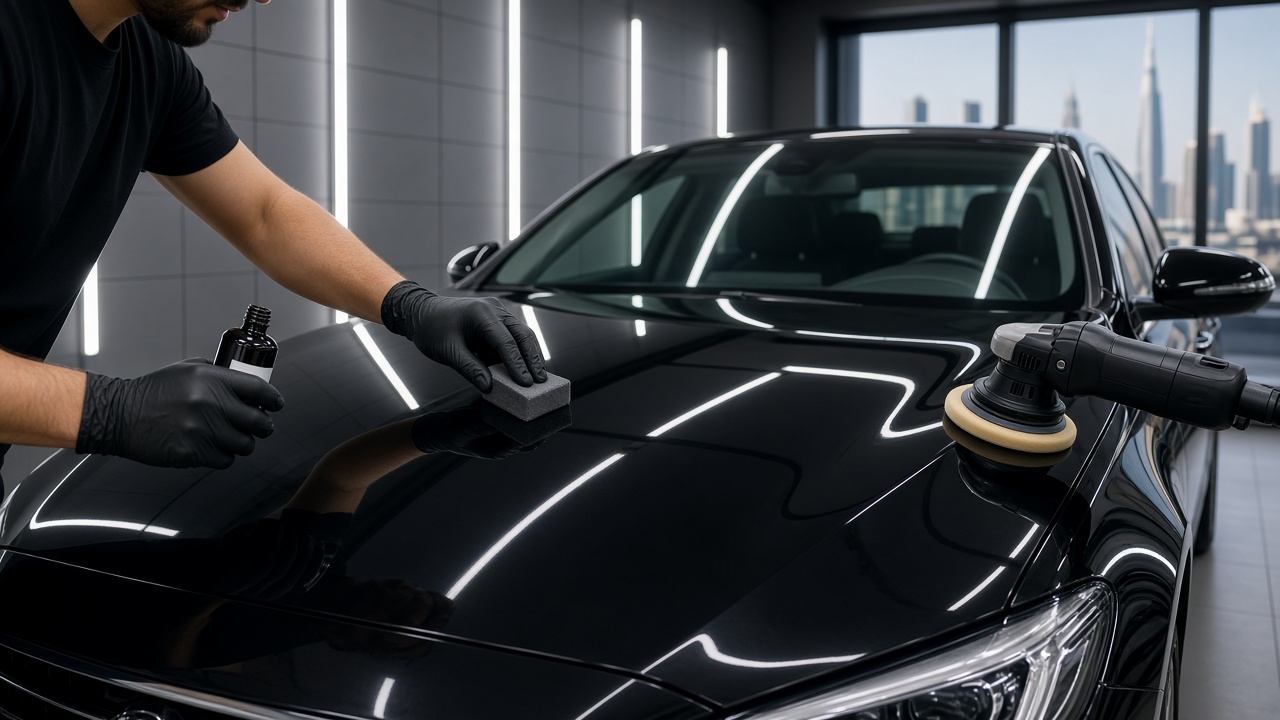
For roughly a century, the image of washing a car has remained virtually unchanged: a sunny driveway, a running garden hose, a bucket full of soapy suds, and gallons of water cascading down the driveway into the street. It is a ritual deeply embedded in car culture. However, a massive shift is currently underway in the automotive world, driven by environmental necessity, urban density, and advancements in chemical engineering. This shift is the “Waterless Revolution.”
The concept of cleaning a vehicle without a constant stream of water or often with no water at all beyond what is in a spray bottle was once viewed with extreme skepticism. Traditionalists argued that without a heavy rinse to flush away dirt, scratching the paint was inevitable. Ten years ago, they might have been right. But today, thanks to the evolution of nanotechnology and hyper-lubricated polymer solutions, waterless washing has not only become safe; in many scenarios, it is actually safer and more effective than the traditional hose-and-bucket method. As water restrictions tighten globally and apartment living becomes more common, mastering the art of the waterless wash is no longer just a niche skill for eco-warriors; it is becoming the standard for modern car care.
The Chemistry of Encapsulation: How It Works
To trust the process, one must first understand the physics and chemistry at play. A waterless wash is not simply “wiping dirt off a dry car.” That would indeed be a recipe for disaster. Instead, waterless wash products are sophisticated chemical cocktails designed to defy friction.
The core technology relies on two main components: high-lubricity surfactants and emulsifiers. When you spray a waterless wash solution onto a dusty panel, the chemicals immediately begin to attack the bond between the dirt and the paint. The surfactants reduce the surface tension, allowing the liquid to slide underneath the dust particles. Simultaneously, the emulsifiers surround the dirt particles, effectively “encapsulating” them in a slick bubble of solution.
This encapsulation is the secret weapon. Once the dirt is lifted and encased in this slippery shell, it no longer makes direct contact with the clear coat. It floats in a microscopic layer of lubricant. When you wipe the panel with a high-quality microfiber towel, you are not scrubbing the dirt against the paint; you are picking up these lubricated capsules. The friction is drastically reduced, preventing the swirl marks and “spider webbing” that plague so many vehicles washed with dirty sponges and contaminated rinse buckets.
The Safety Verdict: Is It Better Than a Hose?
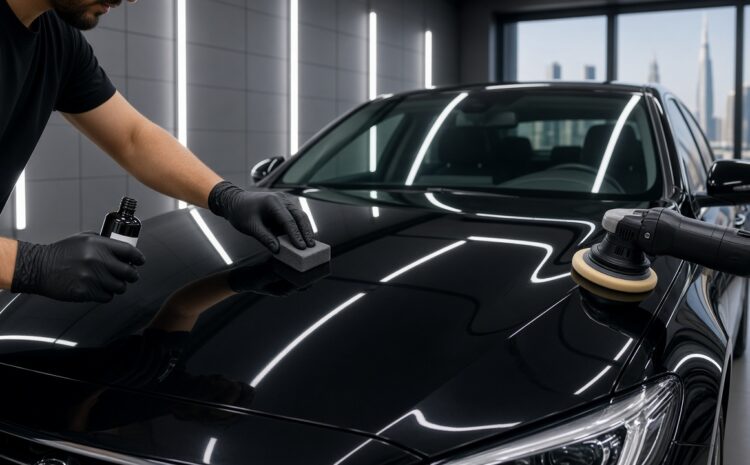
There is a prevalent myth that waterless washing is a compromise something you do only when you don’t have access to “real” washing tools. However, many high-end detailers argue the opposite. When we analyze the highest standards of Car Detailing & Paint Protection, safety is the primary concern, and waterless methods often eliminate the biggest risks associated with traditional washing.
Think about the traditional wash process. You use tap water, which often contains minerals like calcium and magnesium. If that water dries on the car before you can towel it off, it leaves behind hard water spots that can etch into the clear coat. Furthermore, the “two-bucket method” relies on the user constantly rinsing their wash mitt. If they fail to rinse it thoroughly, they are dragging a gritty mitt across the paint.
Waterless washing eliminates the risk of water spotting entirely because no raw tap water ever touches the vehicle. The specialized sprays usually contain optical brighteners and gloss enhancers (often carnauba wax or synthetic sealants) that leave the paint slick and shiny immediately after wiping. Because you are constantly swapping to a fresh side of a microfiber towel (or a fresh towel entirely), you are never reintroducing dirt to the panel. In this sense, a properly executed waterless wash provides a more controlled, sterile, and chemically safe environment for the paint than a garden hose ever could.
The Critical Tool: Why Microfiber Matters
If the chemical solution is the software of the waterless revolution, the microfiber towel is the hardware. You cannot perform a safe waterless wash with old t-shirts, bath towels, or cheap, thin rags found in a bulk bin at a gas station. The success of this method hinges entirely on the quality and management of your microfiber.
Microfiber towels are rated by GSM (grams per square meter). For waterless washing, you generally want a towel in the 300 to 500 GSM range. These towels have a deep “pile” or nap. The purpose of this deep pile is absorption and storage. As you wipe the panel, the encapsulated dirt needs a place to go. It travels upwards into the fibers of the towel, away from the paint surface. A flat, thin cloth would keep the dirt on the surface, grinding it back into the paint.
The composition of the towel also matters. A 70/30 blend (70% polyester, 30% polyamide) is generally softer and more absorbent than an 80/20 blend. The polyamide is the component that does the scrubbing and absorbing, while the polyester provides the structure. For a waterless wash, you need a high polyamide content to ensure the towel grabs the dirt and pulls it deep into the weave, locking it away until the towel is washed.
The Technique: The Art of the Wipe
Having the right spray and the right towel is useless if the technique is flawed. The technique for waterless washing is radically different from traditional washing. It is more akin to surgical cleaning than scrubbing.
The process begins with saturation. You must spray the panel liberally. If you think you’ve sprayed enough, spray a little more. The goal is to ensure every speck of dust is fully saturated and encapsulated. Let the product dwell for a few seconds to break down the road grime.
Next comes the wipe. You should fold your microfiber towel into fours. This gives you eight clean sides to work with per towel. When you wipe, you must use a single, straight motion. Do not scrub back and forth in circles. Wipe from left to right, then lift the towel. Look at the towel; you will see a dark line of dirt.
For the next pass, you must not use that dirty line again. Adjust the towel slightly to expose a clean section, or flip it over. This requires a high volume of towels. To wash an average-sized sedan safely without water, you should expect to use anywhere from 6 to 12 high-quality microfiber towels. The golden rule is: once a side of the towel is dirty, it is “dead” until it goes through the laundry. Never try to stretch the usage of a dirty towel, as that is the moment scratches happen.
Environmental Impact and Urban Constraints
The “Waterless Revolution” is not just about paint preservation; it is about resource preservation. A traditional car wash at home can use between 40 and 100 gallons of water. An automatic tunnel wash uses roughly the same, though many recycle their water (which introduces its own set of chemical concerns).
In contrast, a waterless wash uses approximately 4 to 6 ounces of liquid product. That is a reduction in water consumption of over 99%. In regions facing chronic drought, such as California, Australia, and parts of the Middle East, this is not just an advantage; it is often a legal requirement. Many municipalities have strict bans on “driveway runoff,” preventing homeowners from letting soapy, chemical-rich water flow into storm drains which lead directly to oceans and rivers.
Waterless washing keeps all the chemicals and dirt contained in the towels, which are then washed in a washing machine where the water is treated by the municipal sewage system. This makes it the only fully EPA-compliant method for washing a car in many strict jurisdictions. For apartment dwellers who have no access to a hose spigot, it is the only way to maintain a vehicle without visiting a commercial wash.
When to Draw the Line: Limitations of the Method
While waterless washing is revolutionary, it is not magic. An expert detailer knows when to use it and, more importantly, when not to use it. There is a limit to how much dirt the chemicals can encapsulate and how much the towels can absorb.
If a vehicle has been driven off-road through deep mud, or if it is caked in heavy salt and sand from a snowy winter commute, a waterless wash is dangerous. In these instances, the grit is too heavy and too abrasive. Attempting to wipe away chunks of mud will inevitably result in scratching, regardless of how much lubricant you use.
In these “heavy duty” scenarios, a pre-rinse is mandatory. However, this has given rise to a hybrid method known as the “Rinseless Wash.” This involves a bucket of water mixed with a similar polymer solution. You use a sponge or mitt soaked in the solution to wash the car, but you don’t rinse it off with a hose; you simply dry it. While this uses water (about 3 gallons), it is still far more efficient than the 100-gallon hose method and bridges the gap for dirtier vehicles.
Conclusion: The Future is Dry
The automotive industry is moving toward sustainability in every sector, from electric engines to recycled interior materials. It is only natural that maintenance follows suit. The days of wasting clean, drinkable water to wash a machine are numbered.
The Waterless Revolution is here to stay because it solves multiple problems at once. It saves time (a full wash and wax can be done in 30 minutes), it saves massive amounts of water, and when done correctly, it preserves the paint better than the methods of the past. For the modern car owner, keeping a bottle of high-quality waterless wash and a stack of plush microfibers in the trunk is no longer an option—it is an essential part of ownership.