Your vehicle’s braking system is arguably the most critical safety feature between you and disaster. Yet, most drivers have only a vague understanding of how it works and even less clarity about when components need replacement. The confusion between brake pads and rotors, when each requires attention, and whether both need replacing simultaneously creates anxiety at service centers and often leads to either premature replacement or dangerous delays. Understanding the relationship between these components transforms brake maintenance from a mysterious expense into a logical, manageable aspect of vehicle ownership.
The Dance Between Friction and Metal: How Your Brakes Actually Work
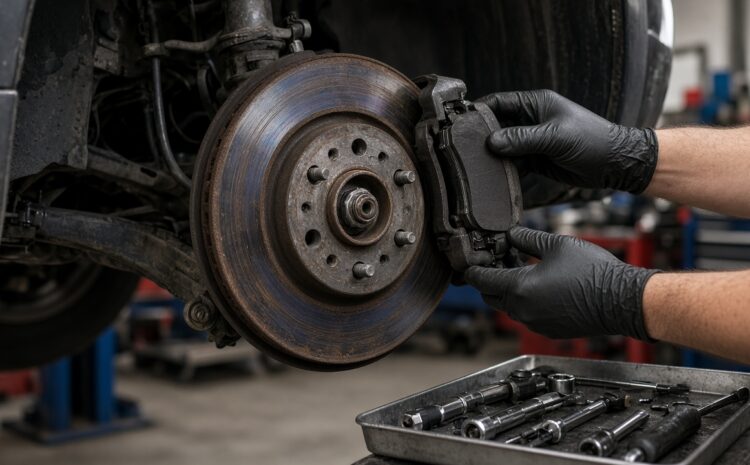
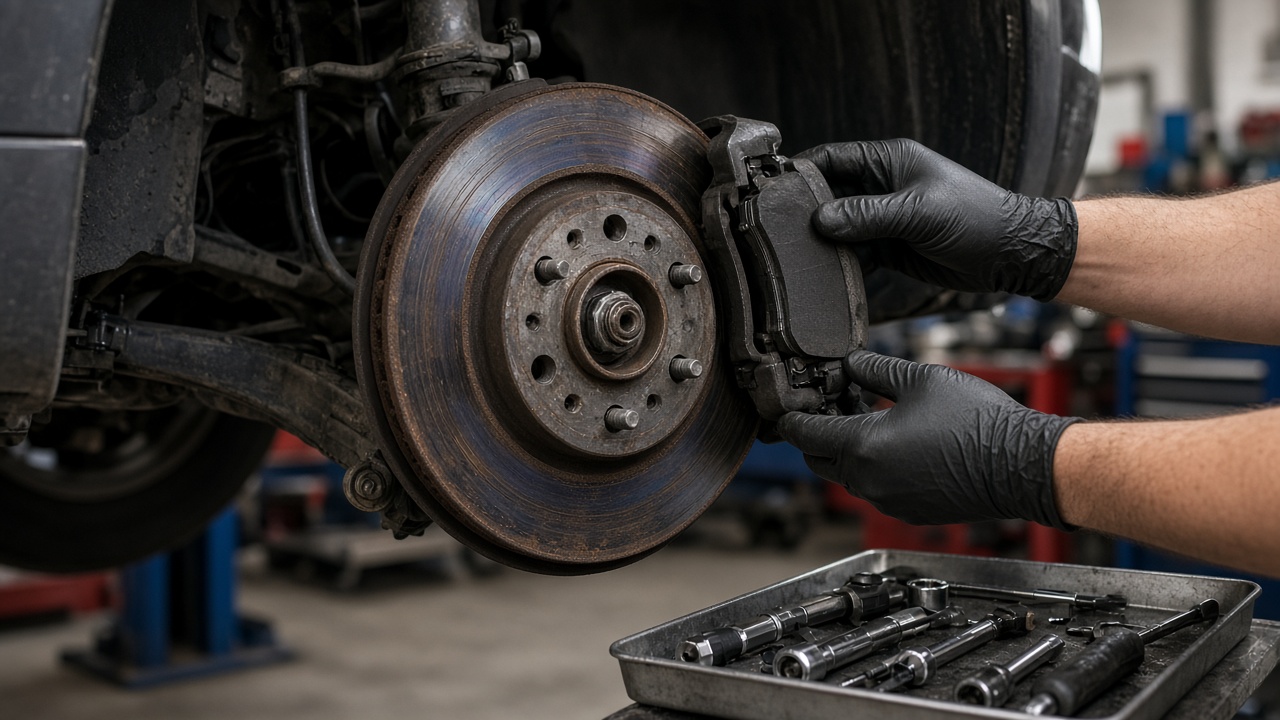
The physics behind stopping a moving vehicle is surprisingly straightforward, though the engineering is sophisticated. When you press the brake pedal, hydraulic fluid transfers that pressure through brake lines to calipers at each wheel. These calipers contain pistons that squeeze brake pads against rotating discs called rotors. The friction generated between pads and rotors converts your vehicle’s kinetic energy into heat, gradually slowing the rotation of your wheels until your car stops. This process happens dozens of times during every journey, subjecting these components to extreme temperatures and constant wear.
Car automotive repair professionals understand that brake pads and rotors work in tandem, but they wear at different rates and have distinct replacement criteria. The pads are designed to be the sacrificial component, made from composite materials engineered to wear down predictably while protecting the more expensive rotors. Think of it like a pencil and paper—the pencil (brake pad) gradually wears away while leaving marks on the paper (rotor). Eventually, both need attention, but the pencil needs replacing far more frequently. This intentional design keeps maintenance costs manageable while ensuring safety.
The brake rotor itself is a precisely machined disc, typically made from cast iron or a composite material in performance applications. Its surface must remain smooth and true for optimal braking performance. When pads press against rotors thousands of times under extreme heat and pressure, both surfaces undergo changes. The pads compress and thin, while rotors develop wear patterns, heat spots, and eventually warping or scoring. Understanding these changes and recognizing warning signs determines whether you need a simple pad replacement or more extensive rotor work.
Reading the Signs: What Your Brakes Are Telling You
Your braking system communicates its condition constantly if you know what to listen and feel for. The most obvious indicator is sound. Most modern brake pads include a small metal tab called a wear indicator that intentionally contacts the rotor when pad material reaches a critical minimum thickness. This creates a high-pitched squealing or scraping sound that’s impossible to ignore. If you hear this noise, your pads are telling you they’re near the end of their service life. Ignoring this warning leads to metal-on-metal contact between the backing plate and rotor, causing expensive rotor damage and compromised braking ability.
However, not all brake noise indicates wear. A light squealing in damp conditions, especially after your car has been parked overnight, often results from surface rust on rotors that quickly wears away during initial braking. Similarly, occasional squeaking without the wear indicator’s consistent scraping might come from brake dust accumulation or pad vibration. The key difference is consistency. Wear indicators create persistent noise that doesn’t disappear, while benign noises are intermittent and often weather-dependent.
Vibration or pulsing through the brake pedal tells a different story, usually about your rotors rather than pads. When rotors warp from excessive heat or develop uneven wear patterns, they create a thickness variation that causes the brake pedal to pulse as different parts of the rotor pass under the pad. This pulsation is most noticeable during moderate to heavy braking and worsens over time. Warped rotors don’t always require replacement; minor warping can be corrected through resurfacing, but severely warped rotors need complete replacement.
Pulling to one side during braking indicates uneven braking force between left and right wheels. This could stem from a seized caliper, contaminated brake pads, or significantly different wear rates between sides. While not always a rotor or pad issue, this symptom demands immediate inspection as it affects vehicle control during braking. A soft or spongy brake pedal that requires more pressure than normal might indicate air in brake lines or fluid contamination rather than pad or rotor problems, but it equally requires urgent attention.
The Measurement Game: Numbers That Matter
Professional technicians don’t rely solely on symptoms; they measure. Brake pads have minimum thickness specifications, typically around 3-4mm depending on the vehicle. Most mechanics recommend replacement when pads reach 3mm, providing a safety margin before the wear indicator activates. Some drivers push this limit, waiting until 2mm or even the 1mm minimum, but this risks sudden pad failure and rotor damage. The cost difference between a pad replacement and a pad-plus-rotor replacement is substantial, making early replacement economically sensible.
Measuring pad thickness requires removing wheels for visual inspection. Through the wheel spokes, you can sometimes estimate pad thickness, but this method is imprecise. During tire rotations or seasonal tire changes, requesting a brake inspection costs nothing extra and provides accurate measurements. Technicians measure pad thickness at multiple points since pads can wear unevenly, with the inner pad sometimes wearing faster than the outer pad due to caliper piston pressure variations.
Rotors have two critical measurements: thickness and surface condition. Every rotor has a minimum thickness specification stamped on its surface, typically called the “discard thickness.” As rotors wear or get resurfaced, they approach this minimum. Once at or below discard thickness, the rotor lacks sufficient material to dissipate heat properly and risks cracking or catastrophic failure under heavy braking. Even if a rotor appears fine visually, if it’s at minimum thickness, replacement is mandatory.
Surface condition assessment requires both visual inspection and precise measurement tools. A micrometer measures thickness variation around the rotor’s circumference. Variations exceeding manufacturer specifications indicate warping. Visual inspection reveals scoring (deep grooves), cracking, or heat spots (discolored areas indicating extreme temperature exposure). Minor surface irregularities can be corrected through resurfacing on a brake lathe, removing a thin layer of material to restore a smooth, true surface. However, each resurfacing reduces rotor thickness, so a rotor can only be resurfaced a limited number of times before reaching discard thickness.
The Replacement Decision Matrix: Pads, Rotors, or Both
When pads reach their wear limit but rotors remain within specifications with smooth surfaces, the decision is simple: replace the pads. This straightforward replacement typically costs between AED 300-800 depending on your vehicle and pad quality. The job takes one to two hours and restores full braking performance. Quality matters here; premium pads last longer and provide better stopping power, though they cost more initially.
When rotors show minor surface wear, scoring, or slight warping but remain above minimum thickness with sufficient material for resurfacing, you have options. Resurfacing costs less than replacement and can extend rotor life significantly. However, this only makes sense if the rotor has adequate material remaining. Resurfacing a rotor that’s near minimum thickness is false economy; you’ll need replacement soon anyway. Professional technicians calculate whether resurfacing is viable based on current thickness, material to be removed, and minimum thickness specifications.
Certain conditions mandate rotor replacement regardless of thickness. Deep scoring that penetrates beyond what resurfacing can correct, cracks anywhere on the rotor surface, severe warping, or heat damage that has altered the metal’s properties all require new rotors. Additionally, if rotors are at or near minimum thickness, replacement is the only safe option. Some technicians recommend replacing rotors whenever you replace the second set of brake pads, reasoning that by the time pads wear out twice, rotors have sufficient wear and heat cycling to justify replacement.
The question of replacing rotors in pairs versus individually has a clear answer: always replace in pairs, at minimum on the same axle. Braking force must be balanced between left and right wheels. Using one new rotor and one worn rotor creates different friction characteristics between sides, potentially causing brake pull and uneven wear on new pads. Front and rear axles can be addressed separately since most braking force occurs at the front, but left and right must match.
Cost Considerations and the Value of Prevention
The financial aspect of brake maintenance reveals why understanding the pad-versus-rotor question matters. A complete brake job—pads and rotors on one axle—might cost AED 800-1,500 for a standard vehicle, while pads alone cost AED 300-600. By replacing pads at appropriate intervals before rotor damage occurs, you potentially avoid one or more rotor replacements over your vehicle’s life, saving thousands of dirhams.
However, the cheapest option isn’t always the wisest. Using low-quality pads to save AED 100-200 might seem economical until those pads wear out in 15,000 kilometers instead of 40,000, or worse, accelerate rotor wear with abrasive materials. Similarly, resurfacing rotors that are marginal saves money today but might necessitate replacement in 10,000 kilometers, requiring another brake service call and duplicate labor costs.
Driving habits dramatically influence brake component longevity. Aggressive braking, frequent stop-and-go traffic, mountain driving, or towing heavy loads accelerate wear. Dubai’s driving conditions, with heavy traffic and high speeds followed by sudden stops, are particularly demanding on brakes. Understanding your driving environment helps predict maintenance intervals. A vehicle used primarily for highway driving might get 60,000 kilometers from brake pads, while the same vehicle in urban traffic might need replacement at 30,000 kilometers.
Material Choices and Performance Differences
Brake pads come in several material formulations, each with distinct characteristics. Organic or non-asbestos organic (NAO) pads are quieter and produce less dust but wear faster and offer less performance under extreme conditions. Semi-metallic pads include metal fibers for better heat dissipation and performance but create more noise and dust while being harder on rotors. Ceramic pads represent the premium option, offering quiet operation, minimal dust, long life, and excellent performance, though at higher cost.
Your choice should match your priorities and driving style. For normal commuting in standard sedans, ceramic pads offer the best overall experience despite higher initial cost. Performance vehicle owners might prefer semi-metallic pads for their superior heat handling during spirited driving. Budget-conscious drivers might select quality organic pads, accepting shorter lifespan for lower cost.
Rotor choices include standard cast iron, slotted, drilled, or combination designs. Standard rotors suit most applications perfectly. Slotted rotors, with machined grooves, help expel gases and debris while maintaining pad bite during heavy use. Drilled rotors, with holes through the surface, provide additional cooling but can crack under extreme stress. These performance rotors benefit sports cars or vehicles used for track days but offer minimal advantage in normal driving while costing significantly more.
The Inspection Schedule: Staying Ahead of Problems
Rather than waiting for symptoms, proactive inspection prevents surprises and expensive emergency repairs. Most manufacturers recommend brake inspection every 20,000 kilometers or annually, whichever comes first. Many service centers include brake inspection with oil changes or tire rotations at no additional cost. Taking advantage of these free inspections provides regular updates on brake condition and helps you budget for upcoming maintenance.
Learning to perform basic visual inspection yourself adds another layer of monitoring. With the wheel removed, you can see brake pad thickness through the caliper. While you shouldn’t rely solely on this method, it helps you understand your brake wear patterns and verify service provider recommendations. If a mechanic claims you need immediate replacement but your visual inspection shows substantial pad remaining, you can seek a second opinion.
Keeping records of brake service, including measurements at each inspection, reveals wear patterns specific to your vehicle and driving. If your front pads consistently wear out at 35,000 kilometers, you can anticipate the next replacement rather than being caught off guard. This data also helps you evaluate whether you’re getting full life from your brake components or if something is causing premature wear.
When Professional Intervention Becomes Essential
While understanding brake systems empowers you to make informed decisions, actual brake work requires specialized knowledge and tools. Brake system hydraulics, proper bleeding procedures, caliper function, and torque specifications all demand professional attention. Even simple pad replacement involves considerations like proper bedding procedures, correct installation sequences, and safety-critical torque values.
Attempting brake work without proper equipment or knowledge risks your safety and others’. A improperly installed brake pad could separate during operation. Incorrectly torqued caliper bolts could cause brake failure. Contaminated brake fluid could lead to vapor lock and complete brake loss. These aren’t theoretical risks; they’re real consequences of improper brake service.
Choosing a qualified service provider matters tremendously. Look for technicians with manufacturer certifications, modern diagnostic equipment, and comprehensive warranties on parts and labor. A brake job is not the place to seek the absolute lowest price. The cheapest option often uses inferior parts or cuts corners on procedures. Your brakes must function perfectly every single time you need them; the cost difference between quality and cheap service is insignificant compared to the value of reliable stopping power.
Conclusion
Understanding the relationship between brake pads and rotors, recognizing wear indicators, and knowing replacement criteria transforms brake maintenance from a confusing expense into a manageable aspect of vehicle ownership. Brake pads are consumable items designed to wear predictably while protecting more expensive rotors. When pads reach 3mm thickness or exhibit wear indicators, replacement is due. Rotors require replacement when they reach minimum thickness, show severe damage, or have been resurfaced to their limits.
The key to economical brake maintenance is timely pad replacement before rotor damage occurs. Waiting too long on pad replacement can double your repair cost by necessitating rotor replacement. Conversely, replacing rotors prematurely wastes money. Working with qualified technicians who measure components accurately and explain their findings helps you make informed decisions.
Your brakes represent the most critical safety system in your vehicle. Understanding when pads versus rotors need attention, recognizing warning signs, and maintaining appropriate inspection intervals ensures your braking system remains reliable while managing costs effectively. Whether you’re hearing that telltale squeal, feeling vibration through the pedal, or simply reaching your inspection interval, addressing brake maintenance proactively keeps you safe while avoiding the significantly higher costs of emergency repairs or accident consequences. Trust your brakes, but verify their condition regularly, and you’ll enjoy both safety and peace of mind on every journey.