Home About Services Brands Blog Contact
November 19, 2025 • Fuel System

Is It Bad Gas or Just the Heat? 8 Warning Signs Your Fuel System is Failing in the UAE

Driving down Sheikh Zayed Road or navigating the industrial traffic of Sharjah, you press the accelerator, and the car hesitates. It sputters. Maybe you hear a faint whine from the back seat. The immediate thought for most drivers in the Emirates is: “Did I get bad gas at that last station?” While fuel contamination is a real issue, the reality of the UAE automotive landscape is often more complex.

In the United Arab Emirates, our vehicles operate under what manufacturers classify as Severe Service conditions. Extreme summer temperatures exceeding 45°C, high humidity in coastal cities like Dubai, and fine silica dust from the desert all conspire to attack your vehicle’s fuel delivery system. What looks like “bad gas” is often a mechanical component struggling to cope with the environment.

Many drivers mistake these mechanical cries for help as simply getting a “bad batch” from the pump. However, ignoring these signs can lead to catastrophic engine failure. If you are already noticing hesitation or noise, seeking professional fuel system repair services in Sharjah is the only way to prevent a minor maintenance issue from becoming a major overhaul. At Smart Garage, we believe in diagnosing the root cause whether it’s the fuel, the tank, or the heat.

The “Bad Gas” Myth: Understanding UAE Fuel Standards

Before diving into symptoms, it is crucial to understand the quality of fuel in the UAE. Unlike some regions, the UAE enforces strict standards overseen by the Emirates Authority for Standardization and Metrology (ESMA). The introduction of Euro 5 compliant diesel and ultra-low sulfur petrol means the chemical quality of fuel here is among the highest in the world.

Therefore, when we talk about “bad gas symptoms” in the UAE, we are rarely talking about poor refining. Instead, we are usually dealing with:

  • Thermal Breakdown: Heat causing fuel to vaporize before it reaches the engine.
  • Contamination: Sand entering the system or water condensation forming in the tank due to humidity.
  • Neglect: Clogged micro-filters that haven’t been changed according to the region’s severe maintenance schedules.

8 Symptoms of Fuel System Distress You Can’t Ignore

1. The High-Pitched “Whine” from the Rear

If you hear a constant whining or buzzing sound coming from the back of your car, this is the classic cry of a dying fuel pump. In the UAE, this is often self-inflicted. Modern fuel pumps are cooled by the fuel sitting in the tank. When you drive with the “Low Fuel” light on during a Dubai summer, the remaining fuel heats up rapidly. This causes the pump to overheat and cavitate (suck in air bubbles), leading to that tell-tale whine and eventual failure.

2. Engine Sputtering at High Speeds

Does your car feel like it is choking when you try to overtake on the highway? This usually indicates that your fuel pump or injectors cannot supply enough volume to meet the engine’s demand. While the car runs fine in city traffic, the high demand of highway driving exposes a clogged fuel filter or a weak pump.

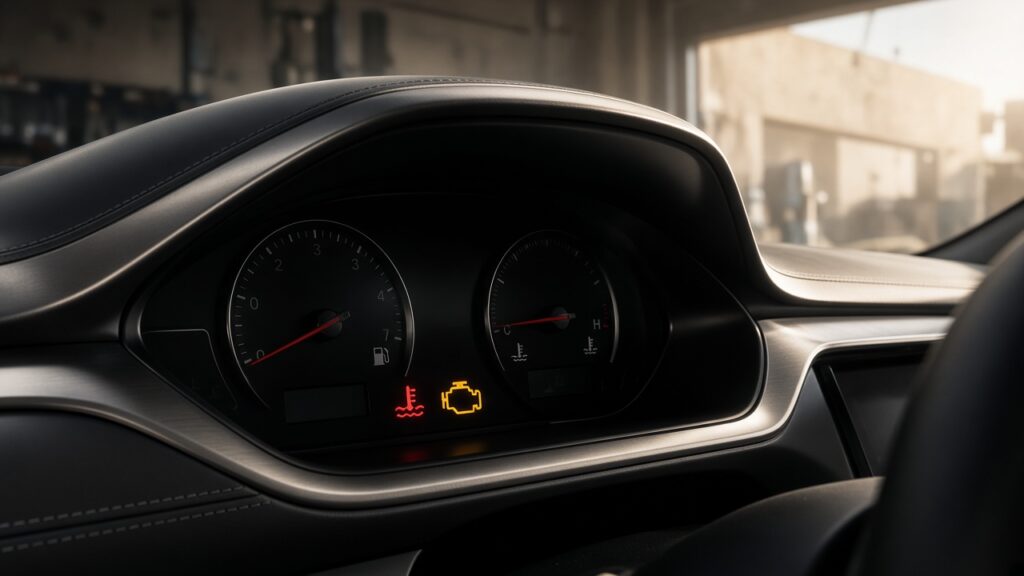
3. The “Check Engine” Light (Lean Codes)

The most common anxiety-inducing light on your dashboard. If your fuel system is clogged, the oxygen sensors will detect that the engine is running “lean” (too much air, not enough fuel). This triggers the light. While many ignore it, running a car lean in hot weather can melt internal engine components due to increased combustion temperatures.

4. Rough Idle and Vibrations

You are stopped at a traffic light in Sharjah, and the car starts to shudder or feels like it might stall. This is often caused by dirty fuel injectors. In stop-and-go traffic, carbon deposits build up on the injector nozzles, disrupting the fine mist spray required for smooth combustion. This results in a rough, shaky idle.

5. Difficult Starts (The Long Crank)

If your car takes longer than usual to start, or if you have to turn the key multiple times, your system is losing “prime.” A healthy fuel system holds pressure even when the car is off. If a check valve fails or an injector leaks, the fuel drains back into the tank, leaving the lines empty. This means the pump has to work double-time just to get the engine running.

6. Reduced Fuel Economy

It seems counter-intuitive, but a bad fuel system often wastes gas. If the engine control unit (ECU) detects a fuel delivery problem, it may force the system into “open loop” mode, dumping extra fuel into the engine to prevent stalling. If you find yourself visiting the petrol station more often than usual, your system needs a diagnostic check.

7. The Smell of Raw Petrol

This is a red alert situation. The smell of raw gas inside the cabin or around the car indicates a leak. In the UAE heat, rubber fuel lines and O-rings can dry out and crack faster than in cooler climates. Additionally, a failing charcoal canister (part of the emissions system) can fail to trap fumes, releasing them into the air. This is a fire hazard and requires immediate towing.

8. Surging (The Ghost Acceleration)

If your car suddenly speeds up without you pressing the pedal, this is called surging. It happens when a consistent flow of fuel is interrupted by a blockage, and then suddenly releases—flooding the engine with a burst of fuel. This erratic behavior is dangerous in tight traffic and is a clear sign of fuel contamination.

The Great Debate: Special 95 vs. Super 98

One of the most frequent questions we get at Smart Garage is: “Is Special 95 causing my engine issues?” There is a pervasive myth that Special 95 is “dirty” compared to Super 98. This is incorrect.

The difference lies in the Octane Rating, which measures the fuel’s resistance to “knocking” or pre-ignition. In the high heat of the UAE, engines are more prone to knocking. High-performance engines (like those in luxury SUVs and sports cars commonly found in Dubai) require Super 98 to prevent this. Using Special 95 in a high-compression engine during summer can cause the ECU to retard timing, leading to sluggish performance and higher consumption.

The Verdict: Special 95 is not “bad gas.” It is perfectly clean. However, if your manufacturer recommends 98, using 95 in July and August can simulate “bad gas” symptoms due to heat-induced timing correction.

The Hidden Threat: Diesel Bug and Water Contamination

For diesel vehicle owners particularly fleet operators and 4×4 enthusiasts the humidity in the UAE poses a unique threat. Diesel fuel is hygroscopic, meaning it absorbs moisture from the air. In the humid coastal environment, water can accumulate at the bottom of the tank.

This water creates a breeding ground for microbial growth, often called the “diesel bug.” This algae-like sludge clogs filters and destroys expensive high-pressure fuel pumps. Regular fuel tank cleaning and using water separators are not just optional extras in this climate; they are essential maintenance.

Smart Solutions: Cleaning vs. Replacement

When faced with these symptoms, many drivers resort to “mechanic in a bottle” solutions pouring cheap additives into the tank. While these can help with minor maintenance, they cannot fix a physically clogged filter or a failing pump.

At Smart Garage, we employ a data-driven approach to fuel system health:

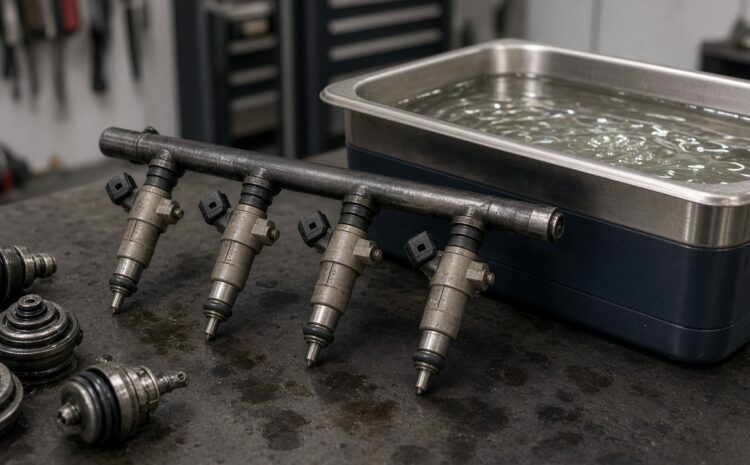
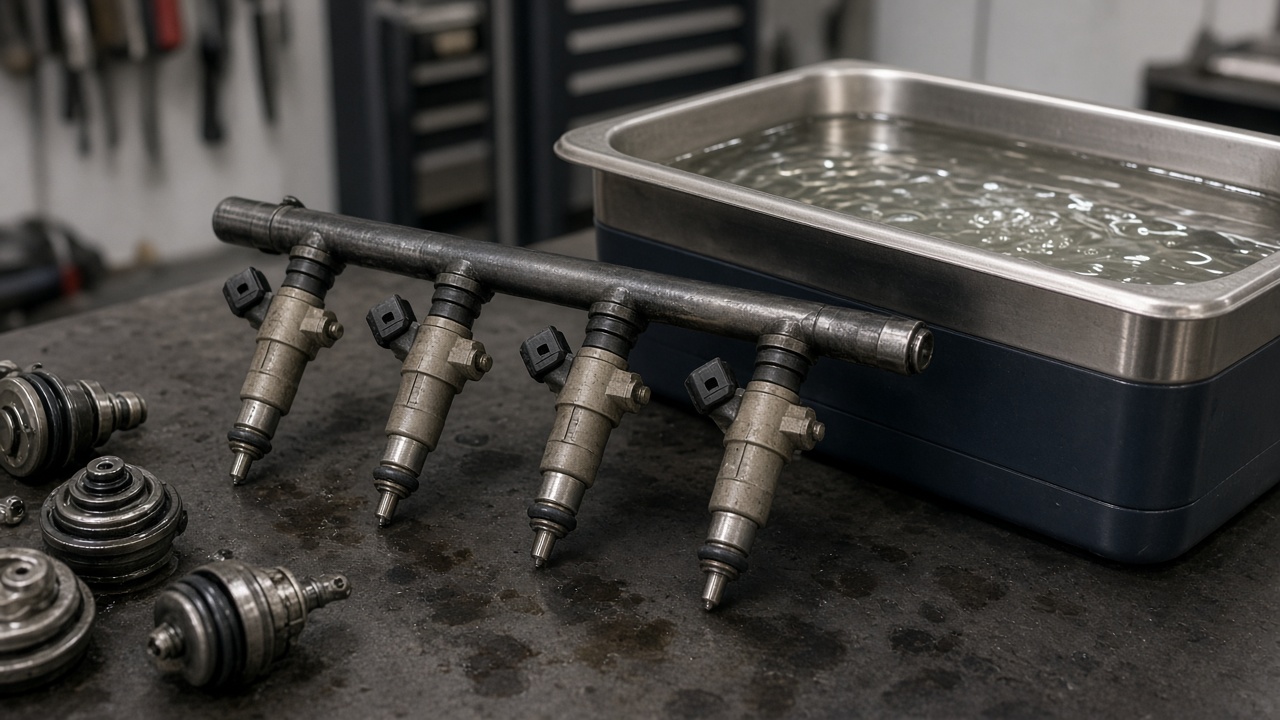
  • Ultrasonic Injector Cleaning: Instead of just dumping chemicals in the tank, we remove the injectors and clean them using ultrasonic waves to pulverize carbon deposits, restoring factory spray patterns.
  • Fuel Tank Restoration: For older vehicles or those that have been sitting, we drain and clean the tank to remove sludge and sand that accumulates over years of desert driving.
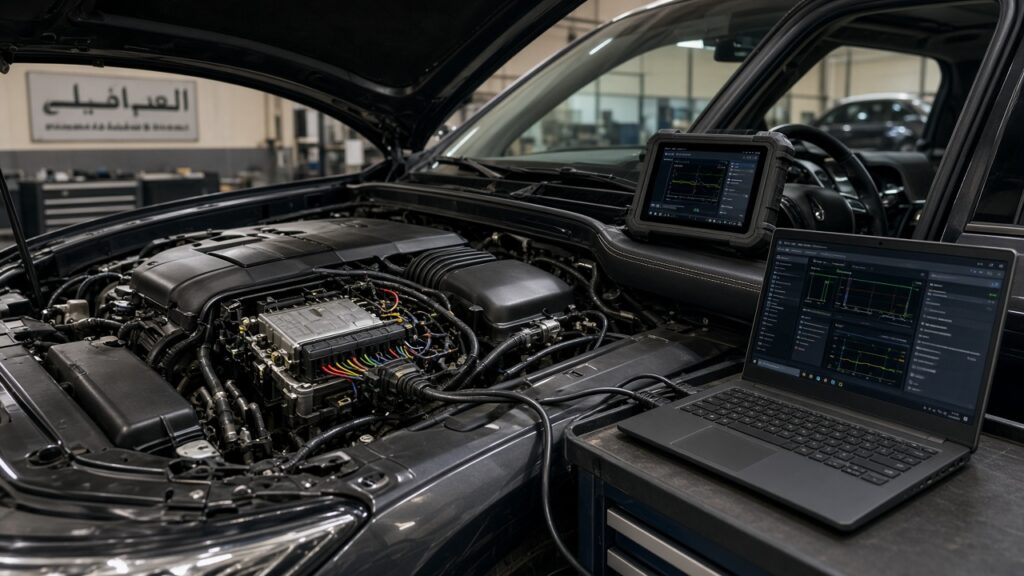
  • Precision Diagnostics: We use advanced scan tools to read fuel trim data, allowing us to pinpoint exactly which part of the system is failing before we replace any parts.

Conclusion: Protect Your Engine from the Elements

In the UAE, your car is fighting a constant battle against heat and dust. What feels like “bad gas” is often a warning sign that your vehicle’s defenses are down. Whether it is a whining pump caused by a hot summer day or a rough idle from city traffic carbon buildup, early detection is key.

Don’t wait for the “Check Engine” light to leave you stranded on the side of the highway. If you recognize any of these 8 symptoms, bring your vehicle to Smart Garage. Our team understands the unique “Severe Service” requirements of the UAE and offers the specialized care your car needs to run smooth, cool, and efficient.
 

 Is It Bad Gas or Just the Heat? 8 Warning Signs Your Fuel System is Failing in the UAE

Is It Bad Gas or Just the Heat? 8 Warning Signs Your Fuel System is Failing in the UAE

Driving down Sheikh Zayed Road or navigating the industrial traffic of Sharjah, you press the accelerator, and the car hesitates. It sputters. Maybe you hear a faint whine from the back seat. The immediate thought for most drivers in the Emirates is: “Did I get bad gas at that last station?” While fuel contamination is a real issue, the reality of the UAE automotive landscape is often more complex.

In the United Arab Emirates, our vehicles operate under what manufacturers classify as Severe Service conditions. Extreme summer temperatures exceeding 45°C, high humidity in coastal cities like Dubai, and fine silica dust from the desert all conspire to attack your vehicle’s fuel delivery system. What looks like “bad gas” is often a mechanical component struggling to cope with the environment.

Many drivers mistake these mechanical cries for help as simply getting a “bad batch” from the pump. However, ignoring these signs can lead to catastrophic engine failure. If you are already noticing hesitation or noise, seeking professional fuel system repair services in Sharjah is the only way to prevent a minor maintenance issue from becoming a major overhaul. At Smart Garage, we believe in diagnosing the root cause whether it’s the fuel, the tank, or the heat.

The “Bad Gas” Myth: Understanding UAE Fuel Standards

Before diving into symptoms, it is crucial to understand the quality of fuel in the UAE. Unlike some regions, the UAE enforces strict standards overseen by the Emirates Authority for Standardization and Metrology (ESMA). The introduction of Euro 5 compliant diesel and ultra-low sulfur petrol means the chemical quality of fuel here is among the highest in the world.

Therefore, when we talk about “bad gas symptoms” in the UAE, we are rarely talking about poor refining. Instead, we are usually dealing with:

  • Thermal Breakdown: Heat causing fuel to vaporize before it reaches the engine.
  • Contamination: Sand entering the system or water condensation forming in the tank due to humidity.
  • Neglect: Clogged micro-filters that haven’t been changed according to the region’s severe maintenance schedules.

8 Symptoms of Fuel System Distress You Can’t Ignore

1. The High-Pitched “Whine” from the Rear

If you hear a constant whining or buzzing sound coming from the back of your car, this is the classic cry of a dying fuel pump. In the UAE, this is often self-inflicted. Modern fuel pumps are cooled by the fuel sitting in the tank. When you drive with the “Low Fuel” light on during a Dubai summer, the remaining fuel heats up rapidly. This causes the pump to overheat and cavitate (suck in air bubbles), leading to that tell-tale whine and eventual failure.

2. Engine Sputtering at High Speeds

Does your car feel like it is choking when you try to overtake on the highway? This usually indicates that your fuel pump or injectors cannot supply enough volume to meet the engine’s demand. While the car runs fine in city traffic, the high demand of highway driving exposes a clogged fuel filter or a weak pump.

3. The “Check Engine” Light (Lean Codes)

The most common anxiety-inducing light on your dashboard. If your fuel system is clogged, the oxygen sensors will detect that the engine is running “lean” (too much air, not enough fuel). This triggers the light. While many ignore it, running a car lean in hot weather can melt internal engine components due to increased combustion temperatures.

4. Rough Idle and Vibrations

You are stopped at a traffic light in Sharjah, and the car starts to shudder or feels like it might stall. This is often caused by dirty fuel injectors. In stop-and-go traffic, carbon deposits build up on the injector nozzles, disrupting the fine mist spray required for smooth combustion. This results in a rough, shaky idle.

5. Difficult Starts (The Long Crank)

If your car takes longer than usual to start, or if you have to turn the key multiple times, your system is losing “prime.” A healthy fuel system holds pressure even when the car is off. If a check valve fails or an injector leaks, the fuel drains back into the tank, leaving the lines empty. This means the pump has to work double-time just to get the engine running.

6. Reduced Fuel Economy

It seems counter-intuitive, but a bad fuel system often wastes gas. If the engine control unit (ECU) detects a fuel delivery problem, it may force the system into “open loop” mode, dumping extra fuel into the engine to prevent stalling. If you find yourself visiting the petrol station more often than usual, your system needs a diagnostic check.

7. The Smell of Raw Petrol

This is a red alert situation. The smell of raw gas inside the cabin or around the car indicates a leak. In the UAE heat, rubber fuel lines and O-rings can dry out and crack faster than in cooler climates. Additionally, a failing charcoal canister (part of the emissions system) can fail to trap fumes, releasing them into the air. This is a fire hazard and requires immediate towing.

8. Surging (The Ghost Acceleration)

If your car suddenly speeds up without you pressing the pedal, this is called surging. It happens when a consistent flow of fuel is interrupted by a blockage, and then suddenly releases—flooding the engine with a burst of fuel. This erratic behavior is dangerous in tight traffic and is a clear sign of fuel contamination.

The Great Debate: Special 95 vs. Super 98

One of the most frequent questions we get at Smart Garage is: “Is Special 95 causing my engine issues?” There is a pervasive myth that Special 95 is “dirty” compared to Super 98. This is incorrect.

The difference lies in the Octane Rating, which measures the fuel’s resistance to “knocking” or pre-ignition. In the high heat of the UAE, engines are more prone to knocking. High-performance engines (like those in luxury SUVs and sports cars commonly found in Dubai) require Super 98 to prevent this. Using Special 95 in a high-compression engine during summer can cause the ECU to retard timing, leading to sluggish performance and higher consumption.

The Verdict: Special 95 is not “bad gas.” It is perfectly clean. However, if your manufacturer recommends 98, using 95 in July and August can simulate “bad gas” symptoms due to heat-induced timing correction.

The Hidden Threat: Diesel Bug and Water Contamination

For diesel vehicle owners particularly fleet operators and 4×4 enthusiasts the humidity in the UAE poses a unique threat. Diesel fuel is hygroscopic, meaning it absorbs moisture from the air. In the humid coastal environment, water can accumulate at the bottom of the tank.

This water creates a breeding ground for microbial growth, often called the “diesel bug.” This algae-like sludge clogs filters and destroys expensive high-pressure fuel pumps. Regular fuel tank cleaning and using water separators are not just optional extras in this climate; they are essential maintenance.

Smart Solutions: Cleaning vs. Replacement

When faced with these symptoms, many drivers resort to “mechanic in a bottle” solutions pouring cheap additives into the tank. While these can help with minor maintenance, they cannot fix a physically clogged filter or a failing pump.

At Smart Garage, we employ a data-driven approach to fuel system health:

  • Ultrasonic Injector Cleaning: Instead of just dumping chemicals in the tank, we remove the injectors and clean them using ultrasonic waves to pulverize carbon deposits, restoring factory spray patterns.
  • Fuel Tank Restoration: For older vehicles or those that have been sitting, we drain and clean the tank to remove sludge and sand that accumulates over years of desert driving.
  • Precision Diagnostics: We use advanced scan tools to read fuel trim data, allowing us to pinpoint exactly which part of the system is failing before we replace any parts.

Conclusion: Protect Your Engine from the Elements

In the UAE, your car is fighting a constant battle against heat and dust. What feels like “bad gas” is often a warning sign that your vehicle’s defenses are down. Whether it is a whining pump caused by a hot summer day or a rough idle from city traffic carbon buildup, early detection is key.

Don’t wait for the “Check Engine” light to leave you stranded on the side of the highway. If you recognize any of these 8 symptoms, bring your vehicle to Smart Garage. Our team understands the unique “Severe Service” requirements of the UAE and offers the specialized care your car needs to run smooth, cool, and efficient.
 

Leave a Reply

Your email address will not be published. Required fields are marked *

Smart Garage
Service Advisor
Online
Smart Garage
Hello! How can we help you with your car today? 👋
Just now
1