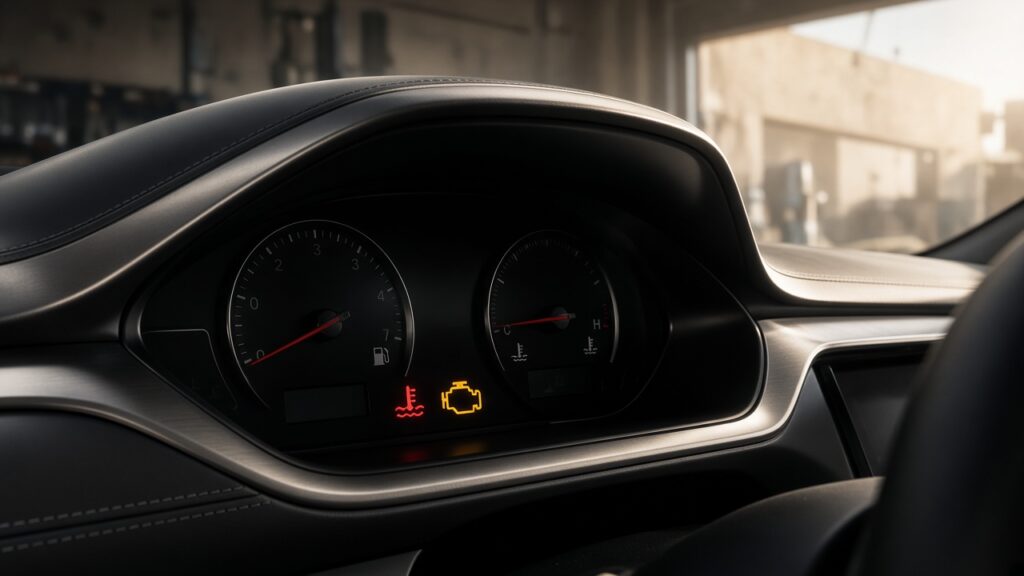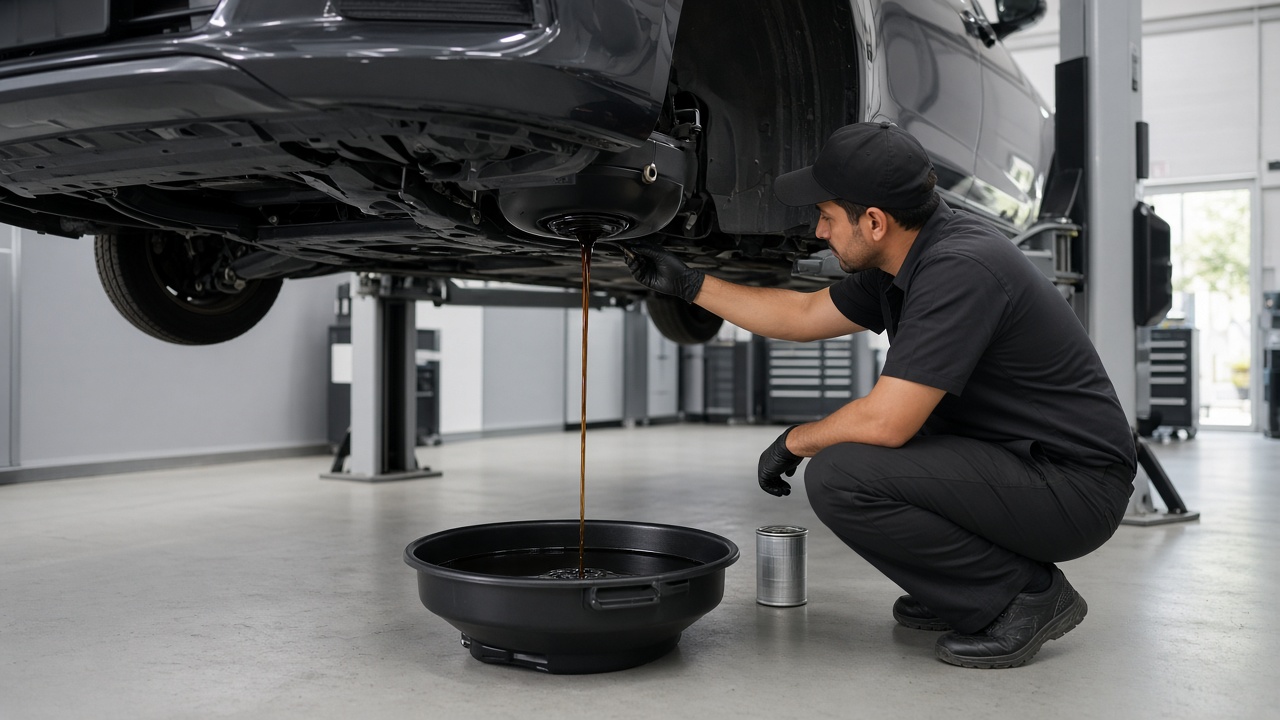
Your car’s odometer has just clicked over to 100,000 kilometers. It’s a significant milestone, a testament to countless journeys across the UAE. But almost on cue, a service reminder lights up your dashboard, signaling that your vehicle is due for its 100,000 km major service.
For many drivers, this moment brings a feeling of anxiety. You may have heard from friends or seen in online forums that this service is expensive, with quotes ranging from AED 1,500 to over AED 3,000. Your car might even feel like it’s running perfectly fine, leading you to ask the one question on every owner’s mind: “Is this major service really necessary, or is it just an expensive up-sell?”
Let’s be direct: the 100,000 km service is not just recommended; it is arguably the single most important investment you will make in your vehicle’s long-term health, safety, and reliability. Skipping it is a high-stakes gamble that can lead to catastrophic component failure, voided warranties, and compromised safety.
This guide will serve as your definitive resource for the 100,000 km major service in the UAE. We will demystify the process by breaking down exactly what is required, why each component is critical (especially in our unique climate), the specific financial and legal risks of skipping it, and how the service might differ for your specific vehicle.
Minor Service vs. Major Service: What’s the Difference?
To understand why the 100k service is so critical, it’s important to know the difference between a “minor” and “major” service.
- Minor Service: Think of this as your car’s regular “health check-up”. Typically performed every 10,000 to 15,000 km, a minor service includes a fresh engine oil and filter change, a top-up of essential fluids, and a thorough visual inspection of your brakes, tires, and belts. Its goal is to handle routine wear and catch small issues before they become big problems.
- Major Service: This is not a check-up; it is a comprehensive, scheduled “overhaul”. A major service is preventative and based on the engineering life cycle of your car’s most critical components. It’s not about checking for wear; it’s about replacing parts that are specifically designed to be at the end of their functional life at or around the 100,000 km mark.
The “UAE Service Accelerator”: Why 100k km Here is Different
A manufacturer’s 100,000 km service schedule is a global average. However, driving conditions in the UAE are anything but average. The combination of environmental factors acts as a “service accelerator,” putting extreme stress on your vehicle.
- Extreme Heat: The “blistering heat,” often soaring above 40°C, is your car’s worst enemy. This heat accelerates the degradation of all critical fluids engine oil, transmission fluid, and coolant—reducing their ability to lubricate and cool. It also shortens battery life and causes rubber components, like belts and hoses, to become brittle and crack.
- Sand and Dust: Fine sand and dust are a constant. This particulate matter clogs your engine air filter, forcing the engine to work harder and consume more fuel. It also chokes your cabin air filter, putting a major strain on your AC system.
What does this mean for you? At 100,000 km in the UAE, your car’s components are not just “worn” they are at their absolute limit. The manufacturer’s recommended service interval is not a “suggestion” you can delay; it is a critical hard deadline standing between you and a potential breakdown.
The 100,000 km Major Service: A Non-Negotiable Checklist
While the exact list can vary slightly by manufacturer, a true 100,000 km major service is comprehensive. It is a holistic procedure where interconnected systems are serviced together. The items are not a-la-carte; they are designed to be replaced and inspected at the same time to ensure reliability for the next 100,000 km.
Critical Replacements (The “Must-Do” List)
These are the parts that are considered to have completed their service life. Failure to replace them is not a matter of “if” they will fail, but “when.”
- Timing Belt (or Timing Chain Inspection): This is the most critical replacement on the list. The timing belt synchronizes your engine’s components. If it snaps, the engine can be destroyed, leading to repairs costing tens of thousands of dirhams.
- Spark Plugs: These are essential for combustion. Worn spark plugs are a primary cause of poor performance, rough idling, and a noticeable drop in fuel economy.
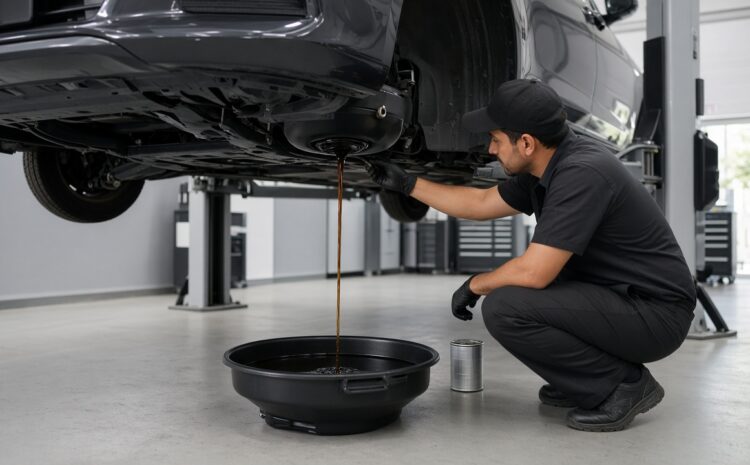
- All Vital Fluids (Full Flush & Replace): At 100k, a simple “top-up” is not enough. Old, degraded fluids must be completely flushed and replaced. This includes:
- Transmission Fluid
- Engine Coolant (Antifreeze)
- Brake Fluid
- Power Steering Fluid
- All Filters:
- Engine Air Filter
- Cabin Air Filter
- Fuel Filter
Comprehensive Inspections & Servicing
A technician will also perform a deep inspection of all other key systems, servicing and replacing parts as needed.
- Full Brake System Service: A “thorough brake system service” inspecting pads, rotors, and lines.
- Cooling System Inspection: Checking the water pump, radiator, and all hoses for cracks or leaks.
- Suspension & Steering: A complete inspection of struts, shocks, and bushings.
- Battery & Electrical System: A comprehensive test of the battery’s integrity.
- Drivetrain & Transmission: A full inspection of axles and driveshafts.
Deep Dive: The “Tire and Wheel Service” Component
After 100,000 kilometers of navigating the UAE’s roads, roundabouts, and occasional potholes, your car’s tires, suspension, and steering systems have endured massive stress. A comprehensive tire and wheel service is a mandatory part of the 100k service to ensure safety, efficiency, and your ability to pass the mandatory RTA inspection.

This service is not just one thing; it’s a trio of distinct procedures that work together.
1. Wheel Alignment
- What it is: This is the most misunderstood service. A wheel alignment does not adjust the tires or wheels. Instead, it involves adjusting the angles of your car’s suspension—the system that connects the car to its wheels.
- Symptoms it fixes: If your car “pulls” to one side, your steering wheel is crooked when driving straight, or you notice your tires are wearing out rapidly and unevenly, you need an alignment.
2. Wheel Balancing
- What it is: This service corrects for uneven weight distribution in the tire and wheel assembly itself. A technician uses a special machine to spin the wheel and identify imbalances, then attaches small, precise weights to the rim to compensate.
- Symptoms it fixes: If you feel a vibration in your steering wheel at highway speeds (60-100 km/h), your front wheels are likely unbalanced. If the vibration is felt more in your seat, the rear wheels are the probable culprit.
3. Tire Rotation
- What it is: This is the process of repositioning your vehicle’s tires to different corners of the car, such as swapping the front tires with the rear tires.
- Symptoms it fixes: This isn’t for fixing a problem, but preventing one. It ensures the tires wear down evenly, which extends their total lifespan, saves you money, and maintains predictable handling.
Why This Trio is Critical for UAE Drivers
This combined tire and wheel service is not just for a smooth ride—it is for legal roadworthiness. Worn-out tires, uneven tread, and issues with brakes or suspension are among the most common reasons for a vehicle to fail the mandatory annual RTA inspection.A misaligned suspension (fixed by a wheel alignment) is a primary cause of the rapid, uneven tire wear that will make your tires illegal and fail the test.
“My Car is German/Japanese” – Does the 100k Service Change?
Yes. A “one-size-fits-all” approach from a generic garage fails to respect the unique engineering of your vehicle. An expert garage knows that a 100,000 km service for a Mercedes is not the same as for a Nissan.
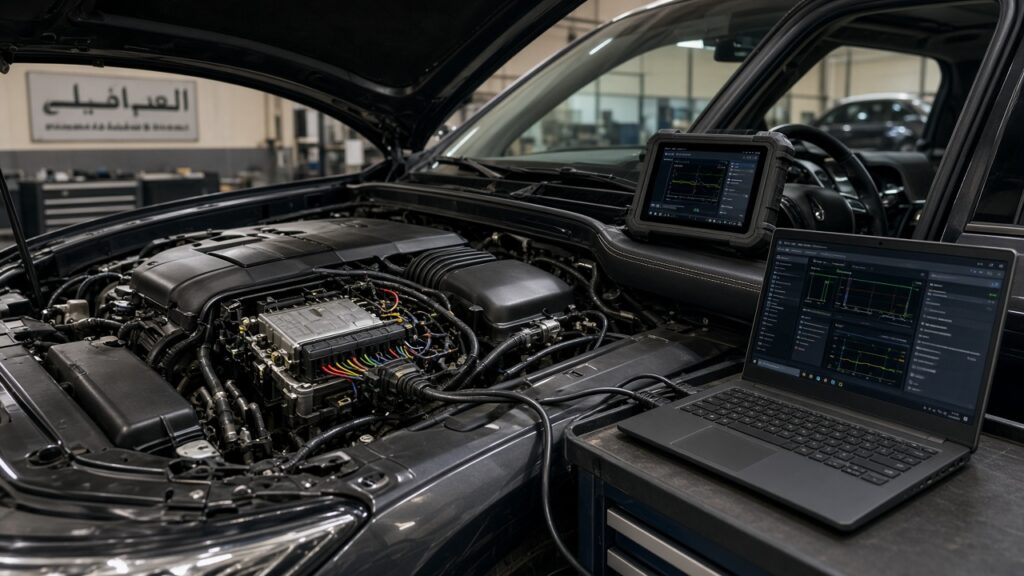
- For German Precision (Mercedes, BMW, Audi): These vehicles are renowned for their high performance and “precision engineering,” but this complexity demands expert care. They have advanced electronic and suspension systems that require specialized diagnostic tools. Because their engines and transmissions operate with “tight tolerances,” skipping a fluid change can quickly lead to premature wear and costly component failure.
- For Japanese Reliability (Toyota, Nissan, Honda): There is a common myth that Japanese cars are so reliable you can “get away” with skipping a service. This is dangerously false. Their legendary reliability is not magic; it is earned through meticulous adherence to the maintenance schedule. A look at any manufacturer’s service schedule, like Nissan’s, proves this. Their 100,000 km service checklist is exhaustive, listing “Replace” (R) and “Inspect” (I) for over 30 items, including the coolant, spark plugs, and in-depth inspections of the entire drivetrain and brake system.
The High Cost of “Saving” Money: 3 Risks of Skipping Your 100k Service
The temptation to save AED 2,000 or 3,000 by skipping this service is understandable. However, this decision is not a “saving” it is a high-stakes gamble. Here are the three critical, non-negotiable reasons why this service is not optional.
1. The Financial Gamble: Pay AED 2,500 Now or AED 25,000 Later
Preventative maintenance is always exponentially cheaper than reactive repair. The 100k service is designed to replace parts before they fail and cause a chain reaction of damage.
- The Timing Belt: Replacing a timing belt might cost AED 1,500 – 2,500. If that belt snaps, the resulting engine damage can cost AED 15,000 to 30,000+ for an engine rebuild.
- The Transmission: A transmission fluid flush is a routine part of the service. Allowing that fluid to degrade and overheat the transmission can lead to a full rebuild costing AED 10,000 to 25,000.
2. The Legal & Warranty Nightmare
Skipping the 100k service has serious consequences beyond just the repair bill.
- A. Voided Manufacturer Warranty: This is not a myth. Failing to follow the manufacturer’s recommended maintenance schedule can result in your car warranty being voided. This includes “skipping oil changes, not replacing filters, or neglecting other routine maintenance tasks”. If your engine fails at 120,000 km and the manufacturer sees the 100,000 km service was never performed, they are within their rights to deny the warranty claim, leaving you with the entire bill.
- B. Guaranteed RTA Test Failure: As mentioned, your car must pass an annual inspection to be legally registered in the UAE. The 100k service directly addresses the most common RTA failure points, including:
- Worn-out tires or uneven tread
- Brake problems (weak response or imbalance)
- Excessive exhaust smoke (from bad plugs/filters)
- Faulty lights and indicators
- Suspension or steering problems
3. The Safety Hazard: A Non-Negotiable Risk
This is the most important reason of all. A 100,000 km service is a safety-critical event. The components being serviced are directly responsible for your ability to control and stop your vehicle.
- Brake Failure: Old, moisture-filled brake fluid can boil under stress (like in heavy traffic), leading to a “spongy” pedal or total brake failure.
- Highway Blowout: Misaligned suspension leads to uneven tire wear. This creates a weak spot in the tire that can lead to a catastrophic blowout at high speed.
- Sudden Engine Stall: A failing timing belt or fuel pump doesn’t always give a warning. It can simply fail, causing your engine to stall suddenly a life-threatening situation if it happens while merging onto a highway.
Conclusion: Your Car’s Next 100,000 Kilometers Start Here
The 100,000 km service is not an end-of-life event; it is a rebirth. It is the moment you transition your car from its “new” phase to its “long-term reliable” phase.
By completing this service, you are making a strategic investment in four key areas:
- Performance: Restoring the fuel economy and power you lost.
- Safety: Ensuring your brakes, tires, and engine will not fail you in a critical moment.
- Resale Value: A fully stamped service book with a 100k major service record is the single best way to command a higher price when you sell.
- Legality: Driving with the peace of mind that your car is 100% RTA test-ready.
You’ve trusted your car for 100,000 kilometers. Now is the time to give it the expert care it has earned. Don’t gamble on its future.
Your Next Step
Your car’s next 100,000 reliable kilometers are a click away. At Smart Garage, our certified technicians are experts in the specific 100k service requirements for all major brands, from German to Japanese.
Contact our expert service advisors today for a transparent, itemized quote, or book your comprehensive 100,000 km major service online.
Book Your 100k Major Service Now