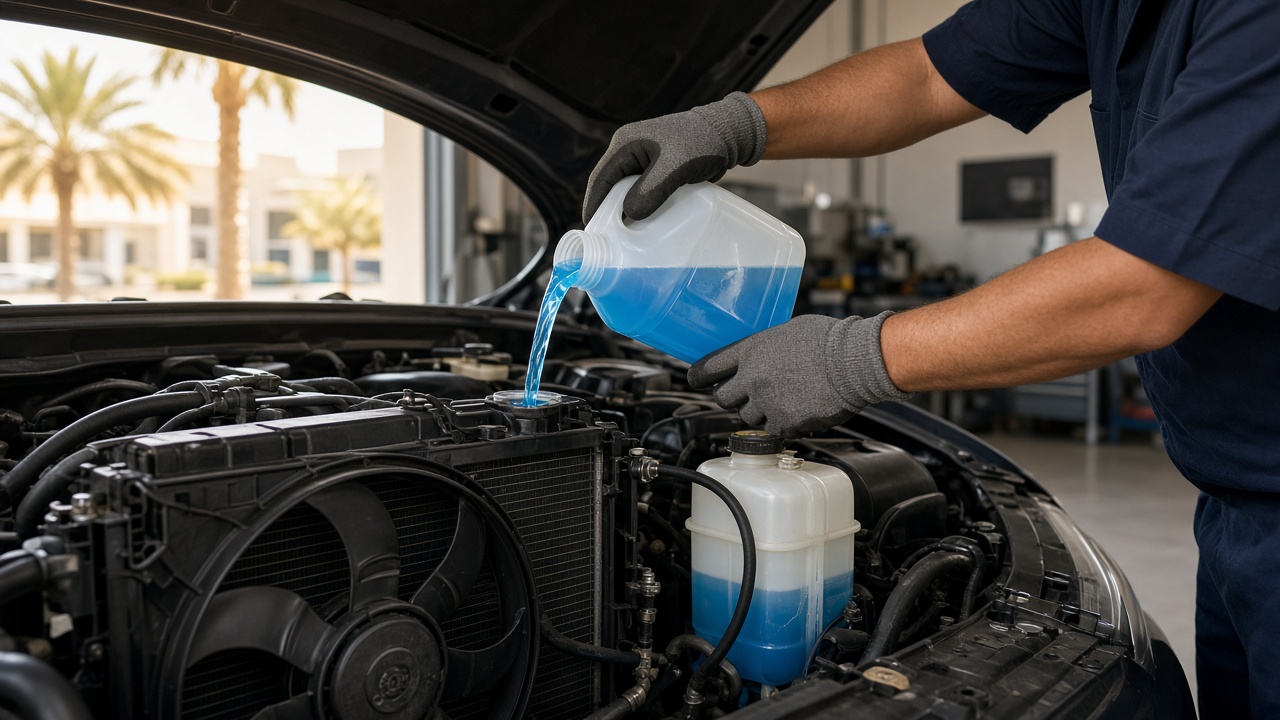
Operating a premium, high-performance vehicle within the Arabian Peninsula requires a thorough understanding of advanced thermal management systems. The Jaguar XF, a vehicle celebrated for its executive styling, precision handling, and supercharged powerplants, represents a major achievement in European automotive design. However, these high-output vehicles are engineered with tight thermal tolerances that are put under immense stress when subjected to the extreme meteorological conditions of the Middle East. During the peak summer months, ambient temperatures regularly climb to 45°C or 50°C, creating an environment that accelerates the degradation of various mechanical and polymer components. This environment often triggers a catastrophic Jaguar XF cooling system failure UAE, which can lead to expensive engine block damage, cracked cylinder heads, and complete powertrain loss if not diagnosed and resolved.
The physics of automotive cooling under extreme thermal loads share many structural and thermodynamic principles with residential and commercial building climate control systems. In both cases, a pressurized closed loop must continuously absorb thermal energy from a heat source and reject it into an unforgiving, high-temperature external environment. Just as a building’s central AC system experiences extreme mechanical stress under the midday sun, a luxury vehicle’s cooling loop experiences heightened operational strain.
The technical experts at Air-Con.ae Sharjah’s premier climate control and AC service provider operating since 2005 from Industrial Area 6, opposite the Cricket Stadium have observed how high humidity, airborne dust, and elevated ambient heat degrade mechanical heat exchangers in both architectural and automotive settings. This comprehensive guide provides an in-depth analysis of the vulnerabilities within the Jaguar XF cooling loop, identifying primary failure points, outlining diagnostic steps, and detailing essential upgrade pathways to withstand the regional climate.
Why Jaguar XF Overheats in UAE Summer: The Thermodynamics of Thermal Stress
Understanding why Jaguar XF overheats in UAE summer requires an analysis of convective heat transfer limitations. In any internal combustion engine, the rate of heat rejection is heavily dependent on the temperature differential (Delta T) between the circulating coolant fluid and the ambient air passing through the radiator core. When ambient temperatures rise above 45°C, and radiant asphalt temperatures exceed 60°C, this critical temperature differential drops significantly. This drop severely limits the convective heat transfer efficiency of the radiator.
This drop in efficiency initiates a chain reaction of thermal stresses across the vehicle’s engine bay:
-
Reduced Temperature Differential: The gap between the hot radiator core and the external intake air narrows, choking convective heat transfer.
-
AC Condenser Heat Load: The air conditioner compressor runs continuously at maximum load, forcing the front-mounted AC condenser to reject massive thermal energy directly into the path of the engine radiator.
-
Restricted Airflow: At low speeds or idling in urban traffic, the radiator receives zero ram-air cooling and must rely entirely on the electric cooling fan, which operates under constant stress in dust-heavy conditions.
When a vehicle is idling in dense metropolitan traffic with minimal ram-air pressure, the cooling system relies entirely on the electrical radiator fan. If there is even a minor drop in fan motor efficiency, or if a relay or fuse develops an electrical fault, the engine temperature will rapidly spike.
Diagnosing the Jaguar XF Coolant Leak Dubai Sharjah: Primary Component Vulnerabilities
The cooling loop of the Jaguar XF, particularly in models equipped with the AJ126 3.0-liter supercharged V6 or the AJ133 5.0-liter supercharged V8, is highly complex. It features a primary engine loop, heater core lines, and separate low-temperature auxiliary loops to cool the supercharger’s intake charge. A key vulnerability in this setup is the extensive use of glass-filled polyamide plastic (PA66-GF30) for major coolant passages. While lightweight and cost-effective for temperate climates, this material experiences rapid thermal degradation and hydrolysis when subjected to the intense heat cycles of the GCC.
Over time, this plastic becomes highly brittle and develops microscopic fissures, ultimately resulting in a sudden Jaguar XF coolant leak Dubai Sharjah.
1. The Supercharger Valley Coolant Outlet (Y-Pipe)
Positioned directly underneath the supercharger assembly, the plastic Y-pipe is subjected to intense engine heat. Under high temperatures, the plastic’s molded seams gradually degrade, leading to high-pressure leaks. Because this pipe is hidden beneath the supercharger, leaks can go undetected until a low coolant warning or a sudden spike in the temperature gauge occurs.
Accessing this pipe requires removing the entire supercharger assembly. Because this labor-intensive process is expensive, technicians recommend replacing the water pump, thermostat, and related hoses at the same time. While the supercharger is removed, it is also highly recommended to replace the supercharger coupler, which commonly develops a rattle, and to drain and refill the supercharger oil.
2. The Rear Coolant Crossover Pipe (Heater Manifold)
Located at the rear of the engine block near the firewall, this plastic manifold connects the engine block to the vehicle’s heater core. Like the Y-pipe, it becomes highly brittle and is prone to cracking along its mounting flanges. Because of its position, a leak here can be difficult to spot, often manifesting only as a sweet smell in the cabin or as coolant pooling around the rear engine casing.
3. Mechanical Water Pump Failure and Impeller Wear
The Jaguar XF’s water pump is a critical mechanical component that frequently experiences premature wear under high thermal loads. High operating temperatures can degrade the pump’s internal shaft seals, leading to external coolant leaks through the pump’s weep hole.
Additionally, electrochemical corrosion can wear down the internal impeller blades, or the impeller may detach and spin freely on its shaft. If the impeller slips, coolant circulation drops significantly. The engine may run at normal temperatures during light cruising, but it will overheat rapidly when subjected to high engine loads or idling in traffic.
Jaguar XF Radiator Problems Dubai Sharjah: Clogged Fins and Degraded Thermal Dissipation
The vehicle’s radiator is highly vulnerable to both internal and external degradation in the GCC. External factors such as sand, dust, and coastal humidity can quickly combine with internal wear to cause complex Jaguar XF radiator problems Dubai Sharjah.
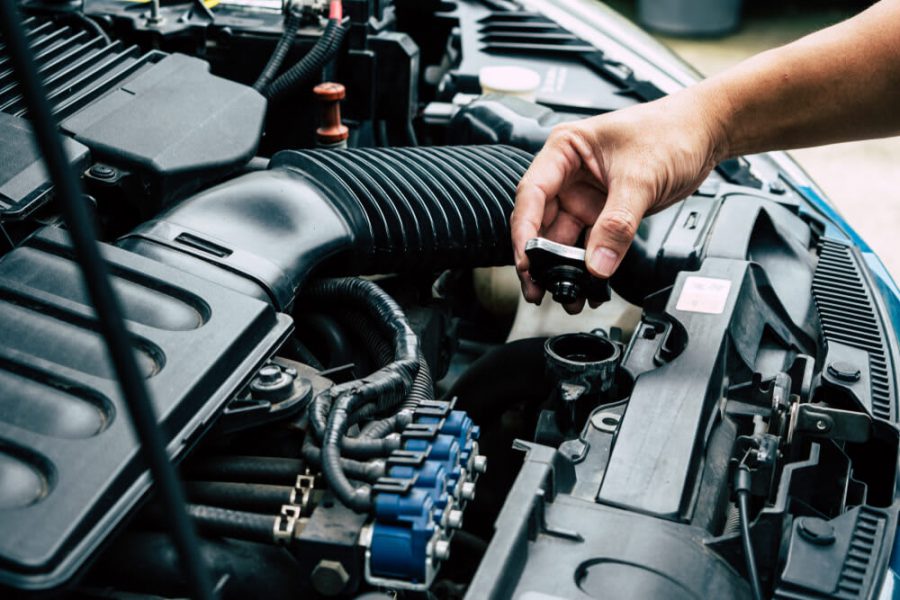
This process leads to a progressive decline in heat transfer performance:
-
Crust Formation: Desert sand and coastal humidity combine to form a solid, cement-like layer within the delicate aluminum radiator fins.
-
Physical Blockage: This crust blocks air passage through the core and insulates the coolant tubes.
-
Thermal Trapping: Under continuous AC load, the radiator’s heat-rejection capacity drops drastically, trapping extreme thermal energy within the engine block.
Auxiliary Radiator Vulnerabilities
Supercharged Jaguar XF models utilize smaller auxiliary radiators to support the main cooling system and manage supercharger intercooler temperatures. Jaguar issued a technical service bulletin for some 2016-onward XF, XE, and F-Pace models regarding these auxiliary units. The bulletin indicates that structural flexing within the vehicle’s mounting frame can stress the plastic tanks of the auxiliary radiators, leading to structural cracks and coolant leaks.
Managing Jaguar XF Overheating Dubai Municipal Traffic Pressures
Operating a Jaguar XF in Dubai involves navigating prolonged idling on heavily congested roads like Sheikh Zayed Road or through the stop-and-go traffic of Al Quoz and Downtown. This driving pattern puts immense pressure on the vehicle’s cooling system. When a vehicle is stationary, it cannot rely on ram-air pressure to cool the radiator, forcing the electric cooling fans to run at maximum speed to manage the high thermal load.
Under these conditions, any underlying issue such as a failing fan motor, a blown fuse, a weak relay, or a slightly slipping water pump impeller—will quickly cause an incident of Jaguar XF overheating Dubai. This severe thermal load makes timely maintenance and cooling system checks essential for luxury vehicle owners in the city.
Mitigating Jaguar XF Overheating Sharjah Industrial Driving Challenges
In Sharjah, particularly in high-density areas like Al Nahda, Muwaileh, and the industrial zones, vehicles face stop-and-go driving patterns in dusty, high-temperature environments. These conditions accelerate the accumulation of dust and sand on the radiator core, making incidents of Jaguar XF overheating Sharjah a common occurrence.
The technical experts at Air-Con.ae have noted that the environmental factors affecting automotive radiator efficiency are identical to those that degrade building AC condenser performance. In both cases, dusty, salt-laden air coats the heat exchanger surfaces, reducing the system’s heat rejection capacity and forcing the compressor or water pump to run continuously under high strain. This shared environmental challenge highlights the importance of regular cooling system cleanings and chemical flushes.
Clinical Symptoms of Jaguar XF Engine Overheating UAE Heat
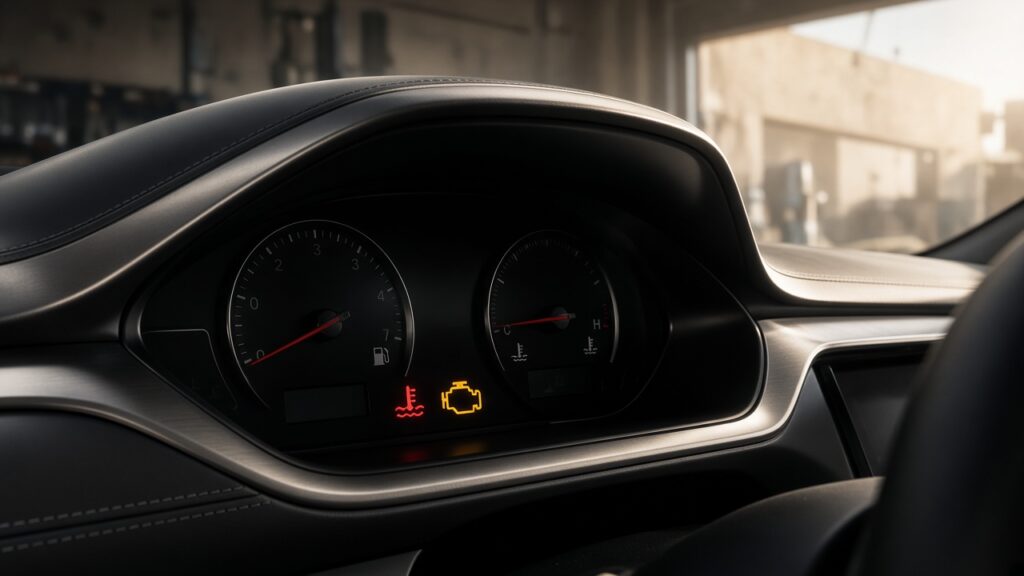
When a vehicle’s cooling loop begins to fail, it displays several distinct symptoms that drivers must recognize immediately to prevent a Jaguar XF engine overheating UAE heat event:
-
“Coolant Level Low” Dashboard Warning: This is often the first sign of trouble, indicating a structural leak in the hidden Y-pipe, the rear crossover manifold, or the mechanical water pump’s weep hole.
-
Temperature Gauge Rising into the Red Zone: This indicates severe coolant loss or a mechanical thermostat that has failed in the closed position, blocking flow to the radiator.
-
Steam Emitting from the Engine Bay: This occurs when pressurized, boiling coolant escapes from a cracked hose or pipe and sprays directly onto hot engine components.
-
Whining or Grinding Noise from the Front Cover: A clear indicator of mechanical water pump wear, where internal bearings are failing or the pulley shaft has developed play.
-
White Smoke (Steam) from the Exhaust Tailpipe: A catastrophic symptom indicating that coolant is leaking into the combustion chambers through a cracked engine block or cylinder head.
When an overheating event occurs, the engine’s internal temperature can quickly exceed its standard operating range of 70°C to 90°C. If a driver continues to operate the vehicle after receiving a high-temperature warning, the extreme heat can warp the cylinder heads or crack the cast-iron cylinder liners. This can allow pressurized combustion gases to enter the cooling jacket, leading to coolant-oil intermix, rough running, cylinder misfires, and complete engine failure.
Financial Projections: Jaguar XF Cooling System Repair Dubai and Jaguar XF Radiator Repair Sharjah
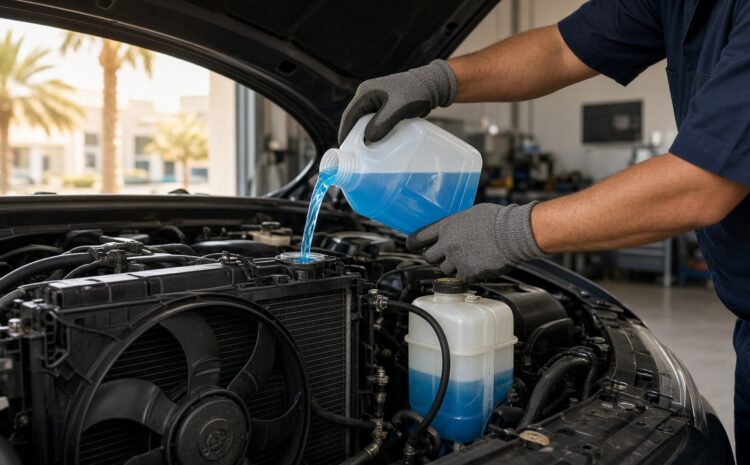
The cost of cooling system maintenance in the UAE depends heavily on whether repairs are proactive or reactive. Proactively booking a Jaguar XF cooling system repair Dubai is significantly more cost-effective than addressing an engine failure caused by a neglected leak. Similarly, arranging a prompt Jaguar XF radiator repair Sharjah or a system inspection can prevent a minor leak from developing into an expensive engine rebuild.
Here is a look at the typical market service rates:
-
Minor Cooling System Fixes (AED 400 to 800): Typically covers replacing individual degraded hoses, tightening loose clamps, or replacing a cracked expansion tank cap.
-
Radiator Flush and Chemical Descaling (AED 200 to 400): A preventative service to clear internal rust, scaling, and debris, restoring normal coolant flow through the core.
-
Major Component Replacement (AED 500 to 2,500): Covers the cost of replacing individual major failure points, such as a failed water pump, a new mechanical thermostat, or a primary radiator.
-
Full Cooling System Rebuild (AED 1,500 to 4,500): A comprehensive service that replaces the entire network of plastic pipes, crossover lines, hoses, and water pumps at once to guarantee long-term reliability.
-
Catastrophic Powertrain Overhaul (AED 11,000 to 18,000+): The financial consequence of ignoring overheating warnings, requiring a complete engine block repair, head gasket replacement, or a complete engine swap.
Precision Engineering and Engine Overheating Repair UAE Luxury Cars
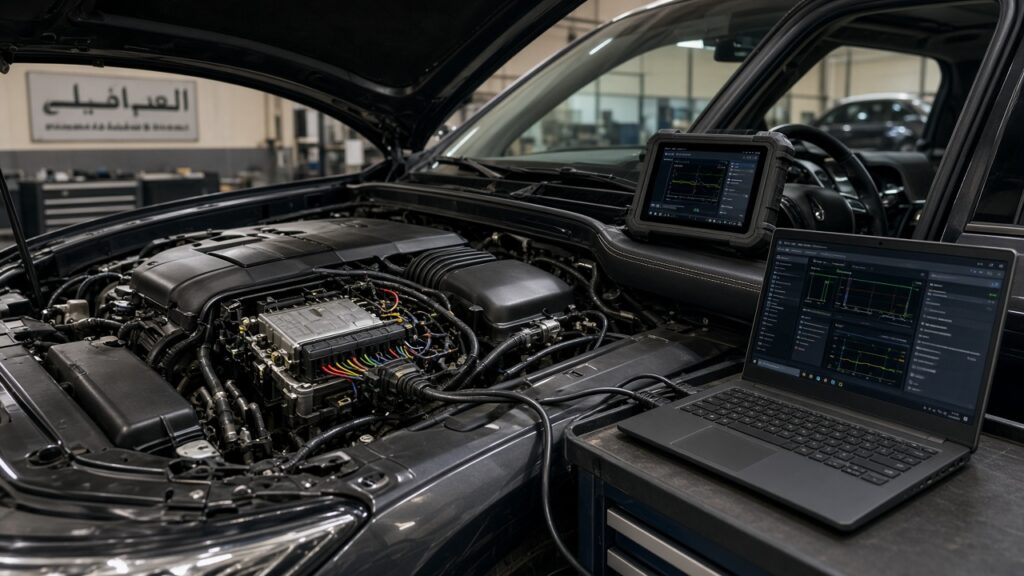
Addressing cooling issues in high-performance European vehicles requires specialized technical expertise and precision diagnostic equipment. This process goes beyond simply replacing individual worn parts; it involves identifying and upgrading known weak points within the cooling system. For European luxury vehicles, performing a professional engine overheating repair UAE luxury cars often involves replacing vulnerable factory plastic components with durable, high-performance aluminum alternatives.
The path to a permanent repair involves a shift in material engineering:
-
Identify Vulnerable Plastics: Standard polyamide components are prone to sudden cracking under thermal expansion and GCC heat cycles.
-
Access the Engine Valley: Remove the supercharger assembly to expose the buried crossover and heater outlet pipes.
-
Install Aluminum Upgrades: Replace these fragile plastic sections with high-grade, CNC-machined or cast aluminum alternatives.
-
Complete Auxiliary Replacements: Renew the water pump, thermostat, and supercharger coupler to restore full thermal reliability.
The key upgraded aluminum replacements include:
-
Aluminum Upper Crossover Pipe: A solid aluminum pipe that replaces the fragile plastic crossover block in the front of the engine, removing the risk of front-end coolant leaks.
-
Aluminum Lower Outlet Pipe: Replaces the plastic lower block with a high-strength cast aluminum alloy pipe to ensure durable coolant flow.
-
CNC-Machined Rear Heater Manifold: A robust aluminum heater pipe that replaces the failure-prone plastic manifold near the firewall, completely sealing the rear cooling circuit.
-
All-Aluminum Welded Radiator: Replaces the factory radiator’s weak plastic end-tanks with solid, welded aluminum core tanks that will never crack under high pressure cycles.
-
Heavy-Duty Mechanical Water Pump: Upgraded pump featuring a solid metal impeller rather than a composite plastic wheel, preventing impeller slippage and internal corrosion.
Integrating HVAC Principles: The Air-Con.ae Approach to Thermal Systems
The physical principles of heat exchange, pressure management, and fluid dynamics apply equally to automotive radiators and home or commercial HVAC systems. Whether managing the temperature of a supercharged engine block or cooling a multi-story office building, the core challenge remains the same: heat must be absorbed, transported, and rejected efficiently.
Since 2005, Air-Con.ae has been a trusted climate control specialist in Sharjah, operating from Industrial Area 6, opposite the Cricket Stadium. The company has extensive experience helping residential and commercial clients manage cooling performance in high-temperature, high-humidity, and dusty desert environments.
In both home AC units and automotive cooling systems, identical environmental factors can lead to system degradation:
-
Clogged Exchangers: Dust and sand accumulate within cooling fins, forming an insulating layer that reduces heat transfer.
-
Pressurized Leaks: Pressure drops caused by leaks in a closed system prevent efficient cooling and place excessive strain on mechanical pumps or compressors.
-
Lubrication Loss: Coolant or refrigerant leaks can carry away vital lubricating oils, leading to rapid mechanical wear and component seizure.
By understanding these shared thermodynamic principles, Air-Con.ae provides professional-grade educational insights that help vehicle and property owners keep their cooling systems running efficiently. Regular maintenance including deep cleanings, system flushes, and pressure tests—is essential to keep any cooling loop performing at its best in the UAE’s challenging climate.
Frequently Asked Questions (FAQs)
What causes a Jaguar XF to overheat when the air conditioning is running at maximum?
Running the air conditioning system at maximum capacity places an additional mechanical load on the engine and causes the AC condenser to reject significant heat. Because the condenser is located directly in front of the engine radiator, this rejected heat raises the temperature of the air entering the radiator. If the radiator fins are clogged with dust, or if the water pump is weak, this added heat load can cause the engine to overheat.
How can a driver detect a hidden coolant leak under the supercharger?
Coolant leaks under the supercharger, particularly from the Y-pipe, are difficult to see because the parts are hidden from view. Key warning signs include a persistent “Coolant Level Low” message on the dashboard, a sweet smell of hot coolant coming from the engine bay, or slow coolant loss with no visible puddles under the car. A technician can confirm the leak by performing a cooling system pressure test or using an endoscope to inspect the engine valley.
Is it safe to drive a Jaguar XF after a high-temperature warning appears?
No, a vehicle should not be driven once a high-temperature warning or check engine light appears. Continuing to drive an overheating vehicle can warp the cylinder heads, blow the head gasket, or crack the engine block. The vehicle should be safely parked, the engine shut down immediately, and professional recovery arranged.
Why do the plastic cooling pipes on the Jaguar XF fail so frequently in the GCC?
The OEM coolant pipes are made of polyamide plastic, which degrades over time when exposed to the high temperatures and continuous heat cycles of the GCC. This degradation makes the plastic highly brittle, leading to cracks along the molded seams and sudden, high-pressure coolant leaks.
How does the aluminum coolant pipe upgrade prevent future engine damage?
Upgraded aluminum pipes replace fragile plastic components with cast or CNC-machined aluminum units. Aluminum does not degrade or crack when exposed to extreme heat and thermal cycling, providing a permanent, durable solution that protects the engine from sudden coolant loss.