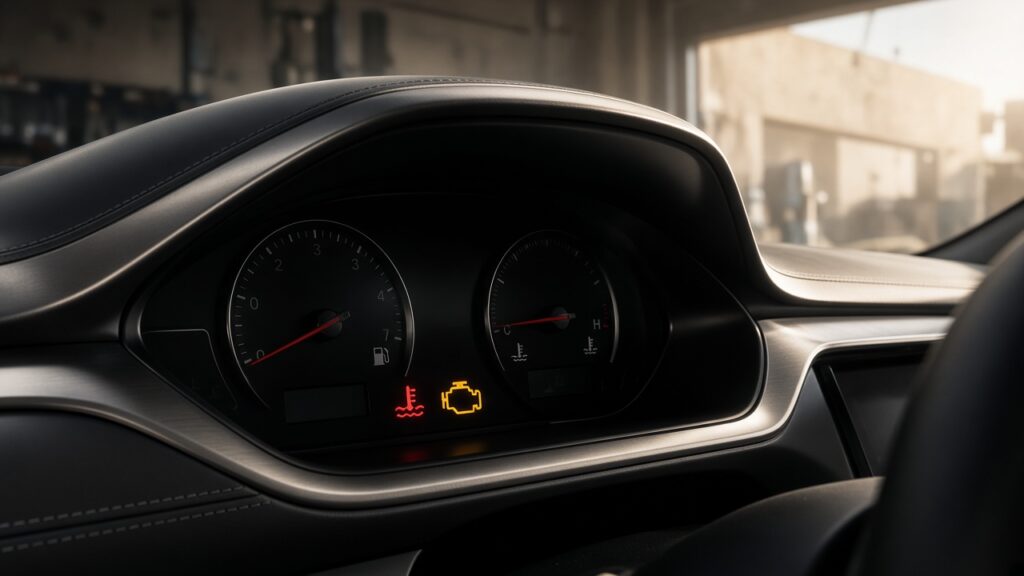
It usually happens when you least expect it. You are sitting at a red light on Hessa Street, or perhaps stuck in stop-and-go traffic on Sheikh Zayed Road. Your AC is running, keeping the Dubai heat at bay.
Suddenly, it hits you.
An acrid, sharp smell fills the cabin. It smells like burnt popcorn mixed with hot asphalt. You turn down the AC, hoping it’s the old truck next to you, but the smell persists. You might even see faint wisps of blue-grey smoke curling up from the passenger side of your hood.
Panic sets in. Is my engine on fire? Is this catastrophic engine failure?
If you are driving a modern 4-cylinder BMW (specifically models from roughly 2012 to present), the good news is that your car is likely not about to explode. The bad news is that you are likely experiencing one of the most common failures on BMW’s N20 and B48 engines: A failed Valve Cover Gasket (VCG).
While it’s a common issue, it’s not one you should ignore. In this detailed guide, the experts at Smart Garage Dubai will break down exactly why this happens, why the UAE climate makes it worse, and the right way to fix it without paying dealership premium prices.
Understanding the Victim: The BMW N20 and B48 Engines
Before we talk about the leak, we need to identify the engines affected. This issue primarily plagues BMW’s widely used turbocharged 2.0-liter 4-cylinder engines.
-
The N20 Engine (approx. 2011–2017): Found in the popular 320i, 328i (F30 chassis), 520i, 528i (F10 chassis), X1, and X3 models of this era.
-
The B48 Engine (approx. 2016–Present): The newer, modular replacement found in the newer 330i (G20), 530i (G30), and newer X-series SUVs.
These engines are powerful and efficient, but they share a common design characteristic that becomes a major weakness over time, especially in hot climates like the UAE.
The Root of the Problem: Plastic vs. Heat
The “valve cover” sits right on top of your engine. It covers the camshafts, valves, and expensive timing components, keeping oil in and dirt out.
On older BMWs, this cover was made of aluminum. On the N20 and B48 engines, to save weight and cost, BMW utilizes a complex plastic composite valve cover. This plastic cover is sealed to the aluminum cylinder head using a complex, molded rubber gasket.
Here is the issue: Your engine gets incredibly hot. The UAE summer ambient temperature is incredibly hot. The aluminum head expands and contracts at a different rate than the plastic cover sitting on top of it.
Over thousands of heat cycles, the flexible rubber gasket that seals the two parts together begins to harden. It loses its elasticity, turns brittle like hard plastic, and eventually cracks.
Once it cracks, pressurized oil seeps out.
Why Do I Smell It Inside the Car?
The design of these engines places the exhaust manifold and the piping for the turbocharger on the passenger side of the engine bay, right below the edge of the valve cover.
When the valve cover gasket fails, gravity does its work. Oil slowly weeps out of the passenger side of the engine and drips directly onto the scorching hot exhaust piping.
The oil instantly vaporizes, creating:
-
The intense burning oil smell. Your cabin AC intake is located near the base of the windshield, pulling these fumes right into the car.
-
Smoke rising from the engine bay (usually visible when stopped at traffic lights).
This is why a BMW burning oil smell is almost always the first symptom owners notice, long before they see drops of oil on their driveway.
The Hidden Danger: It’s Often More Than Just a Gasket
If you take your car to a general mechanic, they might suggest just replacing the rubber gasket. “It’s a cheap part,” they might say.
At Smart Garage, our experience with hundreds of these repairs in Dubai has taught us that just replacing the rubber gasket on an N20 or B48 engine is often a temporary fix that leads to you paying for labor twice.
Why? Because of the plastic valve cover itself.
In the intense heat of the UAE, the plastic valve cover doesn’t just sit there; it ages.
-
Warping and Cracking: The plastic itself can warp slightly over time, meaning a new gasket will never seal perfectly. Furthermore, the plastic often develops hairline cracks, particularly around the bolt holes or near the high-pressure fuel pump housing. No amount of new gasket will fix a cracked cover.
-
Integrated PCV Valve Failure: The Positive Crankcase Ventilation (PCV) valve is built into this plastic cover on these engines. The PCV system manages internal engine pressure. When it fails (which is common), it causes excessive pressure inside the engine, which blows out gaskets and seals. If your PCV has failed, you must replace the entire valve cover assembly.
The Smart Garage Recommendation: For any BMW N20 or B48 engine over 5 years old in the UAE exhibiting these leaks, we almost always recommend replacing the entire valve cover assembly, which comes with a pre-installed new gasket and a fresh PCV valve. This is the only way to guarantee the leak won’t return in six months.
The Risks of Ignoring the Problem
We understand that unexpected car repairs are stressful, but ignoring a BMW oil leak smoke from engine bay situation is dangerous.
-
Fire Hazard: While rare, oil dripping continuously onto a hot turbo or exhaust manifold is a fire risk. If the leak becomes severe, the risk increases.
-
Secondary Damage: Hot engine oil is corrosive to rubber. As it drips down the side of the engine, it will soak into coolant hoses, vacuum lines, and electrical connectors, causing them to swell and eventually fail, leading to much more expensive repairs later.
-
Oil Consumption: You will find yourself constantly topping up expensive synthetic oil between services.
The Fix: Dealership vs. Independent Specialist
If you take your car to the official agency for a BMW valve cover gasket replacement in Dubai, be prepared for a significant bill.
The parts markup at the dealership is high, but the labor rate is enormous. Replacing this cover on an N20/B48 engine is tedious. It involves removing the cowl, strut braces, ignition coils, and, critically, the high-pressure fuel lines and injectors. It is a multi-hour job requiring specialized knowledge to ensure the high-pressure fuel system is re-sealed correctly.

The Smart Garage Advantage
As Dubai’s leading independent European auto specialists, we offer a smarter way to fix this common issue.
1. OEM Parts, Not “Branded” Boxes We know who manufactures the parts for BMW. Companies like Elring, Victor Reinz, and Febi Bilstein make the valve covers and gaskets that go into the “Genuine BMW” boxes. We source these high-quality Original Equipment Manufacturer (OEM) parts directly. You get the exact same quality without paying the markup for the BMW logo on the cardboard box.
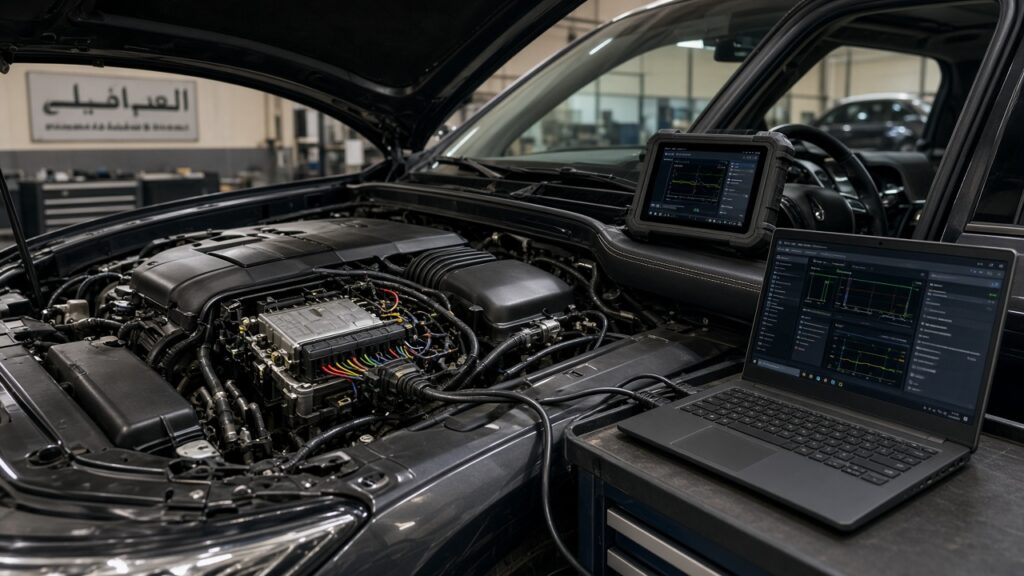
2. Expert Diagnostics We don’t just throw parts at a car. We will pressure test the crankcase to check the health of your PCV system to confirm if you need just a gasket or the full cover.
3. Competitive Labor Rates Our technicians are highly trained in BMW systems, but our overheads are lower than the massive dealership showrooms. We pass those savings on to you in our labor rates.
The Repair Process: What to Expect at Smart Garage
When you bring your BMW to us for an N20/B48 valve cover leak, here is the meticulous process we follow:
-
Confirmation: We verify the leak source using UV dye if necessary and inspect for PCV failure symptoms (like a whistling noise or excessive vacuum at the oil cap).
-
Disassembly: We carefully remove the engine acoustic cover, air intake components, ignition coils, and electrical harnesses.
-
High-Pressure Fuel System: The tricky part. We depressurize and remove the high-pressure fuel rail and lines that sit on top of the valve cover.
-
Removal & Cleaning: The old cover is removed. Critically, we spend significant time cleaning the mating surface on the aluminum cylinder head, ensuring no trace of old rubber or oil remains. A clean surface is vital for a perfect seal.
-
Installation: The new OEM valve cover (with integrated gasket and PCV) is installed.
-
Torque Sequence: The bolts must be tightened in a very specific order and to a very low torque setting. Over-tightening will crack the new plastic cover instantly. We use precision digital torque wrenches for this.
-
Reassembly & Testing: The fuel system is reassembled with new seals. The engine is run up to temperature to ensure there are no fuel leaks and that the oil burning smell is gone.
Conclusion: Stop the Smell, Protect Your Engine
The smell of burning oil in your beautiful BMW 5-Series or X3 is heartbreaking, but it’s not the end of the world. It is a known, common flaw in an otherwise fantastic engine design.
Living in the UAE means our cars age faster due to the heat. Rubber gaskets are temporary items here.
Don’t let the fear of a dealership bill stop you from fixing a leak that could cause fires or further damage. A BMW N20 valve cover leak repair at Smart Garage is a cost-effective, high-quality solution that will return your cabin to being a smoke-free, pleasant place to be.
If you are tired of the smell and worried about that smoke leaking from your hood, contact us today. Let our specialists provide a free inspection and get your Ultimate Driving Machine back in top shape.
Call Smart Garage or book your appointment online today.