Home About Services Brands Blog Contact
March 27, 2026 • Smart Garage Sharjah

The Aftermath of the UAE Storms: Why Your Car Needs a Post-Flood Health Check

The meteorological paradigm of the United Arab Emirates has undergone a profound transformation, shifting from a state of hyper-aridity to a region increasingly defined by high-magnitude, episodic precipitation events that challenge the resilience of urban infrastructure and high-value assets. The series of unprecedented storms spanning from April 2024 through March 2026 has introduced a systemic risk to the automotive sector, particularly within the luxury and high-performance segments. For the master technicians at specialized workshops like Smart Garage in Sharjah Industrial Area 6, the aftermath of these storms represents a complex intersection of hydraulic physics, electrochemical oxidation, and microbial ecology. Understanding the necessity of a post-flood health check requires an exhaustive analysis of how floodwater a chemically aggressive cocktail of silt, industrial pollutants, and hyper-saline runoff interacts with the sophisticated engineering of modern German, British, and Italian marques.

The Evolution of Atmospheric Instability in the Persian Gulf

The climatological data from 2024 to 2026 indicates a shift toward more frequent “convective rainfall” events, driven by deep low-pressure systems interacting with warm, moisture-laden currents from the Arabian Sea and the Red Sea. The record-breaking event of April 16, 2024, where Khatm Al Shakla in Al Ain received 254.8 mm of rain in under 24 hours, set a new benchmark for flood risk. This was not an isolated anomaly but the precursor to subsequent disruptions, including the December 2025 storms that inundated Ras Al Khaimah with over a year’s worth of rain (127 mm) in 48 hours, and the March 2026 system that saw 93.3 mm fall in Ajman while lightning and thunder paralyzed Dubai.

The physics of these desert flash floods is distinct. In urban centers like Dubai and Sharjah, the lack of permeable ground and the design of drainage systems for arid conditions lead to rapid surface water accumulation. This water is not mere H2O; it carries suspended solids, debris, and chemical contaminants that penetrate a vehicle’s mechanical and electrical architecture with high efficiency. The following table delineates the chronology and impact of these significant events, providing context for the increased demand for specialized automotive recovery services.

Chronology of Major UAE Precipitation Events (2024–2026)

Event Date Peak Rainfall Recorded Primary Region Affected Impact on Automotive Sector
April 14-17, 2024 254.8 mm (Khatm Al Shakla) Nationwide / Dubai / Al Ain

Record losses; thousands of vehicles totaled due to deep submersion.

December 19-20, 2025 127.0 mm (Al Ghaznah) Ras Al Khaimah / Northern Emirates

Widespread travel disruption; high incidence of undercarriage damage from runoff.

March 23-27, 2026 93.3 mm (Al Manama) Ajman / Dubai / Sharjah

Heavy lightning damage to sensors; flash flooding in low-lying industrial zones.

March 2026 (Forecast) 100-500 mm (Regional) Middle East / Gulf States

Multi-day flood risk; anticipated long-term electrical corrosion cases.

The Mechanics of Hydraulic Failure in Internal Combustion Engines

The primary concern for an internal combustion engine (ICE) during flood exposure is the phenomenon of hydrolock. The technical definition of hydrolock involves the ingestion of an incompressible liquid into the combustion chamber during the intake stroke. In modern high-performance engines, such as the V8 and V10 units found in Audi, BMW, and Porsche models, the compression ratios are highly optimized. When the piston moves toward the Top Dead Center (TDC) on the compression stroke, the presence of water which possesses a bulk modulus of approximately 2.2 GPa—prevents the completion of the cycle. Consequently, if your vehicle has been exposed to rising water, searching for a specialized car garage near me is the most critical step to avoid turning a repairable issue into a total engine loss.

Intake Geometry and Vulnerability

High-performance luxury vehicles often feature low-slung front ends to optimize aerodynamics and cooling. This design inadvertently places air intakes closer to the water level during a flood. For example, a Porsche 911 or a Ferrari 488 utilizes high-volume intakes that can swallow several liters of water in a single “gulp” if the vehicle is driven through a puddle deeper than 20-30 cm. The risk is amplified by the “bow wave” effect, where the vehicle’s own movement pushes a wall of water into the engine bay. Specialized engine overhaul services at Smart Garage involve a deep-dive into every mechanical component to identify micro-fractures caused by such hydraulic stress.

Transmission Pathology and the Chemistry of Contamination

The transmission system is arguably more vulnerable to water ingress than the engine, as it is often neglected during initial post-flood inspections. Modern automatic transmissions, including the ZF 8-speed and the Volkswagen Group’s Direct-Shift Gearbox (DSG), are not hermetically sealed units; they require breather vents to maintain equal barometric pressure. When a vehicle is submerged, or even driven through deep water, the rapid cooling of the transmission housing creates a localized low-pressure zone that draws water in through these vents.

The Impact of Water on Friction Linings

The presence of even a small amount of water (less than an ounce) in the transmission fluid can be catastrophic. The friction material on clutch plates is typically hygroscopic, meaning it has a high affinity for water. Water dissolves the phenolic resins that bond the friction material to the steel plates. As the bond degrades, the material begins to flake off, leading to gear slippage and eventual total failure of the unit.

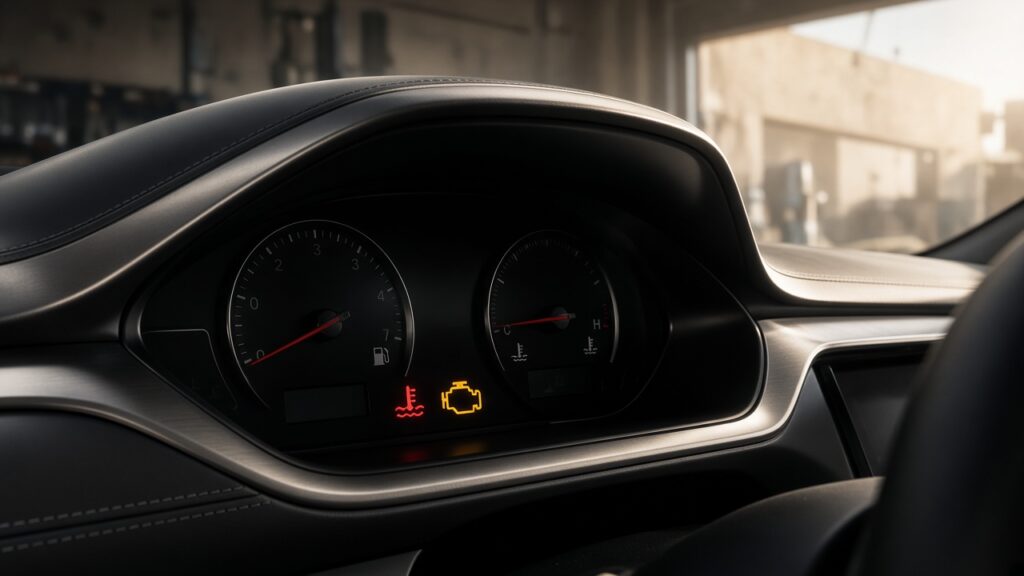
Furthermore, the mechatronic unit the “brain” of the DSG or S-tronic system—is an electro-hydraulic component that is extremely sensitive to contaminants. Water facilitates electrolysis within the mechatronic solenoids, leading to “limp mode” and the flashing PRNDS light on the dashboard. A professional transmission fluid service or automatic transmission flush is the only way to remove these contaminants before permanent damage occurs.

Indicators of Transmission Fluid Contamination

Appearance of Fluid Condition Technical Implication
Translucent Red / Green Healthy

Optimal lubrication and hydraulic pressure maintained.

“Strawberry Milkshake” Water Contamination

Emulsification of oil; immediate risk of clutch plate delamination.

Dark / Burnt Smell Overheating

Potential blockage in the cooling lines or internal friction damage.

Milky / White Paste Severe Ingress

Critical failure of seals; requires a complete rebuild or replacement.

The Silent Decay: Electrical Architecture and “Ghost” Errors

While mechanical failures are often immediate, the damage to a vehicle’s electrical system can remain latent for weeks or months. The high humidity and extreme temperatures characteristic of the UAE (often exceeding 45°C) accelerate the rate of electrochemical oxidation. In the context of a modern luxury vehicle, the electrical system is a complex network of Electronic Control Units (ECUs) and sensors connected via a Controller Area Network (CAN bus).

Capillary Action and Wiring Loom Degradation

One of the most insidious ways water damages a vehicle is through capillary action. Water can enter a wiring harness at a low point—such as a sensor connector near the wheel hub—and be “wicked” upward through the copper strands of the wire, eventually reaching an ECU that was never submerged. This leads to:

  • Greenish Deposits (Patina): Copper oxidation that increases electrical resistance and causes communication errors.

  • Pin Corrosion: The delicate pins on ECU connectors can snap or bridge, leading to short circuits.

  • Sensor Failure: Advanced Driver-Assistance Systems (ADAS), including radar and ultrasonic sensors, are prone to failure after moisture exposure, with failure rates in the UAE being significantly higher than global averages post-storm.

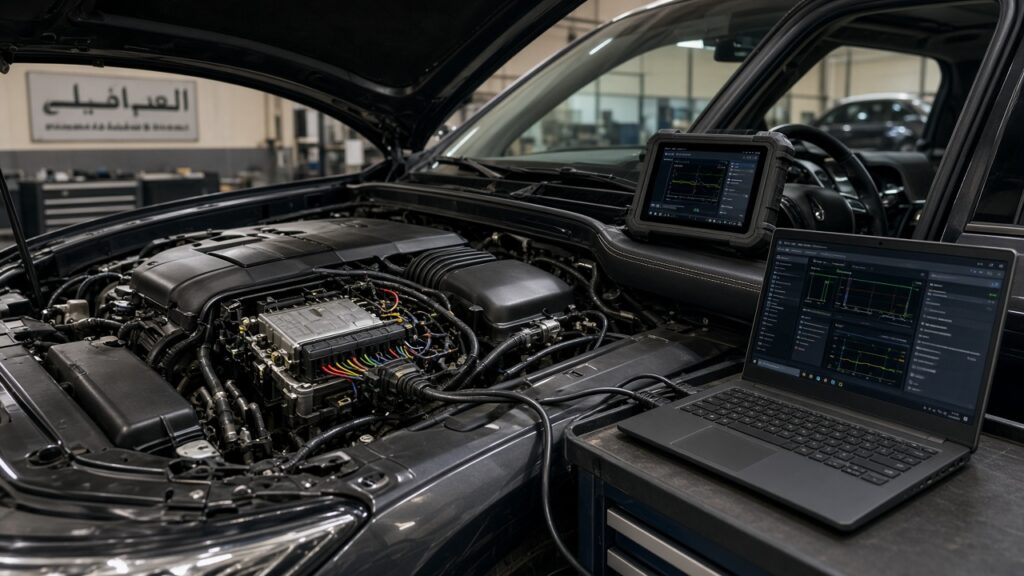
Technicians at Smart Garage utilize dealer-level diagnostic ecosystems—such as ODIS for Audi/VW/Bentley, ISTA/D for BMW/Mini, and XENTRY STAR for Mercedes-Benz—to perform deep scans that can detect these resistance variations before they manifest as a permanent failure.

Comparative Resilience: Electric Vehicles (EVs) vs. Internal Combustion (ICE)

The transition toward electric mobility in the UAE, particularly in the premium sector with marques like Tesla, Porsche (Taycan), and Audi (e-tron), has raised questions regarding their flood resilience. Technically, EVs possess an inherent advantage in that they lack an air intake or exhaust system, completely eliminating the risk of hydrolock.

The Engineering of IP Ratings

EV manufacturers prioritize the sealing of high-voltage components. The battery packs and drive motors are typically rated to IP67, which indicates that they are “dust-tight” and can withstand immersion in up to 1 meter of water for 30 minutes. This level of protection is achieved through advanced sealing methods, including foaming silicone gaskets and waterproof breathing valves.

However, the “low-voltage” systems in an EV—the 12V architecture that controls the infotainment, lighting, and safety modules—are just as vulnerable as those in a petrol car. Furthermore, if water manages to penetrate the high-voltage battery enclosure, it can trigger an isolation fault, causing the vehicle’s contactors to open and effectively “bricking” the car to prevent an electrical fire.

Comparison of Flood Vulnerability Factors

System ICE Vehicles Electric Vehicles (EV)
Drivetrain

Highly vulnerable to water ingestion (Hydrolock).

Highly resistant; no air intake requirement.

Sealing

Limited; breather vents present in gearbox/differential.

Comprehensive high-voltage sealing (IP67).

Weight/Buoyancy

Lighter; higher risk of being swept away in currents.

Heavier due to battery; better traction in shallow water.

Long-term Risk

Corrosion of moving mechanical parts and wiring.

Battery cell degradation and 12V logic failure.

Repair Pathway

Fluid flushes or mechanical rebuilds.

Isolation testing and module replacement.

The Biological Aftermath: Microbial Proliferation and Interior Restoration

The damage caused by the UAE storms is not limited to the mechanical and electrical realms; the biological impact on the vehicle’s interior is a significant health and structural concern. Floodwater in urban centers is often a “cocktail” of pollutants, including sewage, silt, and chemicals. When this water enters a vehicle’s cabin, it saturates the organic and semi-organic materials such as leather, carpets, and seat foam.

The Mold Growth Cycle

Mold and mildew thrive in warm, humid conditions with limited airflow. In the UAE, the intense heat following a rain event creates a “greenhouse effect” inside a parked car. Mold spores can begin to colonize surfaces within 24 to 48 hours of exposure.

  1. Phase 1: Inoculation: Floodwater deposits organic debris and fungal spores into the carpet fibers and open-cell foam of the seats.

  2. Phase 2: Incubation: The high relative humidity inside the cabin provides the necessary moisture for the spores to germinate.

  3. Phase 3: Proliferation: Mold colonies expand rapidly, releasing mycotoxins and volatile organic compounds (VOCs) that produce the characteristic “musty” odor.

Professional interior deep cleaning is essential, as standard vacuuming cannot reach the mold blooming deep within the seat cushions or behind the dashboard. Master technicians recommend removing the seats and carpets entirely to disinfect the chassis floor and treat the fabrics with EN 14476-certified solutions.

The Insurance Landscape and Legal Requirements in the UAE

For car owners in the UAE, navigating the financial aftermath of a storm requires a detailed understanding of the local insurance and regulatory framework. The legal distinction between “Natural Disasters” and “Negligent Driving” is critical in determining whether a claim will be honored.

Comprehensive vs. Third-Party Liability

In the UAE, only Comprehensive Insurance typically offers protection against flood damage, often classified under “Acts of God” or “Natural Calamities”. Third-Party Liability (TPL) insurance is mandatory but only covers damage caused to others, leaving the owner responsible for all repairs to their own vehicle.

The “To Whom It May Concern” (TWIMC) Certificate

The foundational document for any flood claim is the TWIMC certificate issued by the regional police department.

  • Dubai: Obtained via the Dubai Police app under the “Natural Disasters” tab for approximately AED 95.

  • Sharjah: Residents use the Sharjah Police app to report the damage and download the certificate.

  • Abu Dhabi: The Saaed app is the primary portal for reporting such incidents.

Documentation Checklist for a Successful Insurance Claim

Document Type Source Significance
Police Report / TWIMC Certificate Regional Police

Base legal document identifying the cause as a natural disaster.

Vehicle Registration (Mulkiya) RTA / Police

Proof of ownership and valid insurance status.

Spot Photos / Videos Owner

Evidence of the “waterline” and the stationary location of the vehicle.

Diagnostic Report Certified Garage

Technical proof of internal mechanical or electrical damage.

RSA Towing Receipt Insurance / Third Party

Proof that the car was not driven after the flood, preventing “Hydrolock Rejection”.

The Master Technician’s Protocol: A Step-by-Step Post-Flood Health Check

The process of restoring a luxury vehicle to its pre-storm condition is a multi-disciplinary effort. At Smart Garage, this protocol is divided into four distinct phases, utilizing the same diagnostic ecosystems as the manufacturer dealerships.

Phase 1: Stabilization and Initial Assessment

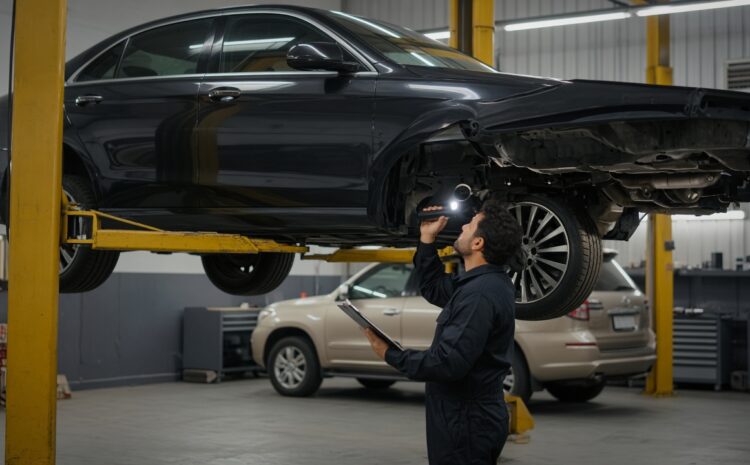
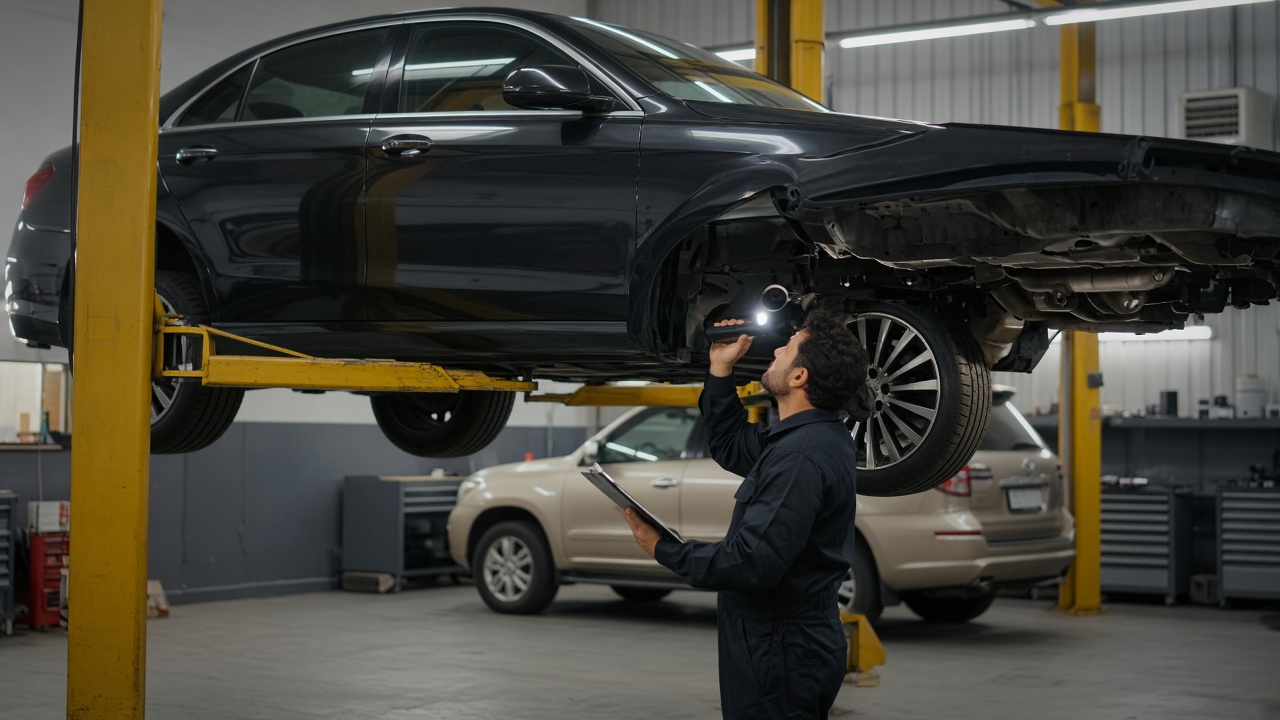
The first step is to disconnect the battery to prevent electrolysis from further damaging the control modules. Technicians then perform a visual inspection for the “waterline”—the highest point the floodwater reached. This provides an immediate indicator of which systems are at risk.

  • Below Door Sills: Risk to brakes, wheel bearings, and suspension bushings.

  • Mid-Door Level: Risk to seat motors, floor-mounted ECUs, and transmission vents.

  • Dashboard Level: High probability of a total loss due to complete electrical and engine failure.

Phase 2: Diagnostic Scanning and Fluid Analysis

Using tools like ODIS (Audi/VW/Bentley), ISTA (BMW), and PIWIS III (Porsche), the technician conducts a full vehicle scan. Simultaneously, physical samples are taken from the engine oil, transmission fluid, and differential oil. The presence of water is often confirmed through a “crackle test” or by the visual indicators of emulsification.

Phase 3: Mechanical and Electrical Remediation

If the engine was not hydrolocked, the remedy involves multiple fluid flushes to ensure all residual moisture is removed. For electrical systems, connectors are cleaned with specialized contact cleaners and treated with dielectric grease to prevent future oxidation. In cases of severe mechanical damage, such as a bent connecting rod, a complete master engine rebuild is required, involving the replacement of pistons, rings, and bearings.

Phase 4: Validation and Quality Control

The final phase involves a high-heat drying cycle for the interior and extensive road testing to ensure that the braking system (specifically the ABS/ESC modules) and the drivetrain are operating with factory-standard precision.

The Future of Automotive Care in a Changing Climate

The storms of 2024–2026 have redefined the priorities for UAE vehicle owners. A car’s health check is no longer just a routine oil change; it is a vital defensive measure against a changing environment. The synthesis of this analysis suggests that the risk of “hidden” damage is the single greatest threat to a luxury car’s longevity and resale value.

The transition to extreme weather patterns in the region necessitates a shift toward specialized, dealer-standard workshops that can handle the nuance of modern automotive technology. As flood events become more frequent, the integration of climate-resilient maintenance—such as periodic checking of transmission vents, ensuring sunroof drains are clear, and preemptive electrical connector protection—will become the new standard for automotive excellence in the desert.

Ultimately, the goal of a post-flood health check is to transform a potential catastrophe into a manageable recovery. By utilizing manufacturer-specific diagnostics and adhering to master-level technical protocols, car owners in Sharjah and Dubai can ensure that their high-performance investments remain as resilient as the nation they navigate.
 The Aftermath of the UAE Storms: Why Your Car Needs a Post-Flood Health Check

The Aftermath of the UAE Storms: Why Your Car Needs a Post-Flood Health Check

The meteorological paradigm of the United Arab Emirates has undergone a profound transformation, shifting from a state of hyper-aridity to a region increasingly defined by high-magnitude, episodic precipitation events that challenge the resilience of urban infrastructure and high-value assets. The series of unprecedented storms spanning from April 2024 through March 2026 has introduced a systemic risk to the automotive sector, particularly within the luxury and high-performance segments. For the master technicians at specialized workshops like Smart Garage in Sharjah Industrial Area 6, the aftermath of these storms represents a complex intersection of hydraulic physics, electrochemical oxidation, and microbial ecology. Understanding the necessity of a post-flood health check requires an exhaustive analysis of how floodwater a chemically aggressive cocktail of silt, industrial pollutants, and hyper-saline runoff interacts with the sophisticated engineering of modern German, British, and Italian marques.

The Evolution of Atmospheric Instability in the Persian Gulf

The climatological data from 2024 to 2026 indicates a shift toward more frequent “convective rainfall” events, driven by deep low-pressure systems interacting with warm, moisture-laden currents from the Arabian Sea and the Red Sea. The record-breaking event of April 16, 2024, where Khatm Al Shakla in Al Ain received 254.8 mm of rain in under 24 hours, set a new benchmark for flood risk. This was not an isolated anomaly but the precursor to subsequent disruptions, including the December 2025 storms that inundated Ras Al Khaimah with over a year’s worth of rain (127 mm) in 48 hours, and the March 2026 system that saw 93.3 mm fall in Ajman while lightning and thunder paralyzed Dubai.

The physics of these desert flash floods is distinct. In urban centers like Dubai and Sharjah, the lack of permeable ground and the design of drainage systems for arid conditions lead to rapid surface water accumulation. This water is not mere H2O; it carries suspended solids, debris, and chemical contaminants that penetrate a vehicle’s mechanical and electrical architecture with high efficiency. The following table delineates the chronology and impact of these significant events, providing context for the increased demand for specialized automotive recovery services.

Chronology of Major UAE Precipitation Events (2024–2026)

Event Date Peak Rainfall Recorded Primary Region Affected Impact on Automotive Sector
April 14-17, 2024 254.8 mm (Khatm Al Shakla) Nationwide / Dubai / Al Ain

Record losses; thousands of vehicles totaled due to deep submersion.

December 19-20, 2025 127.0 mm (Al Ghaznah) Ras Al Khaimah / Northern Emirates

Widespread travel disruption; high incidence of undercarriage damage from runoff.

March 23-27, 2026 93.3 mm (Al Manama) Ajman / Dubai / Sharjah

Heavy lightning damage to sensors; flash flooding in low-lying industrial zones.

March 2026 (Forecast) 100-500 mm (Regional) Middle East / Gulf States

Multi-day flood risk; anticipated long-term electrical corrosion cases.

The Mechanics of Hydraulic Failure in Internal Combustion Engines

The primary concern for an internal combustion engine (ICE) during flood exposure is the phenomenon of hydrolock. The technical definition of hydrolock involves the ingestion of an incompressible liquid into the combustion chamber during the intake stroke. In modern high-performance engines, such as the V8 and V10 units found in Audi, BMW, and Porsche models, the compression ratios are highly optimized. When the piston moves toward the Top Dead Center (TDC) on the compression stroke, the presence of water which possesses a bulk modulus of approximately 2.2 GPa—prevents the completion of the cycle. Consequently, if your vehicle has been exposed to rising water, searching for a specialized car garage near me is the most critical step to avoid turning a repairable issue into a total engine loss.

Intake Geometry and Vulnerability

High-performance luxury vehicles often feature low-slung front ends to optimize aerodynamics and cooling. This design inadvertently places air intakes closer to the water level during a flood. For example, a Porsche 911 or a Ferrari 488 utilizes high-volume intakes that can swallow several liters of water in a single “gulp” if the vehicle is driven through a puddle deeper than 20-30 cm. The risk is amplified by the “bow wave” effect, where the vehicle’s own movement pushes a wall of water into the engine bay. Specialized engine overhaul services at Smart Garage involve a deep-dive into every mechanical component to identify micro-fractures caused by such hydraulic stress.

Transmission Pathology and the Chemistry of Contamination

The transmission system is arguably more vulnerable to water ingress than the engine, as it is often neglected during initial post-flood inspections. Modern automatic transmissions, including the ZF 8-speed and the Volkswagen Group’s Direct-Shift Gearbox (DSG), are not hermetically sealed units; they require breather vents to maintain equal barometric pressure. When a vehicle is submerged, or even driven through deep water, the rapid cooling of the transmission housing creates a localized low-pressure zone that draws water in through these vents.

The Impact of Water on Friction Linings

The presence of even a small amount of water (less than an ounce) in the transmission fluid can be catastrophic. The friction material on clutch plates is typically hygroscopic, meaning it has a high affinity for water. Water dissolves the phenolic resins that bond the friction material to the steel plates. As the bond degrades, the material begins to flake off, leading to gear slippage and eventual total failure of the unit.

Furthermore, the mechatronic unit the “brain” of the DSG or S-tronic system—is an electro-hydraulic component that is extremely sensitive to contaminants. Water facilitates electrolysis within the mechatronic solenoids, leading to “limp mode” and the flashing PRNDS light on the dashboard. A professional transmission fluid service or automatic transmission flush is the only way to remove these contaminants before permanent damage occurs.

Indicators of Transmission Fluid Contamination

Appearance of Fluid Condition Technical Implication
Translucent Red / Green Healthy

Optimal lubrication and hydraulic pressure maintained.

“Strawberry Milkshake” Water Contamination

Emulsification of oil; immediate risk of clutch plate delamination.

Dark / Burnt Smell Overheating

Potential blockage in the cooling lines or internal friction damage.

Milky / White Paste Severe Ingress

Critical failure of seals; requires a complete rebuild or replacement.

The Silent Decay: Electrical Architecture and “Ghost” Errors

While mechanical failures are often immediate, the damage to a vehicle’s electrical system can remain latent for weeks or months. The high humidity and extreme temperatures characteristic of the UAE (often exceeding 45°C) accelerate the rate of electrochemical oxidation. In the context of a modern luxury vehicle, the electrical system is a complex network of Electronic Control Units (ECUs) and sensors connected via a Controller Area Network (CAN bus).

Capillary Action and Wiring Loom Degradation

One of the most insidious ways water damages a vehicle is through capillary action. Water can enter a wiring harness at a low point—such as a sensor connector near the wheel hub—and be “wicked” upward through the copper strands of the wire, eventually reaching an ECU that was never submerged. This leads to:

  • Greenish Deposits (Patina): Copper oxidation that increases electrical resistance and causes communication errors.

  • Pin Corrosion: The delicate pins on ECU connectors can snap or bridge, leading to short circuits.

  • Sensor Failure: Advanced Driver-Assistance Systems (ADAS), including radar and ultrasonic sensors, are prone to failure after moisture exposure, with failure rates in the UAE being significantly higher than global averages post-storm.

Technicians at Smart Garage utilize dealer-level diagnostic ecosystems—such as ODIS for Audi/VW/Bentley, ISTA/D for BMW/Mini, and XENTRY STAR for Mercedes-Benz—to perform deep scans that can detect these resistance variations before they manifest as a permanent failure.

Comparative Resilience: Electric Vehicles (EVs) vs. Internal Combustion (ICE)

The transition toward electric mobility in the UAE, particularly in the premium sector with marques like Tesla, Porsche (Taycan), and Audi (e-tron), has raised questions regarding their flood resilience. Technically, EVs possess an inherent advantage in that they lack an air intake or exhaust system, completely eliminating the risk of hydrolock.

The Engineering of IP Ratings

EV manufacturers prioritize the sealing of high-voltage components. The battery packs and drive motors are typically rated to IP67, which indicates that they are “dust-tight” and can withstand immersion in up to 1 meter of water for 30 minutes. This level of protection is achieved through advanced sealing methods, including foaming silicone gaskets and waterproof breathing valves.

However, the “low-voltage” systems in an EV—the 12V architecture that controls the infotainment, lighting, and safety modules—are just as vulnerable as those in a petrol car. Furthermore, if water manages to penetrate the high-voltage battery enclosure, it can trigger an isolation fault, causing the vehicle’s contactors to open and effectively “bricking” the car to prevent an electrical fire.

Comparison of Flood Vulnerability Factors

System ICE Vehicles Electric Vehicles (EV)
Drivetrain

Highly vulnerable to water ingestion (Hydrolock).

Highly resistant; no air intake requirement.

Sealing

Limited; breather vents present in gearbox/differential.

Comprehensive high-voltage sealing (IP67).

Weight/Buoyancy

Lighter; higher risk of being swept away in currents.

Heavier due to battery; better traction in shallow water.

Long-term Risk

Corrosion of moving mechanical parts and wiring.

Battery cell degradation and 12V logic failure.

Repair Pathway

Fluid flushes or mechanical rebuilds.

Isolation testing and module replacement.

The Biological Aftermath: Microbial Proliferation and Interior Restoration

The damage caused by the UAE storms is not limited to the mechanical and electrical realms; the biological impact on the vehicle’s interior is a significant health and structural concern. Floodwater in urban centers is often a “cocktail” of pollutants, including sewage, silt, and chemicals. When this water enters a vehicle’s cabin, it saturates the organic and semi-organic materials such as leather, carpets, and seat foam.

The Mold Growth Cycle

Mold and mildew thrive in warm, humid conditions with limited airflow. In the UAE, the intense heat following a rain event creates a “greenhouse effect” inside a parked car. Mold spores can begin to colonize surfaces within 24 to 48 hours of exposure.

  1. Phase 1: Inoculation: Floodwater deposits organic debris and fungal spores into the carpet fibers and open-cell foam of the seats.

  2. Phase 2: Incubation: The high relative humidity inside the cabin provides the necessary moisture for the spores to germinate.

  3. Phase 3: Proliferation: Mold colonies expand rapidly, releasing mycotoxins and volatile organic compounds (VOCs) that produce the characteristic “musty” odor.

Professional interior deep cleaning is essential, as standard vacuuming cannot reach the mold blooming deep within the seat cushions or behind the dashboard. Master technicians recommend removing the seats and carpets entirely to disinfect the chassis floor and treat the fabrics with EN 14476-certified solutions.

The Insurance Landscape and Legal Requirements in the UAE

For car owners in the UAE, navigating the financial aftermath of a storm requires a detailed understanding of the local insurance and regulatory framework. The legal distinction between “Natural Disasters” and “Negligent Driving” is critical in determining whether a claim will be honored.

Comprehensive vs. Third-Party Liability

In the UAE, only Comprehensive Insurance typically offers protection against flood damage, often classified under “Acts of God” or “Natural Calamities”. Third-Party Liability (TPL) insurance is mandatory but only covers damage caused to others, leaving the owner responsible for all repairs to their own vehicle.

The “To Whom It May Concern” (TWIMC) Certificate

The foundational document for any flood claim is the TWIMC certificate issued by the regional police department.

  • Dubai: Obtained via the Dubai Police app under the “Natural Disasters” tab for approximately AED 95.

  • Sharjah: Residents use the Sharjah Police app to report the damage and download the certificate.

  • Abu Dhabi: The Saaed app is the primary portal for reporting such incidents.

Documentation Checklist for a Successful Insurance Claim

Document Type Source Significance
Police Report / TWIMC Certificate Regional Police

Base legal document identifying the cause as a natural disaster.

Vehicle Registration (Mulkiya) RTA / Police

Proof of ownership and valid insurance status.

Spot Photos / Videos Owner

Evidence of the “waterline” and the stationary location of the vehicle.

Diagnostic Report Certified Garage

Technical proof of internal mechanical or electrical damage.

RSA Towing Receipt Insurance / Third Party

Proof that the car was not driven after the flood, preventing “Hydrolock Rejection”.

The Master Technician’s Protocol: A Step-by-Step Post-Flood Health Check

The process of restoring a luxury vehicle to its pre-storm condition is a multi-disciplinary effort. At Smart Garage, this protocol is divided into four distinct phases, utilizing the same diagnostic ecosystems as the manufacturer dealerships.

Phase 1: Stabilization and Initial Assessment

The first step is to disconnect the battery to prevent electrolysis from further damaging the control modules. Technicians then perform a visual inspection for the “waterline”—the highest point the floodwater reached. This provides an immediate indicator of which systems are at risk.

  • Below Door Sills: Risk to brakes, wheel bearings, and suspension bushings.

  • Mid-Door Level: Risk to seat motors, floor-mounted ECUs, and transmission vents.

  • Dashboard Level: High probability of a total loss due to complete electrical and engine failure.

Phase 2: Diagnostic Scanning and Fluid Analysis

Using tools like ODIS (Audi/VW/Bentley), ISTA (BMW), and PIWIS III (Porsche), the technician conducts a full vehicle scan. Simultaneously, physical samples are taken from the engine oil, transmission fluid, and differential oil. The presence of water is often confirmed through a “crackle test” or by the visual indicators of emulsification.

Phase 3: Mechanical and Electrical Remediation

If the engine was not hydrolocked, the remedy involves multiple fluid flushes to ensure all residual moisture is removed. For electrical systems, connectors are cleaned with specialized contact cleaners and treated with dielectric grease to prevent future oxidation. In cases of severe mechanical damage, such as a bent connecting rod, a complete master engine rebuild is required, involving the replacement of pistons, rings, and bearings.

Phase 4: Validation and Quality Control

The final phase involves a high-heat drying cycle for the interior and extensive road testing to ensure that the braking system (specifically the ABS/ESC modules) and the drivetrain are operating with factory-standard precision.

The Future of Automotive Care in a Changing Climate

The storms of 2024–2026 have redefined the priorities for UAE vehicle owners. A car’s health check is no longer just a routine oil change; it is a vital defensive measure against a changing environment. The synthesis of this analysis suggests that the risk of “hidden” damage is the single greatest threat to a luxury car’s longevity and resale value.

The transition to extreme weather patterns in the region necessitates a shift toward specialized, dealer-standard workshops that can handle the nuance of modern automotive technology. As flood events become more frequent, the integration of climate-resilient maintenance—such as periodic checking of transmission vents, ensuring sunroof drains are clear, and preemptive electrical connector protection—will become the new standard for automotive excellence in the desert.

Ultimately, the goal of a post-flood health check is to transform a potential catastrophe into a manageable recovery. By utilizing manufacturer-specific diagnostics and adhering to master-level technical protocols, car owners in Sharjah and Dubai can ensure that their high-performance investments remain as resilient as the nation they navigate.
Leave a Reply

Your email address will not be published. Required fields are marked *

Smart Garage
Service Advisor
Online
Smart Garage
Hello! How can we help you with your car today? 👋
Just now
1