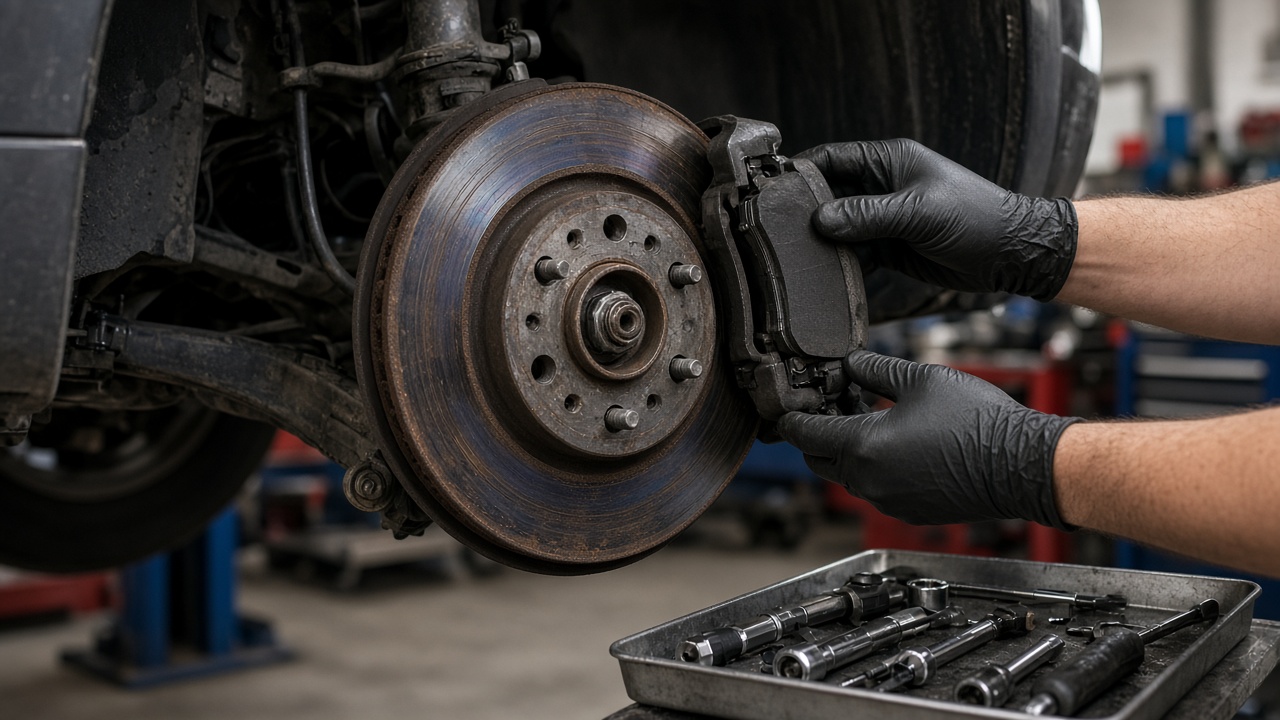
The Symphony of Safety: Decoding Brake Noise in the Desert
Imagine cruising down Sheikh Zayed Road. The skyline of Dubai glistens in the midday sun, the Burj Khalifa towering above the haze. You are maintaining a steady speed, the air conditioning shielding you from the 45°C heat outside. Suddenly, traffic ahead slows—a common occurrence near the Marina exit. You press the brake pedal. Instead of the reassuring, silent deceleration you expect, a piercing screech cuts through the cabin, followed by a low, ominous grinding sensation. Your heart rate spikes. Is it just dust? Or are you seconds away from a failure?
For drivers in the United Arab Emirates, this scenario is all too familiar. In a region defined by automotive passion and extreme environmental conditions, the braking system is the single most critical safety component of any vehicle. Yet, the auditory feedback from your brakes—that squeak, squeal, or grind—is often misunderstood. It is your car communicating its health, its struggles with the desert environment, and its need for professional attention.
This comprehensive guide is designed to transform you from an anxious driver into an informed vehicle owner. We will explore the physics of friction, dissect the impact of the UAE’s sand and heat, and provide a roadmap for professional brake system repair. Whether you drive a rugged Nissan Patrol or a sleek German sedan, understanding your braking system is the first step toward ensuring the safety of your family and the longevity of your investment.
1. The Physics of Friction: Why Brakes Make Noise
To understand why your car sounds like a frightened orchestra, one must first appreciate the engineering behind the braking system. It is a device designed to convert kinetic energy (movement) into thermal energy (heat) through friction. When you stop a heavy SUV from highway speeds, the system generates enough heat to boil water instantly. Noise is often a byproduct of this intense energy conversion.
The Violin Effect
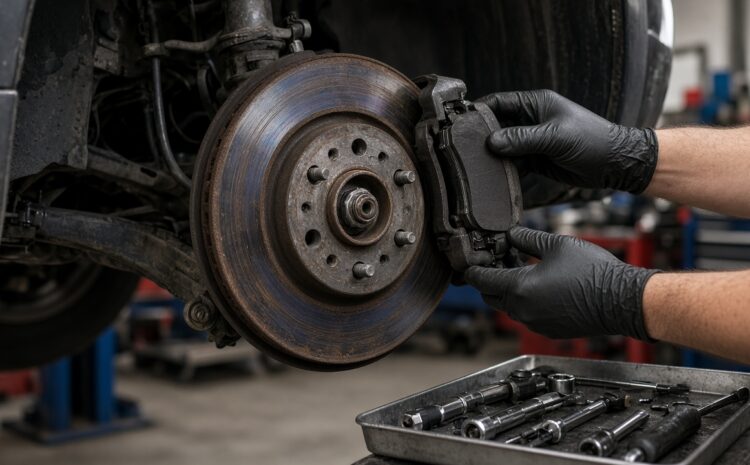
Technically, brake squeal is caused by high-frequency vibration. Think of a violin: the bow (brake pad) slides across the string (brake rotor). Friction causes the string to stick and slip rapidly, creating a vibration that the body of the violin amplifies into sound. In your car, if the brake pads vibrate against the rotor at a specific frequency, the caliper and suspension components amplify this into a high-pitched squeal. While this “stick-slip” motion is inherent to friction, modern engineering usually dampens it—until something goes wrong.
2. The UAE Environment: A Perfect Storm for Brakes
A vehicle in Dubai faces operating conditions vastly different from a vehicle in Europe or North America. The environmental stressors here create a “perfect storm” for brake degradation.
- Silica Sand Intrusion: The desert sand of the UAE is largely composed of silica, a hard, abrasive mineral. Even if you never drive off-road, fine dust accumulates on the roads. When you press the brake, these silica particles can get trapped between the soft brake pad and the hard rotor, acting like sandpaper that scores the metal and causes grinding noises.
- Thermal Extremes & Glazing: In summer, road surface temperatures can exceed 60°C. Add braking heat, and system temperatures can spike over 500°C. This extreme heat can cause the binding resins in brake pads to liquefy and re-harden into a glass-like surface. This “glazing” results in a hard surface that slides over the rotor without gripping, often accompanied by a persistent squeal and increased stopping distances.
- The Morning Grind (Flash Rust): High humidity in coastal cities like Dubai and Sharjah causes moisture to condense on bare iron rotors overnight. This forms a thin layer of orange rust (iron oxide). When you first brake in the morning, the pads scrape off this rust, producing a loud grinding noise. This is usually harmless and should disappear after a few stops.
3. Diagnosing the Noise: Is It Dangerous?
Not all noises indicate immediate danger, but they all require attention. Here is how to interpret the sounds your car is making.
The High-Pitched Squeak (While Driving)
If you hear a high-pitched chirp or whistle that stops when you press the brake pedal, this is likely the mechanical wear indicator. Manufacturers design a small metal tab on the brake pad to touch the rotor when the pad material is dangerously thin (usually 2-3mm). This is a calculated warning: you have limited life left in your pads. Is it dangerous? Yes, if ignored. You are on the verge of metal-on-metal contact.
The Grinding Growl (Metal-on-Metal)
This sound resembles rocks being crushed in a blender. It typically means the friction material is completely gone, and the steel backing plate of the pad is grinding against the steel rotor. Is it dangerous? Extremely. You are actively destroying your rotors and risk total brake failure if the caliper piston over-extends. Stop driving immediately and tow your vehicle to a service center.
The Shudder (Steering Wheel Vibration)
If your steering wheel shakes when you brake from high speeds, this indicates Disc Thickness Variation (DTV) or warping. In the UAE, this often happens when drivers wash their cars immediately after a long drive. Cold water hitting hot rotors causes the metal to contract unevenly. While not always an immediate failure risk, it severely impacts handling and stopping distance.
4. Friction Materials: Ceramic vs. Semi-Metallic for UAE Roads
When you visit a garage for a replacement, you are often faced with a choice. Which material is best for our climate?
Semi-Metallic Pads
Composed of 30-65% metal (steel, iron, copper) mixed with graphite, these pads are excellent conductors of heat. They pull thermal energy away from the rotor, making them ideal for heavy SUVs like the Nissan Patrol or Land Cruiser that generate massive kinetic energy. However, they are naturally noisier and produce more black brake dust.
Ceramic Pads
Made from dense ceramic fibers, these pads are quieter and produce very little dust, keeping your wheels clean. They are popular for luxury sedans. The downside? They insulate heat rather than dissipating it. In extreme braking scenarios, this can raise the temperature of the rest of the braking system, potentially boiling the brake fluid.
The Verdict: For heavy towing or aggressive driving in the heat, semi-metallic offers better fade resistance. For daily commuting and comfort, ceramic is the superior choice.

5. Vehicle-Specific Insights
Different vehicles react differently to the local environment.
- Nissan Patrol (Y62): A known issue involves the brake light switch. If this small electrical component fails, it can prevent the push-button start from working (as the car doesn’t detect the brake press) and disable rear brake lights. Owners also often upgrade to heavy-duty pads to combat the weight of the vehicle.
- Toyota Land Cruiser: Brake shudder here is often caused by improper wheel nut torque. If a tire shop uses an impact gun to overtighten lug nuts unevenly, it stresses the rotor hat, leading to vibration. Always insist on hand-torquing wheels to factory specifications.
- German Luxury Cars (BMW, Mercedes, Audi): These manufacturers use softer, high-friction rotors for performance. Unlike Japanese cars where rotors can often be “skimmed” (resurfaced), German rotors usually need to be replaced alongside the pads to ensure safety, as they have a strict minimum thickness limit.
6. The RTA Factor: Legal Safety Standards
In Dubai, maintaining your brakes is a legal requirement. During the annual vehicle registration renewal at Tasjeel or Adnoc, your car undergoes a rigorous brake test on rollers.
The Imbalance Rule: The RTA test measures the braking force on the left wheel versus the right wheel. If the difference (imbalance) exceeds 30%, the vehicle fails. This imbalance is dangerous because it causes the car to pull sharply into another lane during a panic stop.
Visual Failures: Inspectors also check for cracked rubber brake hoses—common in our heat—and visible leaks. A vehicle making excessive grinding noises during the test may also be failed for “Unsafe Condition.”
7. Actionable Maintenance Tips
Prevent costly repairs with these simple habits:
- The Cool Down Rule: Never wash your car immediately after driving. Wait at least 30-45 minutes for the wheels to be cool to the touch. This prevents thermal shock and rotor warping.
- Fluid Flushing: Brake fluid is hygroscopic, meaning it absorbs water from the air. In the UAE’s humidity, water contamination lowers the boiling point of the fluid. Flush your brake fluid every 30,000 km or 18 months to protect the ABS module.
- Don’t Pad Slap: Avoid cheap services that only change the pads. If you put new flat pads on old, grooved rotors, you reduce the contact area by half. Always skim or replace rotors when changing pads.
8. Conclusion: Silence is Safety
The question Why are my brakes squeaking? has many answers, ranging from harmless morning rust to dangerous negligence. However, the answer to “Is it dangerous?” is almost always: It could be.
In the unforgiving environment of the UAE, your braking system is under constant siege. A squeak is your car’s distress signal. Ignoring it invites increased stopping distances, expensive secondary damage, and the risk of failure when you need it most. Brake repair is not an area to cut corners. It requires the expertise of seasoned technicians who understand local conditions, proper diagnostics, and quality parts.
Take Action Today: Don’t let a small noise turn into a big accident. Listen to your car, check your wheels for dust or grooves, and ensure your vehicle is ready for the road.
Ready to silence the squeak? Visit Smart Garage for a comprehensive brake inspection. Our expert team specializes in advanced diagnostics, rotor skimming, and high-quality replacements to keep you safe on UAE roads.
Share this post with fellow drivers and leave a comment below if you have experienced brake issues in the desert heat!