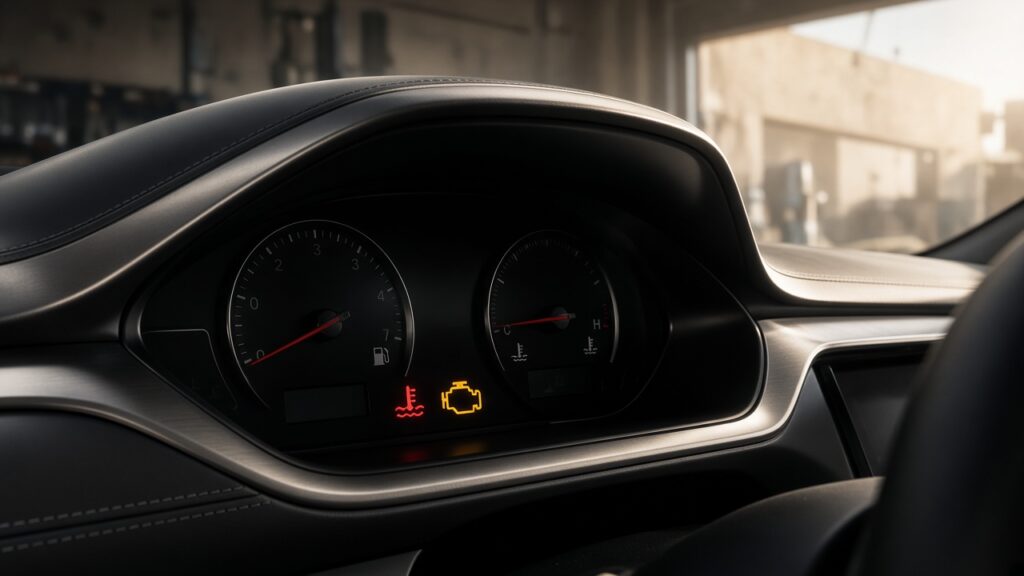
It is a scenario familiar to every driver in the United Arab Emirates. It is mid-July, the ambient temperature on Sheikh Zayed Road is pushing 48°C, and the humidity is thick enough to act as a physical barrier. You escape the blistering heat, slide into the driver’s seat of your vehicle, and press the ignition. You anticipate the refreshing blast of arctic air that makes life in this region bearable. Instead, you are greeted by something else entirely a pungent, invisible assault on your senses.
Perhaps it smells like gym socks left to rot in a locker. Maybe it carries the sharp, acidic tang of vinegar, or the deceptive sweetness of maple syrup. Whatever the specific note, the result is the same: the sanctuary of your vehicle has been breached. This is not merely an inconvenience; it is a symptom of a failing ecosystem within your vehicle. For many car owners, the instinct is to ignore it, hoping it will “blow over” after a few minutes of driving, or to mask it with air fresheners. However, a bad smell is never just a smell; it is a biological or mechanical alarm bell.
In the high-stakes environment of the UAE, where your car’s climate control is a life-support system rather than a luxury, ignoring these signs can lead to degraded vehicle value and significant respiratory health risks. To ensure the longevity of your vehicle and the safety of your passengers, relying on professional Air Conditioning Services is the only way to accurately diagnose and permanently resolve these issues. Unlike generic quick fixes, a comprehensive approach delves into the physics of condensation and the microbiology of evaporator cores to solve the problem at its source.
The Olfactory Diagnostics: Decoding the Smell
To solve the problem, we must first identify the adversary. Your nose is a sophisticated diagnostic tool, capable of detecting volatile organic compounds (VOCs) at minute levels. In the automotive world, specific odors are reliable indicators of specific failures. We must move beyond the generic complaint of “it smells bad” and categorize the odor to determine the remediation strategy.
1. The “Old Socks” or Mildew Odor
This is the most ubiquitous complaint among drivers in Dubai and Sharjah. The smell is earthy, musty, and heavy—reminiscent of a damp basement or wet laundry that has been forgotten in the washing machine. The verdict here is almost always a microbial infestation or biofilm on the evaporator core.
The air conditioning system operates on the principle of heat exchange. The evaporator core is essentially a radiator hidden deep inside your dashboard. As refrigerant expands inside it, the aluminum fins drop to near-freezing temperatures. When hot, humid UAE air passes over these fins, moisture condenses out of the air. In a sterile environment, this water would drip away. However, our environment is laden with fine silica dust and organic pollen. This particulate matter bypasses inferior cabin filters, settles on the wet fins, and creates a nutrient-rich sludge. This becomes an incubator for fungi and mold, releasing the foul gases you smell.
2. The Vinegar or “Sour” Smell
A sharp, stinging scent similar to vinegar or chlorine often confuses vehicle owners. This typically indicates one of two things: bacterial acid production or ozone generation. Specific strains of bacteria digest organic matter trapped in the air intake, producing acetic acid (vinegar) as a byproduct.
Alternatively, this can indicate an electrical issue. Failing electric motors, such as the blower motor, can generate ozone when their carbon brushes wear down and arc. Distinguishing between a bacterial sour smell and an electrical ozone smell is a critical safety diagnostic that requires professional attention.
3. The Sweet, Syrupy Smell
Perhaps the most dangerous odor is the one that smells pleasant, like maple syrup or cotton candy. This is the hallmark of a toxic coolant leak containing ethylene glycol. Your AC system and engine cooling system meet in the HVAC box at the “heater core.” If this component corrodes, hot engine coolant sprays into the ventilation housing.
When the fan runs, it vaporizes this coolant and pumps it into the cabin. This is an emergency. Breathing vaporized coolant is toxic, and a leak here means your engine is losing its ability to cool itself, which can lead to catastrophic engine failure in the summer heat.
4. The “Rotten Egg” or Sulfur Smell
This smell is visceral and unmistakable. It often points to a catalytic converter failure. If your engine is running “rich” (injecting too much fuel), the converter becomes overwhelmed and releases hydrogen sulfide gas. However, in the cooler months, small animals may seek warmth inside the engine bay. If they become trapped and perish, the decomposition process releases sulfur-based gases that are pulled directly into the AC system. This requires physical removal and intensive sanitization.
5. The Chemical or “Chloroform” Smell
A faint, ether-like, or chemical solvent smell often points to a leak in the refrigerant loop itself. Modern vehicles use specific refrigerants mixed with oil. When an evaporator leaks, you are often smelling the aerosolized oil. Breathing this mist is hazardous and indicates that your AC system is losing the pressure required to function effectively.
The UAE Factor: Why “Gulf Specs” Matter
Advice written for European or North American drivers often fails here because it does not account for the extremity of our climate. To understand why car AC smells are so prevalent in our region, we must analyze the specific environmental stressors of the United Arab Emirates.
The Humidity Paradox
While the UAE is known for its desert landscape, coastal cities like Dubai and Sharjah experience extreme humidity levels. The amount of water an AC system removes from the air is directly proportional to this humidity. In our region, a car AC system can generate over 1.5 liters of water per hour. This massive volume puts immense stress on the condensate drain tubes. If these tubes are even partially restricted by sand or road grime, water backs up into the HVAC housing, creating a standing pool of “swamp water” that never dries out.
The Dust and Sand Variable
The “sand” in the UAE is actually fine silica dust, which is pervasive and intrusive. Standard paper cabin filters are often insufficient for the heavy dust load of a sandstorm. Once the filter is saturated, dust bypasses the seal and coats the wet evaporator. This layer of wet dust acts as an insulator, preventing the fins from drying when the car is turned off and creating a permanent wet sponge effect that harbors bacteria.
The “Recirculation” Trap
Due to the intense heat, UAE drivers almost exclusively use the “Recirculate” setting. While this cools the car faster, it means the air inside the cabin is never exchanged with fresh air. The biological load CO2 from breath, sweat, and food odors is trapped in a closed loop, cycling repeatedly through the filter and evaporator. This concentrates contaminants and accelerates biofilm growth.

Health Implications: The “Sick Car Syndrome”
Is a smelly AC just an annoyance, or is it a genuine health threat? Research indicates that “Sick Car Syndrome” is a legitimate environmental health concern, particularly for vulnerable populations such as children, the elderly, and asthmatics.
The molds identified in automotive HVAC systems reproduce by releasing microscopic spores. When you turn on your AC fan, these spores are blasted directly into the breathing zone of the passengers. For individuals with allergies, this triggers immediate symptoms like sneezing and eye irritation. For asthmatics, the combination of cold, dry air and high spore counts can trigger attacks. Furthermore, Gram-negative bacteria thriving in the sludge can release endotoxins, which are linked to fatigue and headaches. If your passengers frequently complain of feeling unwell during long drives, the AC system should be the prime suspect.
DIY Solutions vs. Professional Engineering
Before seeking professional help, many car owners turn to the internet for DIY solutions. While some basic maintenance is encouraged, it is important to understand the limitations of home remedies in our harsh climate.
The Cabin Filter: The First Line of Defense
Replacing the cabin air filter is the only DIY method that is universally effective for prevention. Located behind the glovebox in most cars, it should be changed every 5,000 km in the UAE. We highly recommend upgrading to an Activated Carbon filter, which adsorbs odors and VOCs. However, changing the filter only stops new dirt from entering; it does not clean the mold already growing inside the system.
The Limitations of Sprays and Foams
Many drivers attempt to use disinfectant sprays into the vents or foaming cleaners injected into the drain tube. While these can offer temporary relief, they rarely solve the root cause. Sprays often fail to reach the deep crevices of the evaporator core where the biofilm is thickest. Foaming cleaners, if used incorrectly, can expand into the blower motor electronics or the ECU, causing expensive short circuits. These methods are often “Band-Aids” that mask the odor for a few days before it returns with a vengeance.
The Professional Fix: Smart Garage’s Methodology
When DIY fails, or when the smell indicates a chemical leak, professional intervention is required. At Smart Garage, we approach the issue as a comprehensive engineering challenge, not just a quick cleaning job.
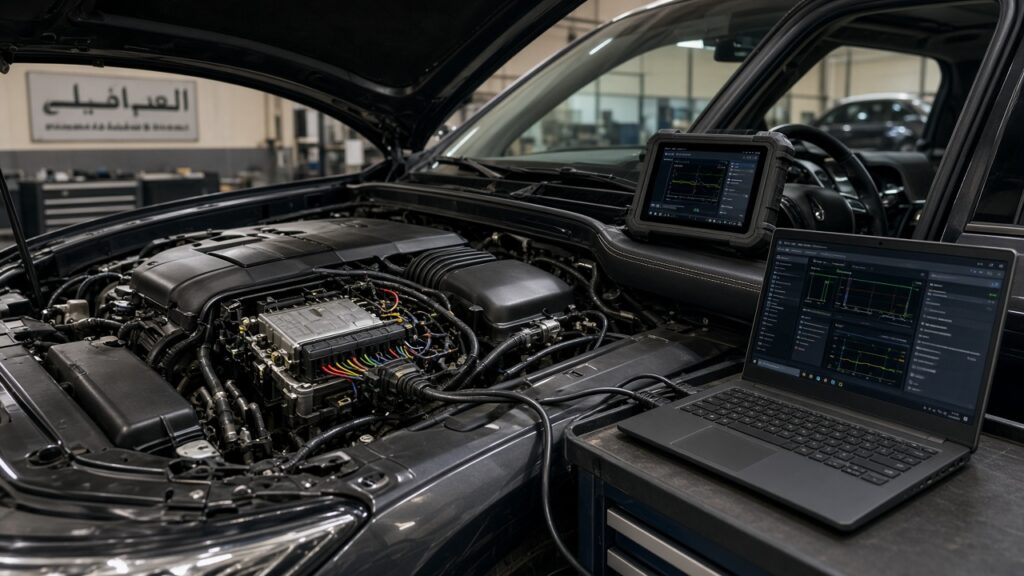
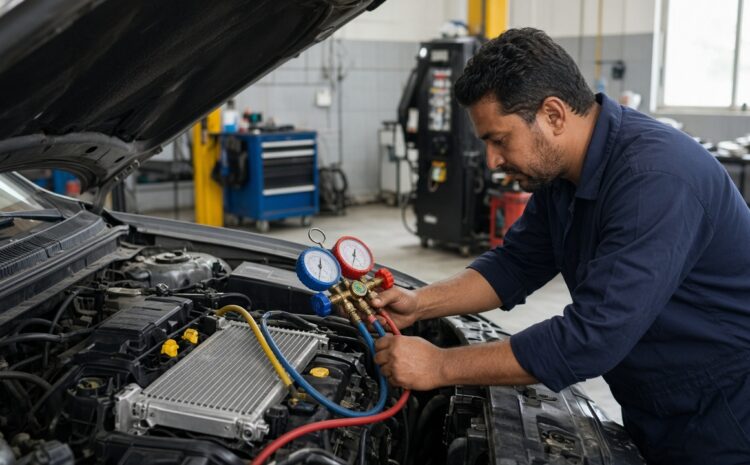
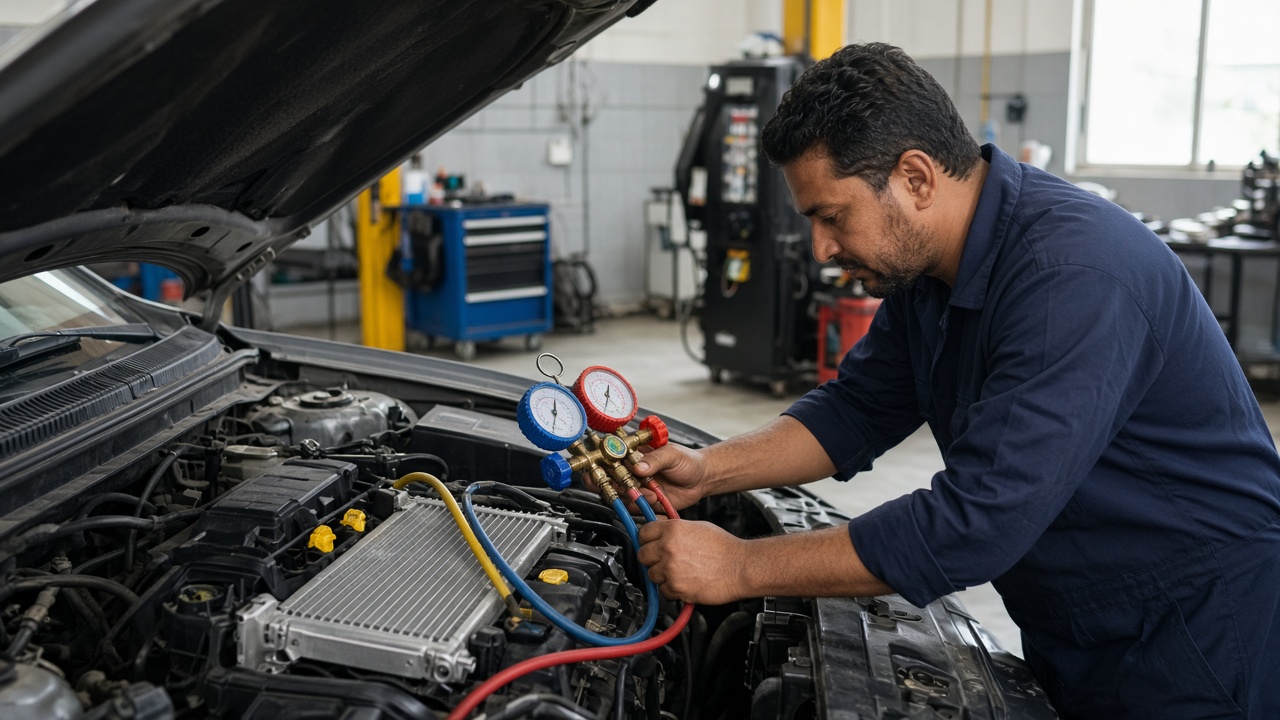
- Forensic Inspection: We don’t guess; we test. Using digital thermometers and pressure gauges, we analyze the health of the entire cooling system. In severe cases, we use endoscopic cameras to visually inspect the interior of the HVAC box for mold growth.
- Vacuum Decay Testing: Instead of just “topping up gas”—which is a wasteful and temporary fix—we perform a vacuum decay test. By holding the system under vacuum, we can confirm if the system is sealed. If the vacuum drops, we know there is a leak that must be found and repaired.
- Deep Evaporator Cleaning: For biological odors, we use specialized high-pressure wands and non-corrosive coil cleaners to strip away the sludge and biofilm that DIY foams miss. This restores the heat transfer efficiency of the evaporator, making your AC colder and smelling fresh.
- System Flushing: If a compressor has failed, it often sends metal debris through the lines. We perform a full system flush to remove this debris, ensuring the new components last for years, not months.
Prevention: Habits for the UAE Driver
The best repair is the one you never have to make. Adopting specific habits can prevent the return of the “Dubai Smell” and extend the life of your AC system.
The “Last Mile” Protocol: This is the single most effective habit to prevent mold. About 2 to 3 minutes before you reach your destination, turn off the AC compressor (press the A/C button so the light goes off) but leave the fan running on high. This blows warm ambient air over the wet evaporator coil, drying it out before you park. No moisture means no breeding ground for mold.
Strategic Parking: While shade is preferred, ultraviolet (UV) light is a natural sterilizer. Occasionally parking in the sun with windows cracked slightly can help kill mold spores on interior fabrics. Additionally, switching to “Fresh Air” mode for a few minutes during highway drives helps flush out stale, contaminated air from the cabin.
Conclusion: Restoring Your Sanctuary
Your vehicle is more than just a machine; in the UAE, it is a mobile sanctuary against the elements. A foul odor invading this space is a violation of that comfort and a clear signal that the vehicle requires attention. Whether it is the biological hazard of mold spores or the chemical threat of a leaking heater core, the implications of a “smelly AC” are far-reaching.
While the market is flooded with quick fixes and “magic” sprays, the reality is that true restoration requires a scientific approach. The difference between a temporary mask and a permanent cure lies in accurate diagnosis. By choosing a partner like Smart Garage, which prioritizes the health of the entire cooling system, you ensure the longevity of your vehicle and the safety of your passengers. Don’t let a bad smell ruin your drive. Check your cabin filter today, practice the “Last Mile” drying technique, and if the smell persists, contact a specialist to breathe easier and drive safer.
Further Reading & Services